

Why Watering Technique Matters More Than You Think
It's a common assumption that as long as plants are getting wet, they're being watered correctly. In reality, how and when you water matters as much as whether you water at all. Poor watering habits - too shallow, too frequent, or at the wrong time of day - can weaken root systems, promote disease, and stress plants more than a dry spell would.
Understanding the relationship between water, soil, and roots puts you in control of one of the biggest variables in garden health. Whether you're tending a raised vegetable bed, a perennial border, or a mixed container planting, the same core principles apply. See our beginner's vegetable garden guide for how these principles apply from the very first season.
“The single most common gardening mistake isn't failing to water - it's watering too often and too shallowly. Give roots a reason to grow deep and they'll take care of the plant far better than you can.”
— Extension Horticulture Specialist, University Cooperative Extension Program, Midwest Region
Timing: When to Water for Maximum Benefit
Early morning - roughly between 6 a.m. and 10 a.m. - is the most effective window for garden watering. Temperatures are cooler, winds tend to be calmer, and water has time to soak into the soil before the heat of the day accelerates evaporation. Foliage that gets wet during morning watering also has time to dry before nightfall.
Evening watering is the most problematic approach. While it avoids evaporation, it leaves leaves and soil surfaces damp overnight - conditions that encourage fungal diseases like powdery mildew and root rot. If morning watering isn't possible, aim for late afternoon rather than after dark.
Use a Rain Gauge to Track Weekly Moisture
A simple, inexpensive rain gauge placed in the garden takes the guesswork out of supplemental watering. Record rainfall after each event and subtract from your target weekly inch. This one tool can prevent both underwatering and the gradual waterlogging that comes from irrigating after adequate rain. Most hardware and garden supply stores carry them in a range of styles.
Midday watering during peak summer heat is inefficient but not harmful to most plants if needed occasionally. The concern about "scorching" wet leaves in sunlight is largely a myth for outdoor garden plants, but up to half of applied water can evaporate before reaching roots when temperatures are high.
Depth: Reaching the Root Zone
Shallow, frequent watering encourages roots to stay near the soil surface, where they're vulnerable to heat, drought, and foot traffic. Deep watering - applying enough water to penetrate 6 to 8 inches into the soil - draws roots downward toward a more stable moisture environment.
A simple way to check depth: water normally, then push a finger or a narrow trowel into the soil immediately after. If the moisture doesn't reach at least 4 to 6 inches down, you're not watering long enough. Sandy soils drain faster and may need more frequent deep sessions; clay soils hold moisture longer but can become waterlogged if overwatered. Understanding your soil's composition connects directly to overall plant health - soil quality affects nutrient availability and water retention in ways most gardeners underestimate.
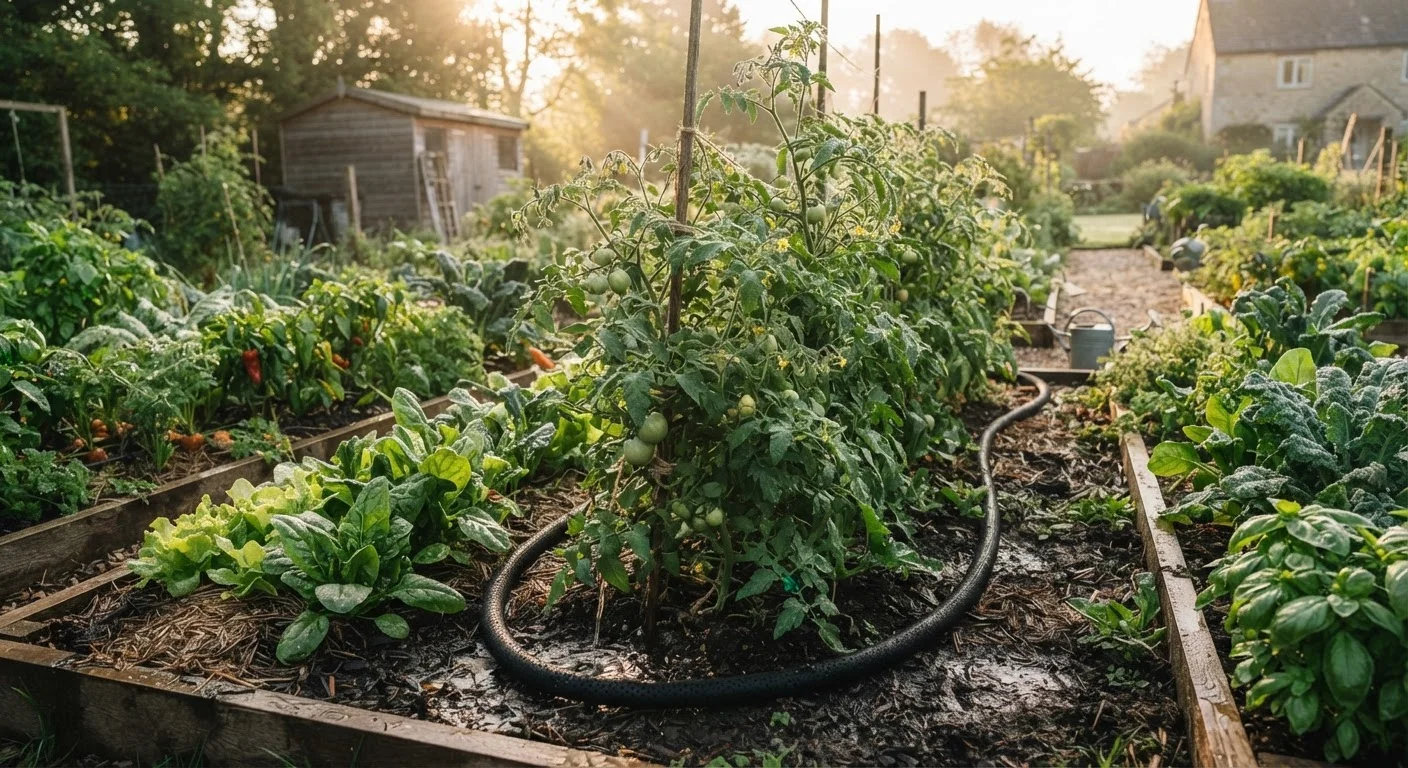
Water at the base of plants rather than overhead whenever possible.
Directing water to the root zone keeps foliage dry, which reduces the likelihood of fungal disease. Overhead watering also loses more moisture to evaporation before it reaches the soil.
Check soil moisture before each watering session.
Overwatering is as harmful as underwatering, contributing to root rot and oxygen-deprived soil. Checking before you water prevents the gradual decline that comes from following a rigid schedule regardless of actual conditions.
Water deeply and infrequently rather than shallowly and often.
Deep watering trains roots to grow downward into more stable, moisture-retentive soil layers. This makes plants more drought-tolerant and better able to access nutrients lower in the profile.
Apply mulch after watering to retain soil moisture.
Mulch acts as an insulating layer that slows evaporation from the soil surface, moderates soil temperature, and reduces the watering frequency required to keep plants healthy.
Adjust your watering schedule to account for recent rainfall.
Applying irrigation water after significant rainfall wastes water and can push soil past saturation, depriving roots of oxygen. Tracking weekly precipitation helps you supplement only when actually needed.
Frequency: Consistency Without Overwatering
Most established garden plants thrive with roughly one inch of water per week, delivered in one or two sessions rather than daily light sprinkles. Newly planted seedlings and transplants need more frequent attention until their roots establish - typically every one to two days during warm weather.
A common mistake is watering on a rigid schedule regardless of rainfall or temperature. Check soil moisture before watering rather than relying on the calendar alone. Push a finger two inches into the soil: if it feels moist, hold off. If it feels dry, water thoroughly.
Container gardens dry out significantly faster than in-ground beds and often need daily watering in summer heat. For guidance on balancing moisture in pots and planters, see our container gardening resource. Applying a 2- to 3-inch layer of mulch around garden plants can cut surface moisture loss by half and reduce how often you need to water - the right mulch choice makes a measurable difference.
~1 inch
Weekly water most garden plants need
University extension guidelines consistently recommend approximately one inch of combined rainfall and irrigation per week for most vegetable and ornamental gardens.
Up to 50%
Water loss reduction from mulching
Research from land-grant university extension programs suggests that a 2- to 3-inch mulch layer can reduce soil moisture evaporation by roughly half compared to bare soil.
If your lawn is showing yellowing or uneven color, watering inconsistency may be one factor. Our guide on reading lawn color signals can help you distinguish overwatering from other common causes.
The content on this site is provided for informational purposes only and should not be considered a substitute for professional advice. While we strive to provide accurate and up-to-date information, we make no guarantees regarding its completeness or accuracy. Always consult a qualified professional for advice specific to your circumstances before making any decisions.