

What Mulch Actually Does (and Why It Matters)
Mulch is any material spread over the soil surface around plants. Its primary jobs are to slow water evaporation, regulate soil temperature, suppress weed growth, and - in the case of organic types - improve soil structure over time. Done right, mulching can reduce how often you need to water and dramatically cut weeding time. See our guide to watering deeply and consistently for how mulch fits into a broader moisture strategy.
Most mulches are applied in a layer 2-4 inches deep. Thinner than that, and weeds push through. Thicker than 4 inches around plant stems creates moisture buildup that invites rot and disease. Always keep mulch a few inches away from the base of stems and tree trunks - the so-called "mulch volcano" piled against a trunk is one of the most common mulching mistakes.
| Recommended mulch depth | 2-4 inches (General horticultural best practice) |
| Clearance from plant stems | 2-3 inches minimum (General horticultural best practice) |
| Best for vegetable gardens | Straw or shredded leaves |
| Best for shrub and tree beds | Wood chips or shredded bark |
| Best for drought-tolerant plantings | Gravel or river rock |
| Refresh frequency (organic mulch) | Once or twice per year |
Organic Mulches: They Feed the Soil as They Break Down
Organic mulches decompose over time, adding nutrients and organic matter to the soil - a meaningful benefit in most home gardens. The tradeoff is that they need to be refreshed periodically, typically once or twice a year.
Wood Chips and Shredded Bark
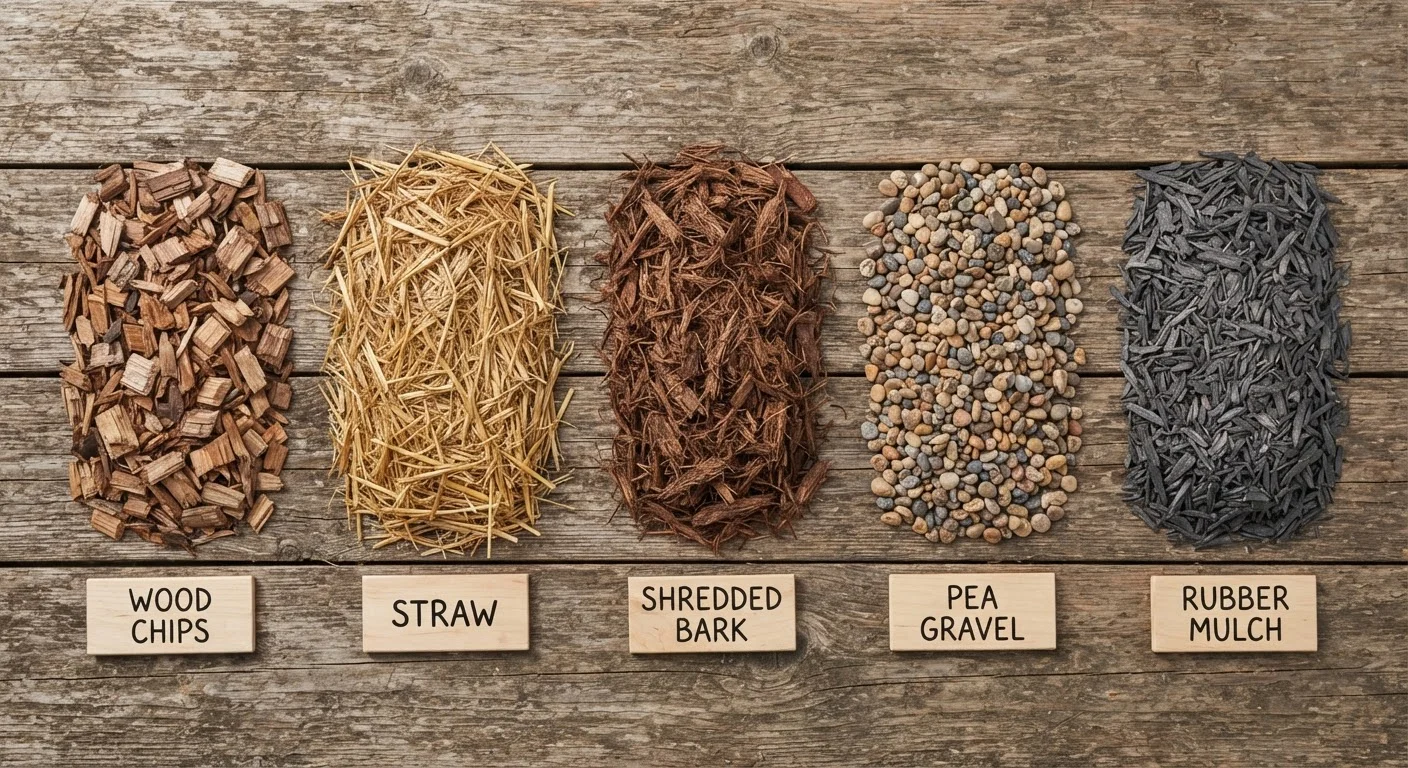
Among the most widely available organic options, wood chips and shredded bark are well-suited to perennial beds, pathways between garden beds, and around shrubs and trees. They break down slowly, so they last a full season or more before needing a top-up. Fresh wood chips (those not yet composted) can temporarily tie up nitrogen in the soil as they decompose - for that reason, it's worth allowing chipped wood to age a few weeks before use in active planting beds. Understanding how organic matter changes your soil helps put this tradeoff in context.
Straw
Straw (not hay, which carries weed seeds) is a go-to mulch for vegetable gardens. It's lightweight, easy to apply, and breaks down into the soil by season's end. It's especially practical around strawberries, tomatoes, and other low-growing crops where keeping fruit off bare soil matters. Look for seed-free straw to avoid introducing weeds.
Shredded Leaves
Fall leaves run through a lawn mower or leaf shredder make an excellent, nearly free mulch. Whole leaves can mat together and block water, so shredding first is important. Shredded leaves break down relatively quickly and are particularly good for woodland garden areas or native plant beds. They pair well with composting strategies - see why composting is simpler than you think for how to put excess organic material to further use.
Compost
A 1-2 inch layer of finished compost functions as both mulch and soil amendment. It's best applied directly around vegetables or annual flowers where immediate nutrient availability matters. Because compost breaks down quickly, it offers less weed suppression than coarser materials.
Organic mulch
Any mulch material derived from once-living matter - such as wood, leaves, or straw - that breaks down over time and contributes nutrients and organic matter to the soil.
Inorganic mulch
Mulch made from non-living materials such as stone, gravel, or rubber that does not decompose and therefore does not improve soil fertility over time.
Mulch volcano
A common but harmful practice of piling mulch in a cone shape against a tree trunk or plant stem. This traps moisture against the bark, promoting rot and disease.
Nitrogen tie-up
A temporary reduction in plant-available nitrogen that occurs when fresh, high-carbon organic matter (like wood chips) begins decomposing in the soil. Soil microbes use available nitrogen during this process.
Landscape fabric
A woven or perforated synthetic sheet placed under mulch to suppress weeds while allowing water to pass through. Its effectiveness typically decreases over time as soil and debris accumulate on top.
Inorganic Mulches: Long-Lasting and Low Maintenance
Inorganic mulches don't decompose, which means they don't need annual replacement - but they also don't improve soil fertility. They tend to work best in areas where the goal is permanent coverage rather than active soil building.
Gravel and River Rock
Stone mulches excel around drought-tolerant plants, succulents, ornamental grasses, and Mediterranean-style garden beds. They allow excellent drainage, hold heat well (which some plants prefer), and essentially never need replacing. The downside: once stone is mixed into soil it's difficult to remove, and the heat they retain can stress moisture-sensitive plants during hot summers.
Rubber Mulch
Often made from recycled tires, rubber mulch is long-lasting and commonly used in playground areas for its cushioning properties. In ornamental garden beds it can suppress weeds effectively, but it doesn't improve soil and may retain heat in ways that harm plant roots in hot climates. It's not well-suited to vegetable gardens.
Landscape Fabric
Technically an underlayer rather than a standalone mulch, landscape fabric is designed to block weeds while letting water through. In practice, its effectiveness at weed suppression diminishes over time as debris accumulates on top and weed seeds germinate in that surface layer. It's most useful under gravel in pathways or utility areas, not in planting beds where you'll be adding plants regularly.
For gardeners planning mixed perennial and annual beds, understanding seasonal plant cycles helps determine which mulch approach fits best. See our article on planning a garden with perennials and annuals for context on how bed turnover affects mulch decisions.
Matching Mulch to the Job
No single mulch type is right for every area of the yard. A quick reference: use straw or shredded leaves in vegetable gardens; wood chips or bark in shrub beds and pathways; compost as a thin top-dressing for annual flower beds; gravel or river rock around drought-tolerant ornamentals and succulents. Rubber mulch is best reserved for non-planting areas like playgrounds or utility paths.
Timing also matters. Applying mulch in early spring helps warm soil faster and suppress early weeds. A fall application protects roots from freeze-thaw cycles through winter. Both are covered in the broader seasonal calendar for year-round lawn and garden care.
When in doubt, start with a modest layer of shredded bark or wood chips - it's forgiving, widely available, and effective in most garden situations. Adjust as you learn what your specific plants and soil need.
The content on this site is provided for informational purposes only and should not be considered a substitute for professional advice. While we strive to provide accurate and up-to-date information, we make no guarantees regarding its completeness or accuracy. Always consult a qualified professional for advice specific to your circumstances before making any decisions.