

Start here
Choosing the Right Spot
Next
Understanding and Preparing Your Soil
Then
Deciding What to Plant
When you're ready
Planting and Spacing Basics
Keep it going
Watering and Early Maintenance
Choosing the Right Spot
Before you buy a single seed packet, spend time observing your yard at different points in the day. The most important factor for vegetable gardening success is sunlight. Most vegetables need a minimum of six hours of direct sun daily; eight or more is better for fruiting crops like tomatoes, peppers, and cucumbers. Note where shadows fall from trees, fences, or buildings throughout the morning and afternoon.
Beyond sun, consider these factors when selecting your garden site:
- Drainage: Avoid low spots where water pools after rain. Waterlogged roots invite disease and rot.
- Proximity to water: You'll water frequently, especially in the first weeks. A spot close to a spigot or hose connection saves significant effort.
- Access: You'll visit your garden often for watering, weeding, and harvesting. A convenient location means you're more likely to catch problems early.
- Level ground: A relatively flat surface reduces runoff and makes raised bed installation easier.
If your yard is mostly shaded, you still have options. Containers on a sunny patio can work well - see our guide to container gardening on a small patio or balcony for approaches that don't require a yard at all.
Start Smaller Than You Think You Need
A 4-by-8-foot raised bed or a 10-by-10-foot in-ground plot is plenty for a first garden. Smaller spaces are much easier to water consistently, weed thoroughly, and monitor for pests. Many experienced gardeners say their best gardens came from restraint in the first year - you can always expand once you've built confidence and know what you enjoy growing.
Understanding and Preparing Your Soil
Soil is where your garden either succeeds or struggles. Most native backyard soil is too compacted, too sandy, or too nutrient-poor to grow vegetables well without some preparation. The good news: improving your soil before you plant is the single most impactful step you can take.
Start with a soil test. Many county cooperative extension offices offer low-cost testing that tells you your soil's pH and basic nutrient levels. Most vegetables prefer a slightly acidic pH between 6.0 and 7.0. If levels are off, amendments can correct them - but you need the data first. Our article on soil pH and why your plants might be struggling explains what the numbers mean and how to respond.
Soil pH
A measure of how acidic or alkaline your soil is, on a scale from 0 to 14. Most vegetables grow best in slightly acidic soil with a pH between 6.0 and 7.0 because nutrients are most available in that range.
Compost
Decomposed organic material - like vegetable scraps, leaves, or grass clippings - that improves soil structure, adds nutrients, and encourages beneficial soil microorganisms.
Transplant
A young plant that was started from seed elsewhere and is moved into your garden rather than being seeded directly in the ground. Transplants give beginners a head start and skip the fragile germination phase.
Cool-season crop
A vegetable that grows best in cooler temperatures - typically below 75°F - and can tolerate light frost. Examples include lettuce, peas, spinach, and broccoli.
Succession planting
The practice of planting the same crop in small batches every two to three weeks so that harvests are spread over a longer period rather than all ripening at once.
Raised bed
A garden structure - usually a wood or metal frame - filled with soil and built above ground level. Raised beds offer better drainage, warmer soil in spring, and easier control over soil quality.
For most beginner gardens, working 2-4 inches of compost into the top 8-12 inches of soil delivers immediate benefits: it improves drainage in clay-heavy soil, adds moisture retention in sandy soil, and introduces the organic matter that feeds soil microbes and plants alike. Avoid heavy doses of synthetic fertilizer before planting - over-fertilizing can burn seedling roots and disrupt soil biology.
If your native soil is very poor or you want the easiest possible start, consider building a simple raised bed and filling it with a mix of topsoil and compost. Raised beds warm up faster in spring, drain reliably, and can be filled with known-quality growing medium from day one.
Deciding What to Plant
The temptation for new gardeners is to plant everything at once. A better approach: start small with crops you actually eat, chosen to match your growing season.
Vegetables fall into two broad categories:
- Cool-season crops - lettuce, spinach, kale, peas, radishes, broccoli - grow best in spring or fall when temperatures stay below 75°F. These can often be planted several weeks before your area's last frost date.
- Warm-season crops - tomatoes, peppers, beans, squash, cucumbers, corn - need warm soil and frost-free nights. Plant these only after your last frost has passed.
For a first garden, a combination of a few fast-growing cool-season crops (radishes mature in as few as 25 days) and two or three reliable warm-season staples gives you early wins and a longer harvest window.
Also decide whether you'll start from seeds or transplants. Seeds are more economical and give you more variety options, but transplants (seedlings you buy from a nursery) are more forgiving for beginners because they give you a head start and skip the most fragile germination phase. Transplants are particularly recommended for tomatoes, peppers, and eggplant, which have long growing seasons.
If you're thinking ahead to future seasons, understanding how annual vegetables fit into a longer garden plan is useful. Our guide to perennials vs. annuals covers how to balance one-season crops with longer-term plantings.
Planting and Spacing Basics
Crowding is one of the most common first-garden mistakes. When plants compete for light, water, and nutrients, yields drop and disease risk increases because air circulation is poor. Always follow the spacing recommendations on seed packets or transplant tags - they reflect what that variety actually needs, not a conservative estimate.
A few fundamentals to follow at planting time:
- Sow seeds at the right depth. A general rule of thumb: plant seeds at a depth equal to roughly two to three times their diameter. Fine seeds like carrots and lettuce are sown shallowly; larger seeds like beans and squash go deeper.
- Water immediately after planting. Settle seeds and transplant roots into contact with the soil by watering gently right after planting. Transplants especially can go into shock if roots are left dry.
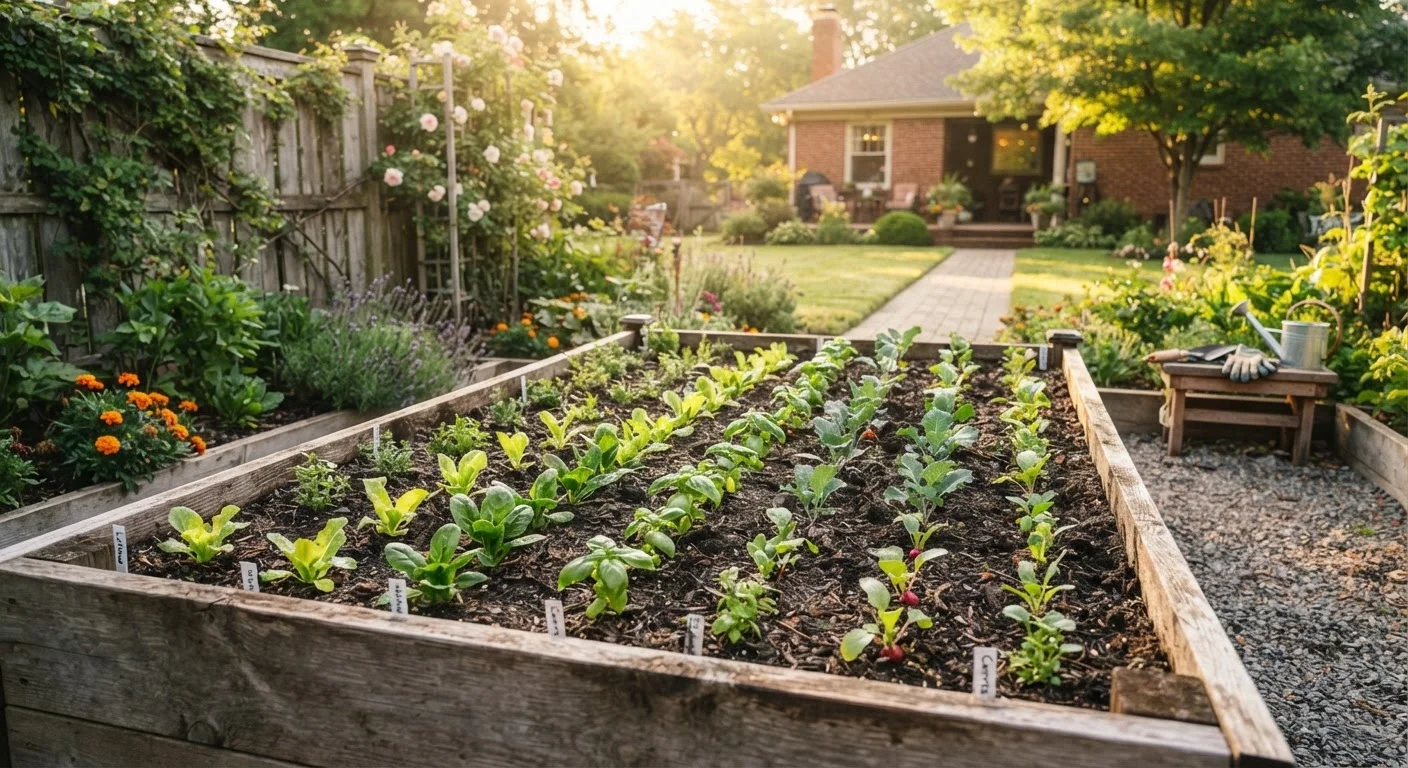
- Label your rows. It sounds obvious, but it's easy to forget what's planted where once seedlings emerge. Simple stakes or even popsicle sticks with written labels prevent confusion.
- Thin seedlings when they emerge. If you sow seeds and multiple germinate in the same spot, thin them to the recommended spacing by snipping extras at soil level with scissors. Pulling risks disturbing neighboring roots.
For gardeners working in limited ground space, thinking carefully about layout and succession planting - staggering planting dates so crops mature at different times - can extend your harvest across more of the season. A broader look at year-round garden care can help you think through the full calendar.
Watering and Early Maintenance
More first-time vegetable gardens fail from watering mistakes than from any other single cause. Both underwatering and overwatering can harm or kill plants, and the damage often looks similar - wilting, yellowing, poor growth.
The goal is consistent soil moisture in the root zone, not just on the surface. Deep, infrequent watering encourages roots to grow deeper into the soil, which makes plants more resilient during dry spells. Shallow daily sprinkles keep moisture at the surface and encourage weak, shallow root systems.
Overwatering Is a Common Beginner Mistake
Soggy soil deprives roots of oxygen and creates conditions where fungal diseases and root rot thrive. If your soil feels wet an inch below the surface, skip that watering session. Well-draining soil and containers with drainage holes help prevent waterlogging, but attentive observation is the best safeguard.
A few practical watering guidelines for new vegetable gardens:
- Water in the morning when possible. This allows foliage to dry during the day, reducing fungal disease risk.
- Water at the base of plants, not over the leaves. Soaker hoses and drip irrigation are ideal for this; overhead sprinklers wet foliage unnecessarily.
- Check soil moisture before watering by pushing a finger an inch or two into the soil. If it feels damp, hold off. If it's dry at that depth, water thoroughly.
- Most vegetables need approximately one inch of water per week from rain or irrigation combined.
Beyond watering, the main early maintenance tasks are weeding and monitoring for pests. Weeds compete directly with your vegetables for nutrients and water. Pull them when small - young weeds are far easier to remove than established ones with deep root systems. Check plants two or three times a week in the early weeks to catch insect damage, disease signs, or nutrient deficiencies before they spread.
For a deeper look at getting watering right, see our guide to watering the garden well - it covers timing, depth, and frequency in detail.
Frequently Asked Questions
Most vegetables require a minimum of six hours of direct sunlight per day, with eight or more hours being ideal. Leafy greens like lettuce and spinach can tolerate some partial shade, but fruiting crops like tomatoes, peppers, and squash need full sun to produce well.
A 4-by-8-foot raised bed or a 100-square-foot in-ground plot is a practical starting size for most beginners. Smaller spaces are easier to maintain, water consistently, and monitor for pests. You can always expand once you've had a successful first season.
Radishes, lettuce, green beans, zucchini, and cherry tomatoes are widely considered beginner-friendly because they germinate reliably, grow relatively quickly, and tolerate minor care mistakes. Starting with transplants rather than seeds can also reduce early frustration.
Timing depends on your local climate and what you're growing. Cool-season crops like peas and kale can go in several weeks before your last frost date, while warm-season crops like tomatoes and cucumbers should wait until frost risk has passed. Check with your local cooperative extension service for frost dates specific to your area.
A basic soil test is strongly recommended, especially for a first garden. It tells you your soil's pH and nutrient levels so you can amend it appropriately rather than guessing. Many county cooperative extension offices offer inexpensive soil testing services.
Newly planted seeds and transplants need consistent moisture - generally every one to two days depending on weather and soil type. Once established, most vegetables do well with about an inch of water per week, delivered deeply and less frequently to encourage strong root growth.
The content on this site is provided for informational purposes only and should not be considered a substitute for professional advice. While we strive to provide accurate and up-to-date information, we make no guarantees regarding its completeness or accuracy. Always consult a qualified professional for advice specific to your circumstances before making any decisions.