

Reading the Pattern Before You Act
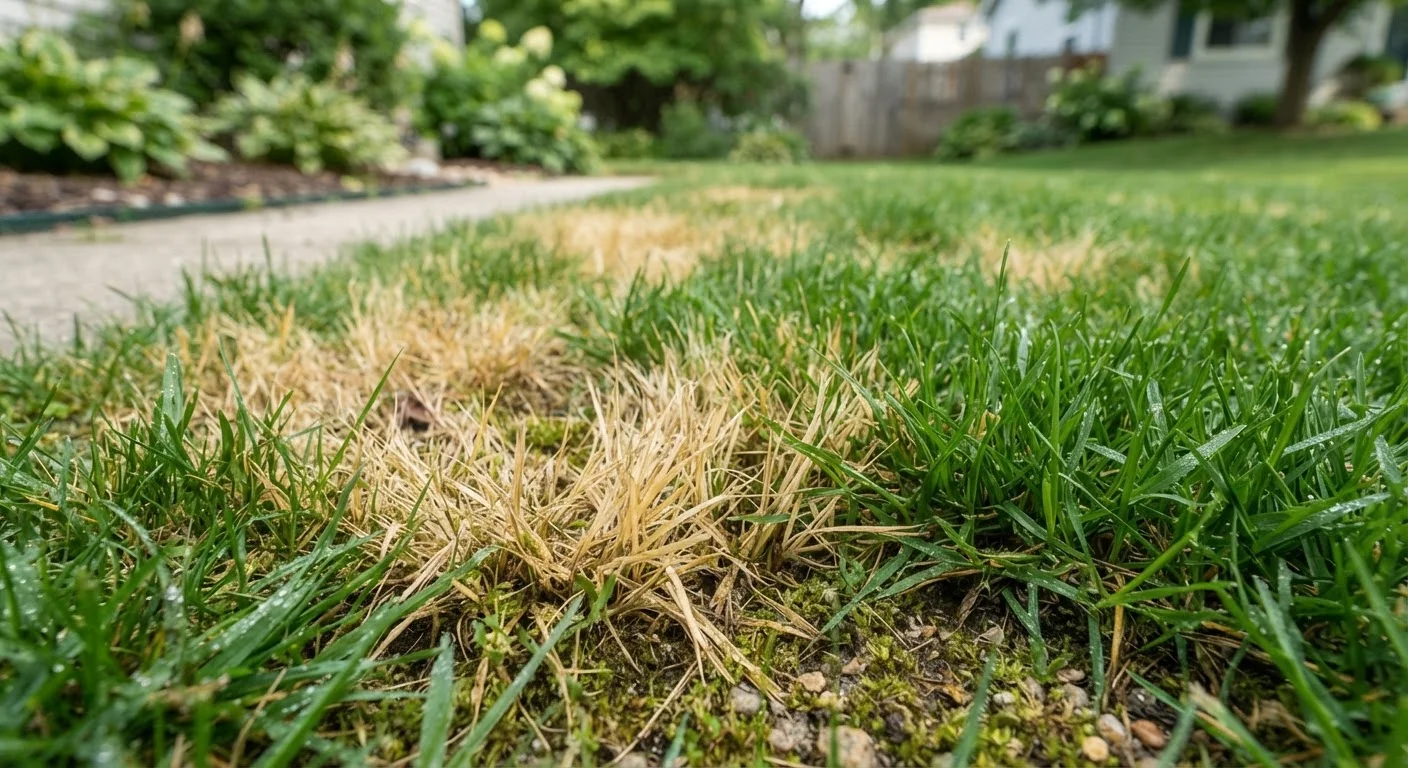
Before you reach for a bag of fertilizer or adjust your sprinklers, step back and look at the shape and spread of the yellowing. The pattern is often your best diagnostic clue.
- Uniform yellowing across the whole lawn usually signals a systemic issue - most often nitrogen deficiency or a widespread pH problem.
- Striped yellow lines that match your mowing or fertilizing paths suggest equipment overlap errors or uneven fertilizer distribution.
- Irregular patches in random locations point toward localized problems: buried debris, pet urine, grub damage, or a drainage issue.
- Yellow near pavement or structures can reflect reflected heat stress or soil compaction near hardscaping.
Timing matters too. Yellowing that appears after heavy rain is often a sign of oxygen-starved roots, while yellowing during a dry stretch usually indicates drought stress or shallow watering habits. See our guide to watering depth and timing for a full breakdown of irrigation mistakes that affect grass color.
Yellow Doesn't Always Mean Stressed
Some grasses go naturally dormant and turn straw-yellow during extreme summer heat or winter cold - this is a normal survival response, not a sign of permanent damage. Bermudagrass, for example, reliably goes dormant in cool temperatures and greens back up when warmth returns. Before treating, confirm whether your grass type is prone to seasonal dormancy in your climate zone.
The Most Common Causes of Yellow Grass
Several distinct issues produce lawn yellowing, and each has recognizable characteristics:
Nitrogen Deficiency
Nitrogen fuels leaf growth and chlorophyll production. When it's depleted, older, lower blades yellow first while new growth may still look green. This is especially common in spring after heavy winter rain has leached nitrogen from the soil. A balanced lawn fertilizer applied at the correct rate typically resolves mild cases within a few weeks.
Soil pH Imbalance
Most turf grasses thrive in soil with a pH between 6.0 and 7.0. Outside that range, nutrients become chemically unavailable to roots even if they're physically present in the soil. Overly acidic soil is corrected with lime; alkaline soil can be amended with sulfur. A soil test is the only reliable way to confirm pH and guide the right amendment.
Overwatering and Poor Drainage
Saturated soil starves roots of oxygen, weakens the root system, and creates conditions for fungal diseases - all of which show up as yellowing. If your soil stays wet for more than 24 hours after rain, compaction or poor grading may be contributing to drainage problems.
Underwatering and Heat Stress
Grass under drought stress first turns a blue-gray color, then yellows and goes dormant. Unlike disease damage, drought-related yellowing typically affects open, sunny areas first and responds quickly to consistent, deep watering.
Pest and Disease Pressure
Grubs feeding on roots create lifting, spongy patches. Fungal diseases like dollar spot or brown patch produce yellow halos or irregular bleached areas. Pest- and disease-caused yellowing does not improve with watering or fertilizing - identifying the specific culprit is essential before treating.
6.0-7.0
Ideal soil pH range for most turf grasses
Outside this range, essential nutrients like iron and nitrogen become chemically unavailable to grass roots regardless of soil content.
~30%
Lawn problems linked to watering errors
Extension services and turf management programs commonly note that improper irrigation - too much or too little - is among the leading preventable causes of lawn decline.
3-4 inches
Recommended mowing height for cool-season grasses
Maintaining proper mowing height preserves leaf tissue that produces chlorophyll and reduces heat and drought stress on the turf.
Diagnosing and Correcting the Problem
Once you've identified the likely cause, correction becomes straightforward in most cases:
- Do a soil moisture test first. Push a screwdriver 6 inches into the soil. If it slides in easily, moisture is adequate. If it resists, the soil is too dry. This alone will rule out watering as a variable.
- Conduct a soil test. For any yellowing that doesn't respond to basic care, a soil test is the most efficient next step. Results guide fertilizer type, rate, and any pH amendments needed.
- Check for pests. Lift a small section of yellowed turf. Healthy roots should be visible and firm. Loose, detached turf with no visible roots suggests grub activity.
- Review your mowing habits. Cutting grass too short (scalping) removes the green leaf tissue and stresses the plant, causing yellowing. Most cool-season grasses prefer a height of 3-4 inches; warm-season grasses tolerate shorter cuts.
If yellow patches persist through summer and the lawn looks thin, you may be dealing with a combination of stress factors. Consider visiting our article on overseeding a thin lawn for a path forward that doesn't require starting from scratch.
For a broader perspective on when these issues tend to arise, the year-round lawn and garden care overview outlines the full seasonal calendar of maintenance that keeps grass resilient. And if fall is approaching, the tasks covered in fall lawn care that pays off in spring can help prevent the nutrient and soil issues that fuel next year's yellowing.
When in Doubt, Test Your Soil First
Many lawn problems - from yellowing to thinning - are rooted in soil chemistry rather than watering or pest pressure. A basic soil test, available through most county cooperative extension offices, gives you accurate pH and nutrient data so you treat the actual problem instead of guessing. Testing in fall allows you to amend over winter and start spring with corrected soil conditions.
Frequently Asked Questions
Fertilizer burn can cause yellowing if too much nitrogen was applied at once, especially during hot or dry weather. The excess salt draws moisture out of grass roots and blades, leaving scorched, yellow streaks. Water the area thoroughly and avoid fertilizing again until the grass recovers.
Yes. Overwatering saturates the soil and deprives roots of oxygen, which impairs nutrient uptake and leads to pale, yellow blades. It also promotes fungal diseases that cause discoloration. Check soil moisture a few inches down before watering - if it's still damp, hold off.
Iron deficiency shows up as interveinal chlorosis - the blade turns yellow while the veins remain green. It often appears on young growth first. High soil pH is a common trigger because it prevents iron from being absorbed even when iron is present in the soil.
Grub damage produces irregular, spongy yellow patches that can be peeled back like a loose carpet because larvae have eaten through the root system. If you lift the turf and find C-shaped white grubs beneath, pest control measures are the appropriate next step.
A soil test is strongly recommended for any persistent or recurring yellowing that doesn't respond to basic fixes. It reveals pH, nutrient levels, and organic matter content - all of which directly affect grass health. Most cooperative extension offices and garden centers offer affordable testing kits or services.
In many cases, yes - once the underlying cause is corrected, grass can recover and return to green. Recovery time depends on the severity and the cause. Severe cases involving dead roots or prolonged drought stress may require overseeding.
The content on this site is provided for informational purposes only and should not be considered a substitute for professional advice. While we strive to provide accurate and up-to-date information, we make no guarantees regarding its completeness or accuracy. Always consult a qualified professional for advice specific to your circumstances before making any decisions.