

Start here
Why Container Gardening Works in Small Spaces
Next
Choosing the Right Containers
Then
Soil, Drainage, and Fertilizing Basics
When you're ready
Selecting Plants That Thrive in Containers
Ongoing
Watering, Light, and Seasonal Care
Why Container Gardening Works in Small Spaces
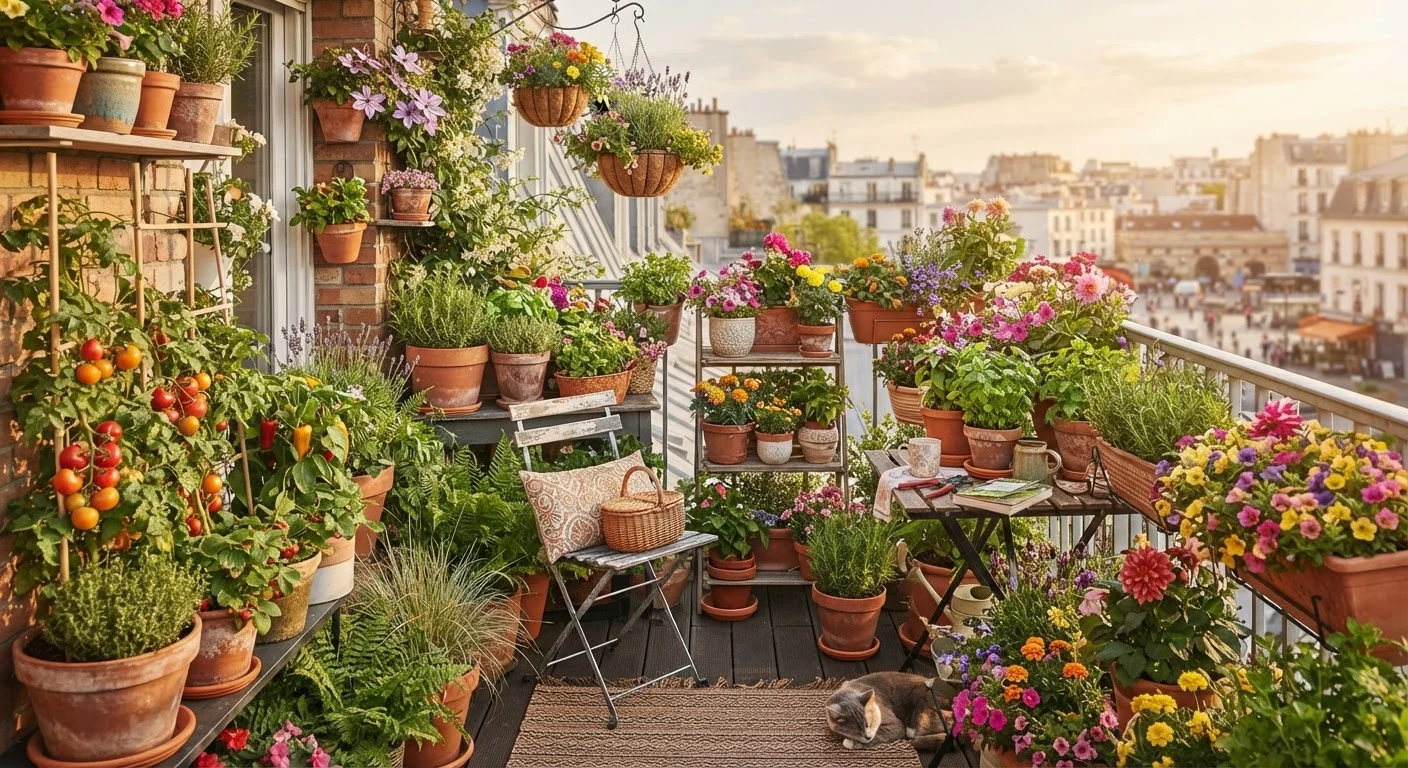
A patio, balcony, or even a sunny stoop can support a genuine garden - one that produces herbs, flowers, vegetables, or all three. Container gardening removes the most common obstacle beginners cite: no yard, no garden. In reality, what you need is sunlight, the right containers, appropriate soil, and a consistent watering habit.
The advantages go beyond just fitting into a small footprint. Containers give you precise control over soil quality, drainage, and placement. You can move plants to follow the sun, protect them from unexpected frosts, or rearrange your layout seasonally. This flexibility makes containers an effective growing environment for a wide range of plants - sometimes more forgiving than in-ground beds when managed well.
If you're new to growing food outdoors, our vegetable garden beginner's guide covers foundational concepts that complement what you'll learn here.
Choosing the Right Containers
Container selection matters more than most beginners expect. Two factors outweigh everything else: size and drainage.
Check Your Balcony's Weight Capacity
Soil, water, and containers add up quickly - a single large pot filled with wet soil can weigh 50 pounds or more. Balconies have structural load limits, and exceeding them is a serious safety risk. Before setting up a large container garden, consult your building's documentation or a structural professional to understand what your balcony can safely support.
Size: Roots need room to grow. Herb plants can thrive in 6-8 inch pots, but most vegetables need containers that hold at least 5 gallons of soil. Tomatoes, peppers, and eggplant do better in 10-15 gallon containers. Undersized pots restrict root development, cause rapid moisture loss, and limit yield.
Drainage: Every container must have at least one drainage hole. Sitting in waterlogged soil is the most common way container plants die. If you fall in love with a decorative pot that lacks drainage, use it as a cachepot - place a properly draining inner pot inside it.
Material considerations: Terracotta is breathable and attractive but heavy and fragile. Plastic and resin containers are lightweight, retain moisture longer, and survive winters better. Fabric grow bags promote excellent root health through a process called air pruning and are particularly lightweight - a major benefit on balconies with weight restrictions.
Vertical Space Is Free Space
When floor space is limited, grow upward. Wall-mounted planters, tiered plant stands, and trellised containers dramatically expand your planting area without adding footprint. Climbing plants like pole beans, small cucumbers, or trailing herbs can fill vertical space beautifully while keeping the floor accessible.
Soil, Drainage, and Fertilizing Basics
Potting mix
A specially formulated growing medium designed for use in containers. It is lighter and drains better than garden soil, preventing the compaction that suffocates plant roots in pots.
Drainage hole
An opening at the bottom of a container that allows excess water to escape. Without drainage holes, water accumulates and causes root rot, which kills most plants.
Hardiness zone
A geographic designation - defined by the USDA - that indicates the average minimum winter temperatures in an area. Knowing your zone helps you choose plants likely to survive your local climate.
Slow-release fertilizer
A granular fertilizer that breaks down gradually over weeks or months, feeding plants steadily rather than all at once. It reduces the risk of over-fertilizing and simplifies maintenance.
Dwarf or compact variety
A cultivated plant variety bred to stay smaller than its standard counterpart, making it better suited to limited space and container growing without sacrificing yield or blooms.
Root-bound
A condition where a plant's roots have filled the container entirely and begun circling or knotting together. Root-bound plants struggle to absorb water and nutrients and need to be repotted into a larger container.
The soil decision is non-negotiable: use a quality potting mix, never garden soil or topsoil. Garden soil compacts inside a pot, blocks drainage, and often introduces pests or pathogens. A good potting mix contains ingredients like perlite or vermiculite that keep the medium loose and well-aerated even after repeated watering.
For edible plants and heavy producers like tomatoes, choose a mix that includes compost or add a small amount yourself. Our home composting guide explains how even small-space gardeners can make and use compost.
Fertilizing: Container plants exhaust available nutrients faster than in-ground plantings because frequent watering flushes nutrients out of the limited soil volume. Start with a slow-release granular fertilizer mixed into the potting medium at planting. Supplement every two to four weeks during the active growing season with a balanced liquid fertilizer. Watch for yellowing leaves, which can signal a nitrogen deficiency, and pale or purplish foliage, which may indicate phosphorus or micronutrient shortfalls.
Selecting Plants That Thrive in Containers
Not every plant adapts equally well to container life. Focus on varieties bred or selected for compact growth - descriptions like "dwarf," "patio," "bush," or "container" on plant tags are useful signals.
Herbs: Basil, parsley, chives, cilantro, thyme, rosemary, and mint are among the easiest container plants. Note that mint spreads aggressively and should always be kept in its own pot.
Vegetables: Lettuce, spinach, radishes, bush beans, compact peppers, cherry tomatoes, and dwarf varieties of summer squash all perform well. Shallow-rooted crops like lettuce and radishes suit smaller pots; fruiting crops like tomatoes and peppers need depth and volume.
Flowers: Marigolds, petunias, nasturtiums, and geraniums are reliable container performers that also attract beneficial pollinators. Trailing varieties add visual interest to the edges of larger containers.
When mixing plants in a single pot, group those with similar water and light needs together. Pairing a drought-tolerant herb with a water-hungry vegetable usually ends badly for one of them.
For a broader look at how to plan plant combinations across seasons, see our article on planning perennials and annuals.
Annuals vs. Perennials in Pots
Most container gardeners rely heavily on annuals - plants that complete their life cycle in one season - because they bloom abundantly and are easy to swap out. Perennials can be grown in containers too, but they require extra winter protection since pot-grown roots are more exposed to freezing temperatures than in-ground ones. Our guide on perennials vs. annuals walks through the tradeoffs in detail.
Watering, Light, and Seasonal Care
Containers dry out significantly faster than garden beds, particularly in warm weather, wind, or full sun. During summer, most container plants need watering daily - sometimes twice daily for small pots in direct sun. Check soil moisture by pressing a finger about one inch into the mix; water when it feels dry at that depth, not just on the surface.
Light: Most fruiting vegetables require at least six hours of direct sunlight per day. Herbs generally need four to six hours. Leafy greens and some flowering plants tolerate partial shade. Track sunlight patterns on your balcony across different times of day and different seasons - exposure can shift significantly as the sun angle changes.
If you're moving houseplants outdoors for the season, acclimate them gradually to avoid sun scorch. Our article on common outdoor acclimation mistakes covers what can go wrong and how to prevent it.
End-of-season care: Pull spent annuals after frost. Store or clean pots before winter to extend their lifespan. Perennials overwintered in containers benefit from being clustered together and wrapped or moved to a sheltered location. Consult the year-round garden care calendar for a fuller seasonal maintenance picture.
Frequently Asked Questions
Lightweight containers made of resin, fabric grow bags, or fiberglass are often ideal for balconies because they reduce structural load while still holding adequate soil volume. Choose containers with drainage holes and sizes matched to your plants - herbs do well in 6-8 inch pots, while tomatoes need at least 5 gallons. Avoid very heavy materials like concrete or thick terracotta when weight is a concern.
Yes, many vegetables grow successfully in containers. Compact or dwarf varieties of tomatoes, peppers, lettuce, spinach, radishes, and beans are well-suited to pot culture. The key requirements are a large enough container, consistent watering, and at least six hours of direct sunlight daily. See our <a href="/home-garden/lawn-garden/starting-a-vegetable-garden-from-scratch">beginner vegetable gardening guide</a> for broader growing fundamentals.
Container plants typically need watering more frequently than in-ground plants because pots lose moisture quickly, especially in warm or windy conditions. Check soil moisture daily by pressing your finger an inch into the mix - water when it feels dry at that depth. Small and dark-colored pots dry out fastest; self-watering containers can reduce the frequency of checking.
Always use a quality potting mix formulated for containers, not garden soil or topsoil dug from the yard. Garden soil compacts in pots, restricts root growth, and drains poorly. Look for a mix that contains perlite or vermiculite for aeration. For vegetables and herbs, a mix with added compost provides a nutrient head start.
Yes. Unlike ground gardens, containers have a finite amount of soil and nutrients wash out with repeated watering. Most potting mixes include a starter charge of fertilizer that lasts only a few weeks. After that, a balanced slow-release fertilizer at planting, supplemented with a liquid feed every two to four weeks during the growing season, keeps most plants thriving.
Many annuals simply end with frost, so pull spent plants and store or clean your pots before freezing temperatures arrive. Perennials in containers are more vulnerable to cold than those in-ground because roots lack soil insulation. Move cold-sensitive pots to a sheltered spot, cluster them together, and wrap pots with burlap if hard freezes are expected. Check our <a href="/home-garden/lawn-garden/lawn-and-garden-care-through-the-seasons-a-year-round-overview">year-round garden care overview</a> for seasonal planning tips.
The content on this site is provided for informational purposes only and should not be considered a substitute for professional advice. While we strive to provide accurate and up-to-date information, we make no guarantees regarding its completeness or accuracy. Always consult a qualified professional for advice specific to your circumstances before making any decisions.