

What Soil pH Actually Means for Your Plants
When gardeners struggle with yellowing leaves, stunted growth, or plants that simply refuse to thrive despite regular watering and fertilizing, soil pH is frequently the overlooked culprit. Understanding it doesn't require a chemistry degree - but it does require knowing one key principle: pH determines whether nutrients in your soil are chemically available to plant roots.
Think of soil pH as a gatekeeper. Even if your soil contains ample nitrogen, iron, or calcium, an imbalanced pH can render those nutrients essentially invisible to your plants. At low (acidic) pH levels, nutrients like calcium and phosphorus become less available, while aluminum and manganese can rise to toxic concentrations. At high (alkaline) pH levels, iron, zinc, and boron become increasingly locked up.
The 6.0-7.0 sweet spot is where most common garden plants - tomatoes, peppers, turf grasses, annuals - can access the widest range of nutrients efficiently. Stray significantly outside that window and you'll often see symptoms that look like a fertilizer problem when the real issue is pH.
Regional Soil Differences Matter
Soil pH varies considerably by region. Soils in the humid eastern United States tend to be more acidic due to leaching by rainfall, while soils in the arid West and areas with limestone bedrock often skew alkaline. Your local cooperative extension service can provide region-specific guidance - their recommendations are calibrated to your actual soil conditions, not a generic national average.
How to Test Your Soil pH
Testing is the essential first step - adjusting soil without knowing your starting point is guesswork. Fortunately, testing is affordable and straightforward.
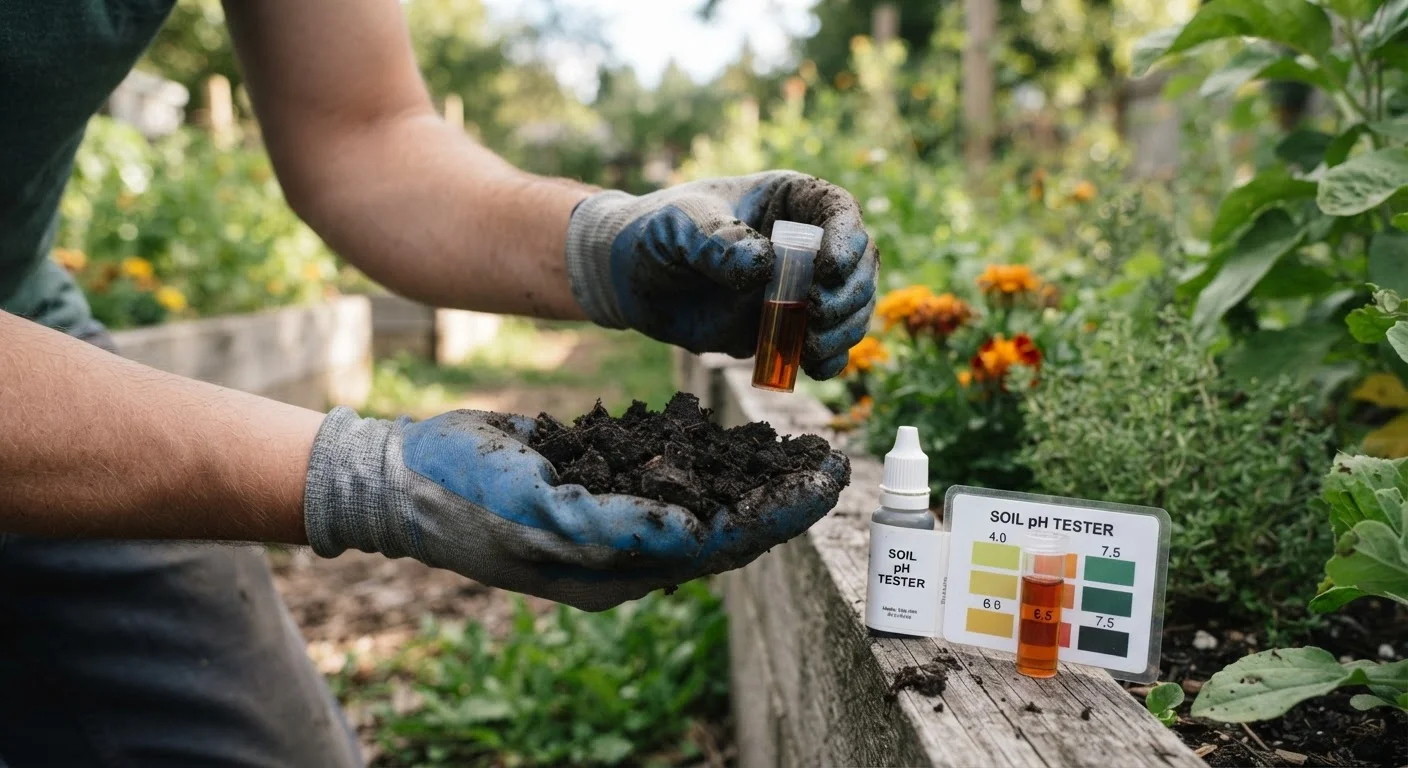
- Home test kits: Available at garden centers, these use a chemical solution or strips that change color based on pH. They're useful for a quick snapshot but may lack precision.
- Digital pH meters: Probes inserted directly into moist soil give an instant reading. Quality and accuracy vary widely, so look for well-reviewed instruments and calibrate according to the manufacturer's instructions.
- Cooperative extension lab tests: Many state university extension services offer inexpensive mail-in soil analysis. These are the most reliable, often testing for nutrient levels, organic matter, and recommended amendments alongside pH.
When collecting samples, take small scoops from several spots across your garden bed and mix them together before testing - a single spot can be misleading. Test at least once every two to three years, or any time plants show persistent unexplained stress.
If you're starting a new garden entirely, testing early is especially valuable. Our guide to starting a vegetable garden from scratch covers soil prep as part of the full setup process.
How to Adjust pH - and How to Do It Safely
Once you know your pH, correcting it is manageable - but patience is required. Soil chemistry changes slowly, and over-amending can create new problems.
Raising pH (Making Soil Less Acidic)
If your soil tests below 6.0 and you're not growing acid-loving plants, ground limestone (calcium carbonate) is the standard amendment. Dolomitic lime also adds magnesium, which is beneficial in magnesium-deficient soils. Apply in fall when possible so it has time to react before the next growing season. Follow product label rates and your test lab's specific recommendations - over-liming is a real risk.
Lowering pH (Making Soil Less Alkaline)
Soils above 7.5 are more challenging to correct, especially in naturally alkaline regions or areas with limestone bedrock. Elemental sulfur is the most commonly recommended amendment; soil bacteria convert it to sulfuric acid over time, gradually lowering pH. Acidifying fertilizers and sphagnum peat moss can help in mild cases. Results take months, and very alkaline soils may require ongoing management rather than a one-time fix.
Always retest after one full growing season before adding more amendments. Nutrient problems that persist after pH correction may have other causes - yellowing in lawns and garden plants can stem from watering issues or other deficiencies as well.
Start Small When Amending pH
It's tempting to add a large quantity of lime or sulfur to speed up correction, but over-amending can overshoot your target and create a new imbalance. Always follow the specific rates recommended by your soil test report, and plan for gradual adjustment over one to two seasons rather than a single dramatic application.
Plants with Specific pH Preferences
Not every plant wants the same conditions, and knowing your plants' preferences helps you either match your soil to them or choose plants that suit your existing soil.
| Plant Type | Preferred pH Range |
|---|---|
| Most vegetables | 6.0 - 6.8 |
| Turf grasses | 6.0 - 7.0 |
| Roses | 6.0 - 6.5 |
| Blueberries | 4.5 - 5.5 |
| Lavender | 6.5 - 7.5 |
| Azaleas & rhododendrons | 4.5 - 6.0 |
Container gardeners have a significant advantage here - you can tailor the growing medium for each plant type. See our container gardening guide for more on choosing the right soil mix for pots and planters.
Understanding pH also helps you interpret fertilizer choices. Organic and synthetic fertilizers can both shift soil pH over time with repeated use - something worth factoring into your long-term soil management. Our article on how fertilizers change your soil over time explores those differences in depth.
6.0-7.0
Optimal pH range for most garden plants
This range is widely cited by university extension services as where nutrient availability peaks for the majority of vegetables, grasses, and ornamentals.
~60%
U.S. soils that are naturally acidic
According to USDA soil science resources, a large portion of soils in the eastern and Pacific Northwest United States tend toward acidity due to rainfall patterns and native vegetation.
3-6 months
Time for lime to fully adjust soil pH
Ground limestone reacts with soil chemistry gradually; most extension recommendations suggest applying in fall to see results by the following spring planting season.
Frequently Asked Questions
You can use an inexpensive pH test kit available at most garden centers, which typically involves mixing a soil sample with water and a chemical indicator. Digital soil probes are another option, though accuracy varies by model. For the most reliable results, a mail-in test through your local cooperative extension service will also measure nutrient levels alongside pH.
Most vegetables grow well in soil with a pH between 6.0 and 6.8. Some crops, like blueberries, prefer more acidic conditions around 4.5 to 5.5, while others like asparagus tolerate slightly alkaline soil. Matching your soil's pH to your specific crops gives nutrients the best chance of reaching the plant.
Soil pH shifts gradually - typically over several months to a full growing season. Lime takes 3 to 6 months to fully react in soil, while sulfur can work a bit faster in warm, moist conditions. Testing again after one season helps you track progress before adding more amendments.
Yes, and it's often easier than in-ground beds because you control the growing medium entirely. Use a potting mix formulated for your plant type - acid-loving plants like azaleas have dedicated mixes - and test periodically since container soils can shift pH more quickly than garden soil.
Fertilizer adds nutrients to the soil, but an imbalanced pH can lock those nutrients into forms roots can't absorb. This is especially common with iron deficiency at high pH, causing yellowing between leaf veins (interveinal chlorosis). Testing and correcting pH is often the missing step after fertilizing.
Yes - heavy rainfall gradually leaches calcium and magnesium from soil, making it more acidic over time. This is common in humid, high-rainfall regions of the eastern United States. Regular testing every two to three years helps catch these natural shifts before they affect plant health.
The content on this site is provided for informational purposes only and should not be considered a substitute for professional advice. While we strive to provide accurate and up-to-date information, we make no guarantees regarding its completeness or accuracy. Always consult a qualified professional for advice specific to your circumstances before making any decisions.