

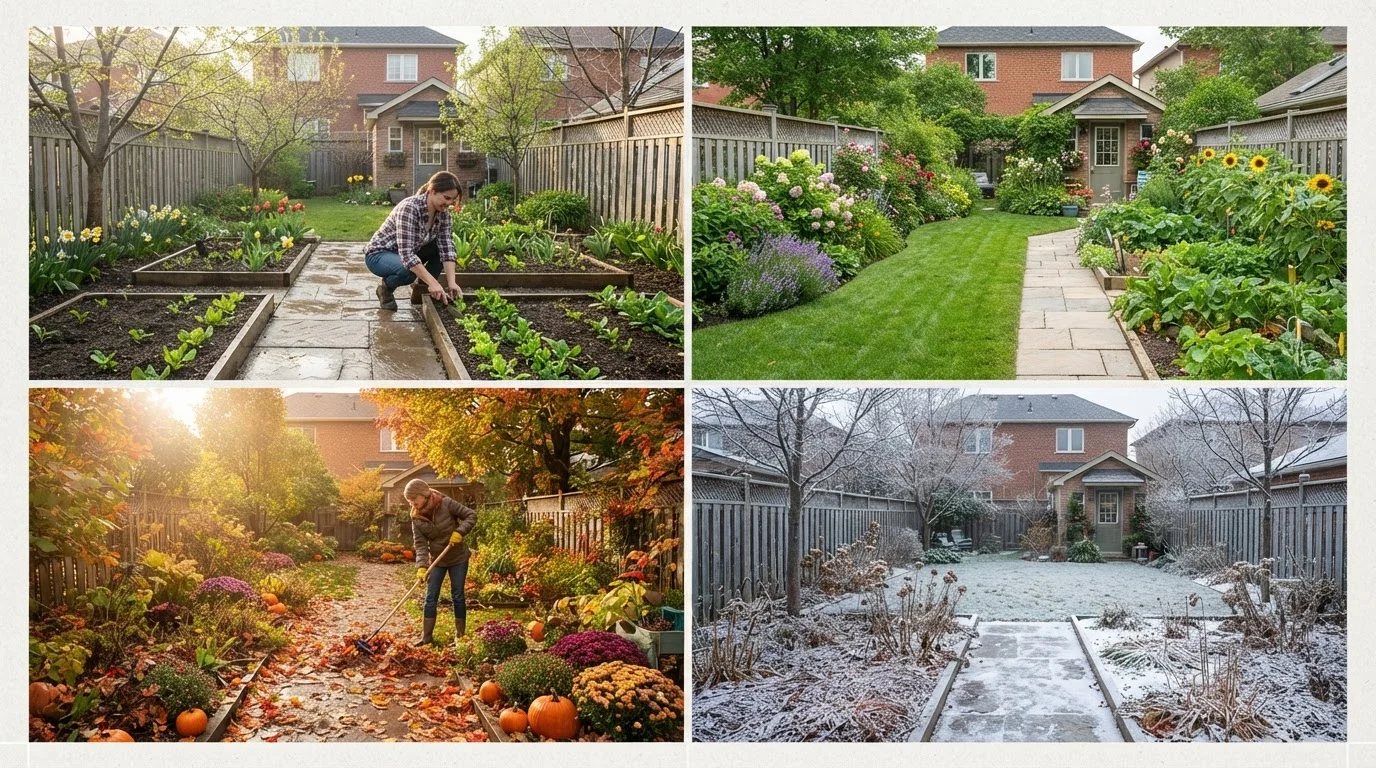
Why Seasonal Timing Matters
A yard doesn't respond to effort alone - it responds to effort applied at the right time. Working with your local climate and plant biology means smaller tasks done on schedule outperform larger projects done late or out of sequence. A lawn fertilized at the wrong growth stage, or perennials divided at the wrong time of year, can set back your garden rather than move it forward.
This guide walks through the core tasks for each season so you can build a realistic, year-round maintenance rhythm. Whether you're managing a modest patch of grass or a full mixed-bed garden, the same calendar logic applies. For broader property upkeep, your home's annual maintenance calendar can help you coordinate outdoor tasks with interior and structural maintenance.
~40%
Of U.S. household water used outdoors
According to the U.S. Environmental Protection Agency, nearly 40% of household water use in summer goes to lawns and gardens, much of it applied inefficiently.
1 inch
Weekly water needed by most established lawns
Turfgrass specialists generally recommend one inch of water per week, combining rainfall and irrigation, for cool- and warm-season grasses during active growth.
50-65°F
Soil temperature for cool-season grass germination
University extension programs identify this soil temperature range as optimal for seeding cool-season grasses such as tall fescue and Kentucky bluegrass.
Spring: Waking Up Your Yard
Spring is about assessment and preparation before the growing season peaks. Start by walking your yard after the last frost and noting areas of compaction, thatch buildup, bare spots, or winter damage. This inspection shapes everything else you do.
Soil and Lawn
- Test your soil pH every two to three years. Most grasses prefer a pH between 6.0 and 7.0. Lime raises pH; sulfur lowers it. County extension offices often offer inexpensive testing kits.
- Rake and dethatch once the ground is no longer saturated. Thatch - the matted layer of dead grass between soil and blades - blocks water and nutrients when it exceeds half an inch.
- Overseed bare patches when soil temperatures reach roughly 50-65°F for cool-season grasses (fescue, bluegrass) or 65-70°F for warm-season varieties (Bermuda, zoysia).
- Apply a balanced slow-release fertilizer after grass has started actively growing - not before, which can push weak, disease-prone growth.
Garden Beds
- Cut back dead perennial stems and remove winter mulch gradually as nighttime temperatures stabilize above freezing.
- Work compost into beds before planting, improving drainage in heavy clay soils and moisture retention in sandy ones.
- Plan your plant mix with care. Choosing between perennials and annuals has significant implications for both workload and cost over multiple seasons.
Don't fertilize a lawn that hasn't started actively growing in spring. Feeding dormant or barely-awake grass pushes leafy top growth at the expense of roots, leaving the lawn more vulnerable to summer stress.
Root development early in the season is what gives grass its heat and drought tolerance - premature nitrogen applications redirect energy away from this critical phase.
When overseeding in fall, keep the seeded area consistently moist for two to three weeks. Even a few hours of dry-out can kill germinating seeds before they establish.
Grass seed germination requires sustained surface moisture; newly sprouted seedlings have no established root system to draw from deeper soil layers.
Summer: Maintaining Momentum
Summer maintenance is primarily about sustaining what spring established - and avoiding common mistakes that stress plants during heat.
Watering Wisely
Most established lawns need about one inch of water per week, including rainfall. Water deeply and infrequently (two to three times per week rather than daily shallow sprinkles) to encourage roots to grow deeper, where soil retains more moisture during dry spells. Water in the early morning to minimize evaporation and reduce fungal disease risk.
Mowing Practices
- Never remove more than one-third of the grass blade in a single mowing. Scalping weakens roots and invites weed pressure.
- Raise mowing height by half an inch during heat waves - taller grass shades the soil and retains more moisture.
- Leave grass clippings on the lawn when possible. They return nitrogen to the soil as they break down.
Managing Weeds and Pests
Hand-pull or spot-treat weeds early before they set seed. For pest issues, correctly identify the problem before treating - not every insect in your yard is harmful, and broad-spectrum treatments can damage beneficial populations.
If you have limited outdoor space, containers on a patio can be a practical summer garden. Container gardening on a small patio or balcony covers how to choose the right soil, containers, and plants for success without a traditional yard.
Fall: Investing in Next Year
Fall is arguably the most impactful season for lawn health. The work you do from late August through November directly determines how quickly your yard bounces back the following spring.
Aeration and Overseeding
Core aeration - pulling small plugs of soil from the lawn - relieves compaction and opens pathways for water, oxygen, and nutrients to reach grass roots. For cool-season lawns, early fall is the ideal window for both aeration and overseeding, as soil is still warm and competition from weeds has declined. Fall lawn care tasks that pay off the following spring provides a detailed checklist for timing these steps correctly.
Fertilizing and Leaf Management
- Apply a fall-specific fertilizer (higher in potassium, lower in nitrogen) to strengthen root systems going into dormancy.
- Rake or mulch leaves before they mat - a thick layer of wet leaves can smother grass and encourage fungal growth.
Garden Bed Prep
- Cut back most spent perennials, but leave seed heads that provide winter bird forage or visual interest.
- Apply two to four inches of mulch over beds after the ground cools to moderate soil temperature swings and suppress early spring weeds.
- Dig up and store tender bulbs (dahlias, cannas) before hard frost in colder climates.
If you're weighing whether to reduce maintenance demands in the long run, native plants adapted to your local conditions can significantly lighten the seasonal workload.
Winter: Protecting and Planning
In most U.S. climates, winter means the lawn is dormant and the heavy lifting is done. But it's also the season when planning pays dividends.
Protection Tasks
- Avoid walking on frozen or frost-covered grass - the blades are brittle and foot traffic causes physical damage that shows up as brown streaks in spring.
- Wrap young or vulnerable shrubs loosely in burlap in areas with heavy snow or ice; avoid plastic, which traps moisture and heat.
- Check that mulch layers are intact over perennial beds after freeze-thaw cycles loosen them.
Tool and Equipment Maintenance
- Drain and store garden hoses and irrigation systems to prevent cracking.
- Clean, sharpen, and oil hand tools before storing them. Dull blades tear rather than cut, increasing plant stress and disease entry points.
- Have mower blades sharpened and small engines serviced before the spring rush.
Planning for Spring
Winter is the right time to review what worked and what didn't over the past year. Sketch out bed changes, research new plant varieties suited to your hardiness zone, and order seed catalogs. A thoughtful off-season plan means less scrambling when temperatures rise.
Building Your Year-Round Routine
No single season makes or breaks a yard - it's the accumulation of consistent, well-timed effort across the full calendar that produces lasting results. The good news for beginners is that once core habits are established (regular mowing, seasonal fertilizing, timely watering), the system largely maintains itself with incremental adjustments.
Start with what feels manageable. Even tackling two or three seasonal priorities per season - rather than every item on a comprehensive checklist - will produce noticeable improvement over a year or two. As your knowledge of your specific soil, microclimate, and plant varieties grows, you'll be better equipped to fine-tune the schedule.
For a broader view of keeping your entire property in good shape, home maintenance resources cover everything from roofing to drainage, complementing the outdoor work you're building here.
This article is intended as general educational guidance for homeowners and gardeners. Results vary based on local climate, soil type, grass variety, and individual site conditions. Consult your local cooperative extension office for region-specific recommendations.
The content on this site is provided for informational purposes only and should not be considered a substitute for professional advice. While we strive to provide accurate and up-to-date information, we make no guarantees regarding its completeness or accuracy. Always consult a qualified professional for advice specific to your circumstances before making any decisions.