

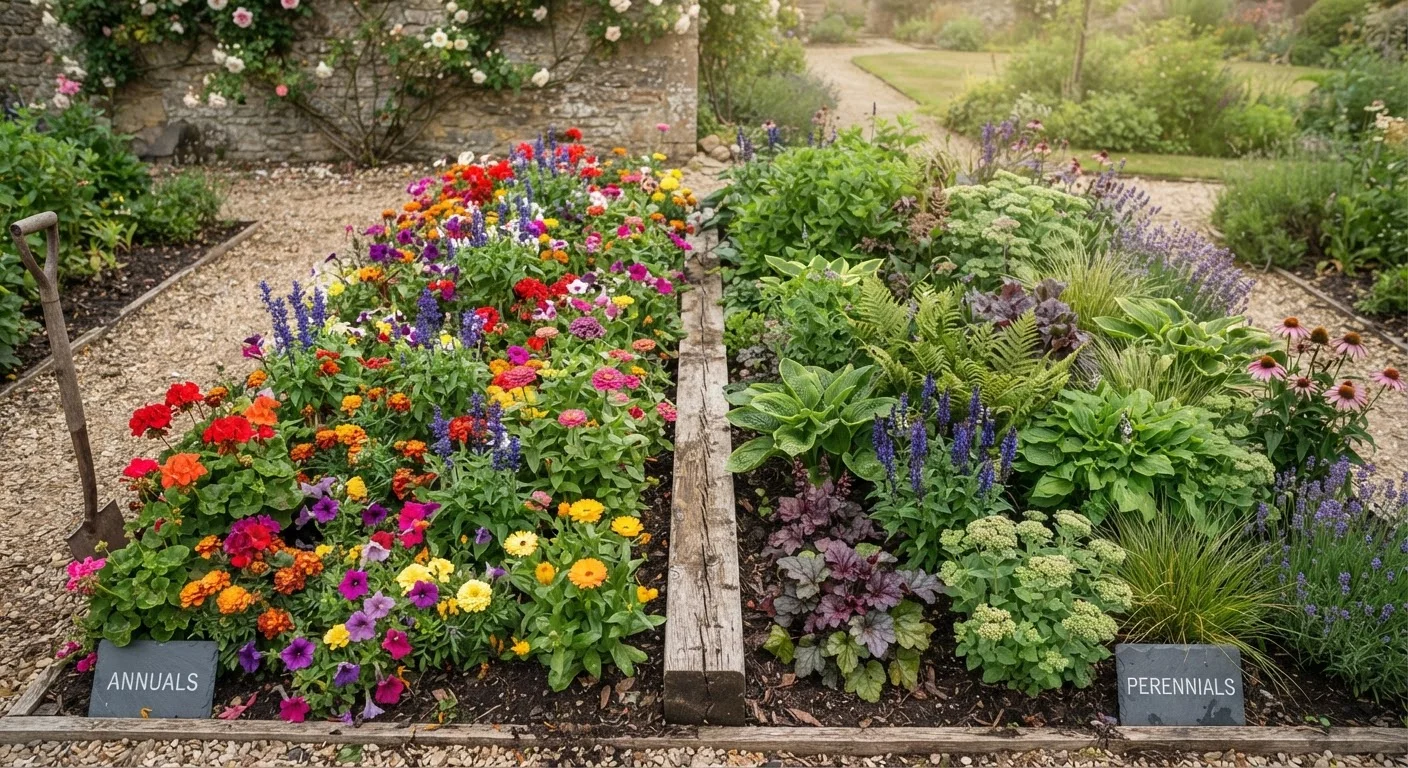
Option A
Perennials
The long-term investment that keeps coming back.
Best for: Gardeners who want a lower-maintenance foundation that regrows each spring without replanting.
Option B
Annuals
The flexible, season-long color workhorse.
Best for: Gardeners who want bold, continuous blooms and the freedom to change their garden's look each year.
What Actually Separates a Perennial from an Annual
The distinction is simpler than it sounds. Perennials are plants whose root systems survive winter and regenerate top growth each spring. The part you see above ground may die back in cold months, but the plant itself persists underground. Annuals complete their entire life cycle - germination, flowering, seed production, and death - within a single growing season. Once frost arrives, they're done.
A third category worth knowing is biennials, which take two years to complete their cycle, flowering in the second year. They're less common in home gardens but worth recognizing so you're not surprised when a plant doesn't bloom its first season.
One important nuance: a plant may be a true perennial in a warmer climate and treated as an annual in colder regions where it can't survive winter. Snapdragons and petunias, for example, are technically perennials in USDA hardiness zones 10-11, but most American gardeners grow them as annuals. Your local hardiness zone matters - check the USDA Plant Hardiness Zone Map to understand what will reliably overwinter where you live.
The Real Cost and Labor Differences
Perennials generally carry a higher per-plant price at the nursery. You might pay two to three times more for a perennial than a comparable annual. But that math flips over time: a perennial planted today may still be growing - and spreading - five or ten years from now. Many perennials also multiply, giving you divisions you can transplant to expand your garden for free.
Annuals require a fresh purchase every single season. Over several years, those cumulative costs add up significantly. However, annuals are easier to find in inexpensive six-packs or flats, making the per-season startup cost feel more accessible to new gardeners.
Labor follows a similar pattern. Perennials demand more work upfront - soil amendment, proper planting depth, and patience through the first year or two while they establish. The familiar gardening saying holds here: "Sleep, creep, leap" - perennials often look underwhelming in year one, grow slowly in year two, and finally perform impressively by year three. After establishment, most perennials need only seasonal cutback, division every few years, and routine feeding. See our year-round lawn and garden care guide for a full seasonal maintenance calendar.
Annuals, by contrast, need replanting every spring - which means bed preparation, planting, and more frequent fertilizing since they're pushing hard to bloom continuously all season. They reward that effort with nonstop color, but the workload resets every year.
| Criterion | Perennials | Annuals |
|---|---|---|
| Lifespan | Returns each year from roots | One growing season only |
| Upfront cost | Higher per plant | Lower per plant |
| Long-term cost | Lower - no annual repurchase | Higher - replant every spring |
| Bloom duration | Weeks per species | Planting through first frost |
| Annual labor | Lower after establishment | Higher - replanting each season |
| Design flexibility | Limited - plants are permanent | High - change every year |
| Climate dependence | Must match hardiness zone | Mostly zone-independent |
| Pollinator value | Often high, especially natives | Varies by species |
Design Strategy: Playing to Each Plant's Strengths
The most visually satisfying home gardens don't choose sides - they layer both types deliberately. A common approach is to use perennials as the structural backbone of a bed: reliable plants that define the shape and height of the planting year after year. Annuals then fill the gaps, especially during the windows when perennials aren't in bloom.
Perennials rarely bloom for more than a few weeks at a time. A garden planted exclusively with perennials can look spectacular in June but sparse by August if you haven't staggered bloom times across multiple species. Annuals solve this problem directly - they bloom from planting through frost with no seasonal gaps.
Color flexibility is another strong argument for annuals. If you want to try a new palette next year, you simply don't plant last year's choices again. With perennials, changing your mind means digging up established plants - a more disruptive process. If you're gardening in containers on a patio or balcony, annuals are often the more practical choice for that same reason. Our container gardening guide covers plant selection for smaller spaces in more detail.
3-5 years
Typical perennial payback period vs. annuals
Horticultural educators generally estimate that perennials offset their higher upfront cost within three to five growing seasons compared to annual repurchasing.
~2-4 weeks
Average bloom window per perennial species
Most perennial flowers have a relatively short peak bloom period, which is why staggering species with different bloom times is a core garden design strategy.
60%+
Of home gardeners mix both plant types
National gardening surveys consistently find that the majority of home gardeners use a combination of annuals and perennials rather than committing exclusively to one type.
If sustainability and reduced inputs appeal to you, consider how native perennials fit into this picture. Many are drought-tolerant once established and support local pollinators across seasons. Our article on native plants and lower-maintenance yards explores that angle in depth.
Building a Planting Plan That Balances Both
A practical starting point for beginner and intermediate gardeners is a roughly 60/40 split - majority perennials for structure and long-term value, with annuals filling color gaps and high-visibility spots like entryways or containers. That ratio isn't rigid; adjust it based on your budget, how much replanting effort you're willing to absorb each spring, and how often you want design flexibility.
When selecting perennials, stagger bloom times so something is always flowering. Choose early-season bloomers like coneflowers or black-eyed Susans alongside mid- and late-season varieties so your garden has interest from spring through fall. Then use annuals - marigolds, zinnias, impatiens - to fill the gaps and add density.
Before purchasing anything, assess your site conditions: sun exposure, soil drainage, and moisture levels. Even the most reliable perennial will struggle if planted in the wrong conditions. If you're starting a new bed from scratch, soil preparation is arguably more important than plant selection. A guide to starting a garden from scratch walks through site prep fundamentals that apply to ornamental beds as well.
Finally, don't overlook soil health as a long-term factor. Perennials especially benefit from consistent organic matter in the soil. Understanding how you feed your garden over time - whether with organic or synthetic inputs - shapes how well your perennials establish. See our comparison of organic vs. synthetic fertilizers for a balanced look at what each does to your soil over time.
Hardiness Zone Matters More Than You Think
A perennial labeled as such at your local nursery may not survive winter in your specific region. Always verify that a perennial is rated for your USDA hardiness zone before purchasing. Plants on the edge of their cold hardiness range may survive mild winters but fail in an unusually harsh one. When in doubt, ask a nursery professional familiar with your local climate.
The content on this site is provided for informational purposes only and should not be considered a substitute for professional advice. While we strive to provide accurate and up-to-date information, we make no guarantees regarding its completeness or accuracy. Always consult a qualified professional for advice specific to your circumstances before making any decisions.