

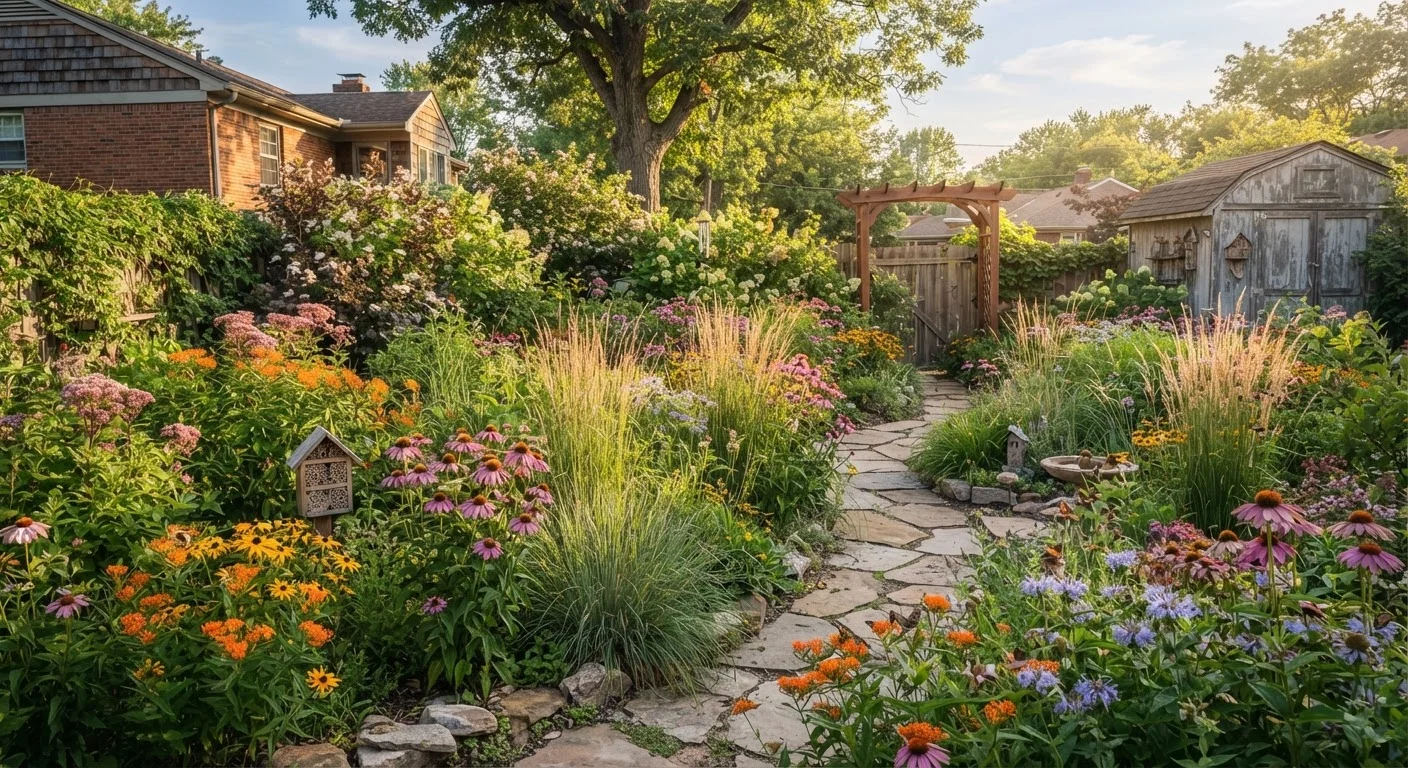
Our Verdict
Native plants offer real, measurable benefits for homeowners willing to invest time upfront in planning and establishment. Once rooted, they generally demand less water, fewer inputs, and less seasonal intervention than conventional plantings. The trade-offs - a slower start, a limited retail selection, and a learning curve in sourcing - are manageable with the right expectations.
Homeowners who want a lower-maintenance yard over the long term, support local wildlife, and are willing to do some upfront research into their specific region's native species.
What Makes a Plant 'Native' - and Why It Matters
A native plant is one that evolved in a specific region over thousands of years without human introduction. It developed alongside local soils, seasonal rainfall patterns, temperature swings, and the insects and birds of that ecosystem. This is fundamentally different from a plant that simply grows well in your climate - plenty of non-native species do that, sometimes aggressively.
The distinction matters because co-evolution creates interdependence. Native oaks, for example, support hundreds of caterpillar species that in turn feed nesting birds. Non-native ornamentals often don't participate in that food web at all, even when they look healthy and bloom reliably. Understanding this helps explain why gardeners increasingly see native plants not just as low-maintenance choices, but as an ecologically meaningful one.
If you're building on broader gardening knowledge, the year-round lawn and garden care overview is a helpful companion to think about how native plantings fit across seasonal maintenance cycles.
The Real Advantages of Going Native
The lower-maintenance reputation of native plants is largely earned - but it comes with a time condition attached. Here's what the evidence and practical experience of gardeners consistently support:
Reduced watering once plants are established
Native plants are adapted to local precipitation patterns, so they typically require little to no supplemental irrigation after the first one to two seasons. This can translate to meaningful water savings, particularly in drought-prone regions.
Little or no fertilizer needed
Because native plants evolved in local soil conditions, they generally don't need the nutrient amendments that non-native ornamentals often require. This simplifies maintenance and reduces runoff of synthetic fertilizers into waterways.
Greater natural pest and disease resistance
Long co-evolution with local insects and pathogens has given native plants built-in tolerance mechanisms. While they're not immune to problems, they tend to recover more readily without pesticide intervention.
Strong support for local pollinators and wildlife
Native plants often provide the specific pollen, nectar, and larval host resources that local bees, butterflies, and birds depend on. Non-natives, even when flowering, frequently don't meet those specialized needs.
Long-term cost savings on inputs and labor
After the establishment period, native gardens typically need less mowing, watering, fertilizing, and pest management - reducing both time spent and money spent on products and professional services.
70%
Of outdoor residential water used on landscaping
The U.S. Environmental Protection Agency estimates that landscape irrigation accounts for roughly 30-70% of household water use depending on region and season, much of which can be reduced with climate-adapted planting.
4x
More native bee species supported vs. non-native plants
Research from the Xerces Society and related pollinator studies consistently shows that native flowering plants support significantly higher native bee diversity than exotic ornamentals in comparable garden settings.
Native plants also pair well with other sustainable practices. If you're amending soil around new plantings, home composting is a straightforward way to improve soil structure without synthetic inputs.
Honest Trade-Offs Worth Knowing Before You Plant
No approach to gardening is without its complications, and native plantings are no exception. These are the challenges most commonly underestimated by beginners:
Establishment period demands consistent attention
The first growing season - sometimes two - requires regular watering and monitoring while roots develop. New gardeners sometimes expect immediate self-sufficiency and are caught off guard by this phase.
True regional natives can be hard to find
Many garden centers carry a limited and inconsistent selection of genuine regional natives. Sourcing plants from specialty nurseries or native plant society sales may require extra planning and lead time.
Risk of mislabeling and misidentification at retail
Plants are sometimes sold as 'native' when they are actually cultivated varieties (nativars) or regionally non-native species. Nativars may offer reduced ecological value compared to straight native species.
Aesthetic expectations may take adjustment
Native plantings often look wilder and less manicured than traditional ornamental gardens. This can create friction in neighborhoods with formal landscaping norms or homeowner association requirements.
Some natives spread aggressively
Certain native species - particularly some grasses and rhizomatous plants - can colonize more space than intended. Matching plants to your site conditions and available space is essential to avoid management headaches.
Learning curve for proper plant selection
Choosing the right native for your specific conditions (sun, soil drainage, moisture) requires more research than simply buying whatever looks good at the nursery. Mismatched plants underperform even when technically native to your region.
HOA and Local Ordinance Considerations
Some homeowner associations and municipalities have landscaping rules that may affect how - or whether - you can plant a native garden, particularly if it involves replacing turf or allowing plants to grow in a less manicured style. Before making significant changes to your yard, check your HOA guidelines and local ordinances. Many areas have been updating these rules to accommodate or even encourage native plantings, but requirements vary widely. When in doubt, a conversation with your HOA board or local planning office can clarify what's permitted.
If you're weighing how natives fit into a broader planting strategy, the perennials vs. annuals guide explores how plant lifespan affects your workload and budget year after year - relevant because most natives are perennials.
How to Start: Practical First Steps
You don't need to tear out your entire yard to benefit from native plants. Most experienced gardeners recommend starting with a defined area - a single bed, a strip along a fence, or a sunny patch that currently struggles with conventional plants.
- Identify your ecoregion. Native plants are regional, not national. What grows natively in coastal Georgia is different from what belongs in the Colorado foothills. Many state cooperative extension services and native plant societies publish region-specific plant lists at no cost.
- Source carefully. Look for plants propagated from local genotypes, ideally through native plant nurseries, native plant society sales, or reputable extension programs. Avoid plants labeled only as 'naturalized' or 'adapted,' which may not be true natives.
- Plan for establishment. Water new native plantings regularly during their first growing season, tapering off as roots develop. Mulching around plants helps retain moisture and suppress weeds during this critical window.
- Resist over-tidying. Many native plants provide winter habitat and food through seed heads and dried stems. Leaving some of this standing until late spring benefits overwintering insects - a practice increasingly recommended by wildlife ecologists.
For gardeners also interested in growing food alongside native ornamentals, the vegetable garden beginner's guide covers site selection and soil prep that applies equally well to mixed native-and-edible planting schemes.
The content on this site is provided for informational purposes only and should not be considered a substitute for professional advice. While we strive to provide accurate and up-to-date information, we make no guarantees regarding its completeness or accuracy. Always consult a qualified professional for advice specific to your circumstances before making any decisions.