

Our Verdict
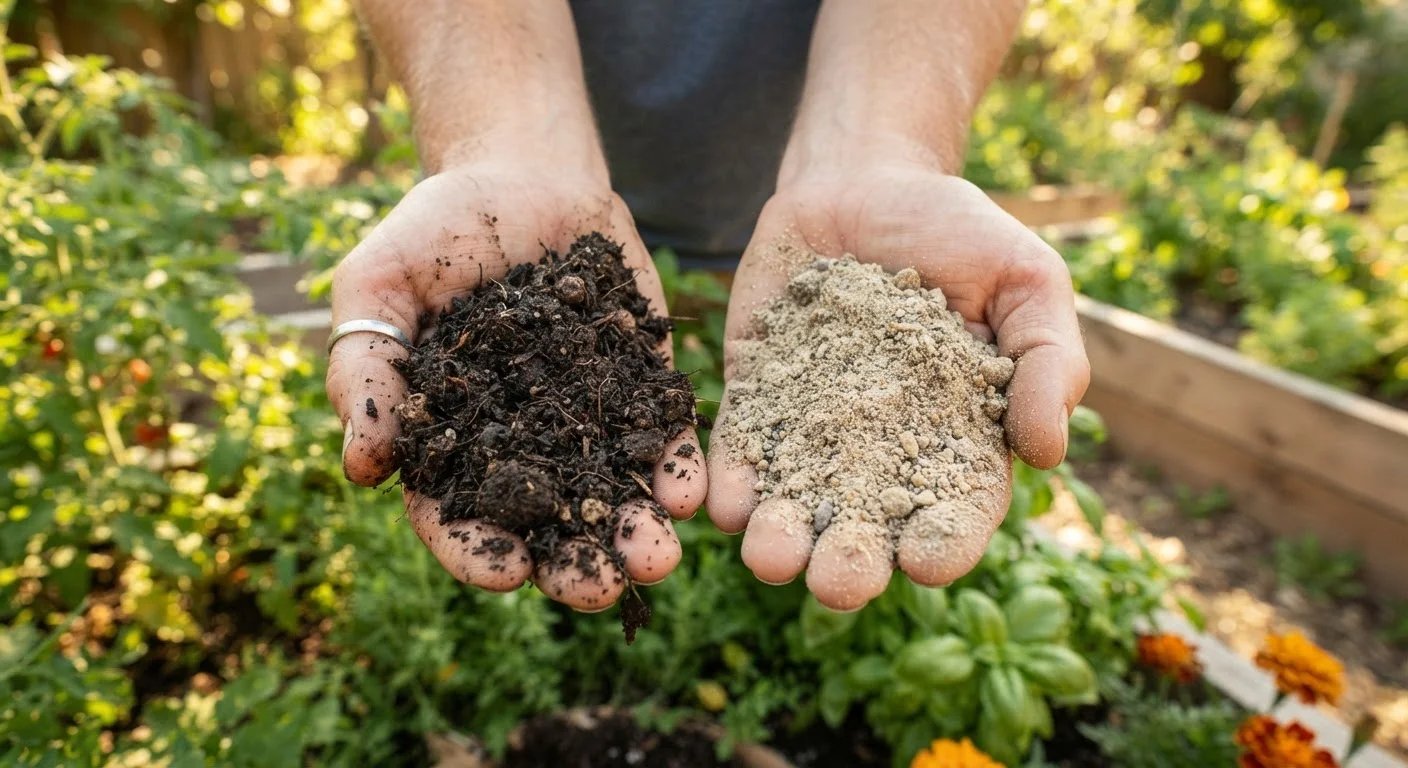
Neither fertilizer type is universally superior - they serve different purposes and produce different soil outcomes. Synthetic fertilizers solve immediate nutrient deficiencies fast, while organic fertilizers invest in the long-term biological health of your soil. Many experienced gardeners use elements of both approaches depending on the season and the plant.
| Best for | Recommended |
|---|---|
| Gardeners who need fast results for struggling plants | Synthetic fertilizer |
| Those building long-term soil health and garden sustainability | Organic fertilizer |
| Vegetable gardeners prioritizing soil biology and earthworm activity | Organic fertilizer |
| Lawn owners dealing with specific, measurable nutrient deficiencies | Synthetic fertilizer |
How Each Fertilizer Type Works in the Soil
Fertilizers feed plants by supplying three primary nutrients: nitrogen (N), phosphorus (P), and potassium (K). The key difference between organic and synthetic types isn't what nutrients they contain - it's how those nutrients become available to plant roots.
Synthetic fertilizers are manufactured from chemically processed mineral sources. Their nutrients are already in a water-soluble form that plants can absorb almost immediately after application. This is why you often see a lawn green up within days of applying a synthetic product.
Organic fertilizers - made from materials like compost, bone meal, blood meal, kelp, or manure - must first be broken down by soil microorganisms before plants can use them. This process is slower, but it feeds the entire soil ecosystem, not just the plant.
Understanding this distinction helps explain why each type has a different long-term effect on what's actually happening underground. For a broader look at how soil conditions affect plant health, see our guide on soil pH and nutrient availability.
| Organic Fertilizers | Synthetic Fertilizers | |
|---|---|---|
| Nutrient release speed | Slow (weeks to months) | Fast (days) |
| Soil biology impact | Feeds and supports microbial life | Minimal direct benefit to microbes |
| Soil structure over time | Improves aggregation and water retention | Little to no structural improvement |
| Runoff risk | Generally lower | Higher, especially with nitrogen |
| Nutrient precision | Variable - depends on source material | Predictable, measurable ratios |
| Cost | Varies; homemade compost is low-cost | Often lower per application |
| Best use case | Long-term soil health, routine feeding | Correcting acute deficiencies quickly |
What Happens to Your Soil Over Time
The cumulative effect of fertilizer choices shows up most clearly after several seasons of consistent use.
With Repeated Synthetic Use
Heavy reliance on synthetic fertilizers over many years has been associated with a gradual decline in soil organic matter. Because synthetic nutrients bypass the need for microbial decomposition, populations of beneficial bacteria, fungi, and earthworms may decline when organic inputs aren't added separately. Compaction can become more pronounced, and the soil's ability to retain water and buffer against pH swings may weaken.
This doesn't mean synthetic fertilizers are harmful in moderate or occasional use - but leaning on them exclusively while skipping compost or mulch tends to work against soil structure over time.
With Consistent Organic Use
Organic materials decompose into humus - a stable form of organic matter that improves soil texture, water retention, and the exchange of nutrients. Over several seasons, soils amended with organic fertilizers or compost typically develop better aggregation (the crumbly, open structure that roots love), greater microbial diversity, and higher earthworm populations.
The tradeoff is timing. Organic fertilizers may not correct a severe nutrient deficiency quickly enough to save a struggling plant mid-season.
Start With a Soil Test Before Fertilizing
Applying fertilizer without knowing your soil's current nutrient levels is a common and easily avoidable mistake. A soil test - available through many university extension programs and garden centers - tells you exactly what's lacking and in what amount. This prevents over-application, saves money, and protects nearby waterways from unnecessary runoff. Testing every two to three years is a reasonable habit for most home gardeners.
Nutrient Runoff and Environmental Considerations
Because synthetic fertilizers are water-soluble, excess nutrients - particularly nitrogen - can wash off during rain or irrigation and enter waterways. This contributes to a process called eutrophication, where excess nutrients cause algae blooms that deplete oxygen in lakes and streams.
Organic fertilizers release nutrients more gradually, which generally reduces the risk of runoff. However, they are not entirely without environmental risk - improperly applied manure, for example, can also introduce pathogens or excess phosphorus into nearby water.
Pairing either fertilizer type with a layer of mulch helps slow nutrient loss and protect soil between applications. Our article on garden mulch types and uses explains how to choose the right mulch for your situation.
Choosing the Right Approach for Your Garden
There's no single correct answer - your goals, budget, and garden type all matter. A few practical guidelines can help:
- Test your soil first. A basic soil test reveals which nutrients are actually deficient. Applying fertilizer without this information is guesswork. Many cooperative extension offices offer low-cost testing.
- Match the tool to the problem. If a plant is yellowing rapidly from nitrogen deficiency, a fast-acting synthetic source can help bridge the gap. For routine seasonal feeding, organic options build more durable results.
- Combine approaches when it makes sense. Many experienced gardeners use organic matter as a baseline (compost, aged manure) and reach for synthetic fertilizers only when a specific, confirmed deficiency calls for it.
- Consider your plants. Long-lived perennials and vegetable beds often benefit more from the soil-building effects of organic inputs. A comparison of perennials and annuals can help clarify how plant type shapes your fertilizer strategy.
For gardeners building a year-round routine, our seasonal lawn and garden care overview shows when fertilizing fits into the broader calendar of outdoor maintenance.
The content on this site is provided for informational purposes only and should not be considered a substitute for professional advice. While we strive to provide accurate and up-to-date information, we make no guarantees regarding its completeness or accuracy. Always consult a qualified professional for advice specific to your circumstances before making any decisions.