

Why Homeowners Need a Dedicated Repair Fund
Owning a home means accepting that virtually every system and surface has an expiration date. Roofs last 20-30 years. Water heaters average 8-12 years. HVAC systems typically run 15-20 years before major service is needed. These aren't surprises - they're scheduled realities that homeowners can plan for.
A home maintenance reserve fund treats your property the way smart businesses treat infrastructure: as a depreciating asset that requires ongoing investment to stay functional. Without a dedicated reserve, even mid-size repairs can force homeowners to carry high-interest debt or defer the work entirely. Deferred maintenance rarely gets cheaper - small problems left unaddressed can become costly structural issues.
The reserve fund concept also differs meaningfully from a general emergency fund. An emergency fund is designed for sudden, unpredictable life disruptions - job loss, medical bills, a car accident. A maintenance reserve is for the foreseeable: the furnace that's been running 18 years, the gutters pulling away from the fascia, the deck boards starting to splinter.
1%-2%
Recommended annual savings rate by home value
This widely cited guideline is commonly referenced by personal finance educators and housing organizations as a starting baseline for homeowners.
$3,000+
Average annual home maintenance spending, U.S. homeowners
Consumer expenditure data consistently shows homeowners spend several thousand dollars per year on maintenance and repairs, with significant variation by home age and size.
8-12 years
Typical water heater lifespan
Water heaters are one of the most frequently replaced home systems; manufacturers and plumbing trade groups commonly cite this lifespan range for tank-style units.
What the Fund Typically Covers
A well-funded reserve can absorb costs across several major home systems and exterior components. Here's how the main categories break down:
- Roofing: Repairs to flashing, missing shingles, or sealants are common. Full replacement is infrequent but expensive. Regular roof inspections help catch minor damage before it escalates.
- HVAC systems: Annual servicing, filter replacements, and eventual unit replacement for both heating and cooling equipment.
- Plumbing: Pipe repairs, water heater replacement, fixture upgrades, and drain maintenance.
- Electrical: Panel inspections, outlet replacements, and wiring updates - many of which require a licensed electrician.
- Exterior surfaces: Painting, siding repair, caulking around windows and doors, and driveway sealing.
- Interior systems: Appliance repair or replacement, flooring refinishing, and door or window hardware.
The fund isn't meant for cosmetic renovations or lifestyle upgrades - those belong in a separate savings goal. A sinking fund approach can help you manage multiple saving targets at once without blending them together.
Keep Your Reserve Fund Separate
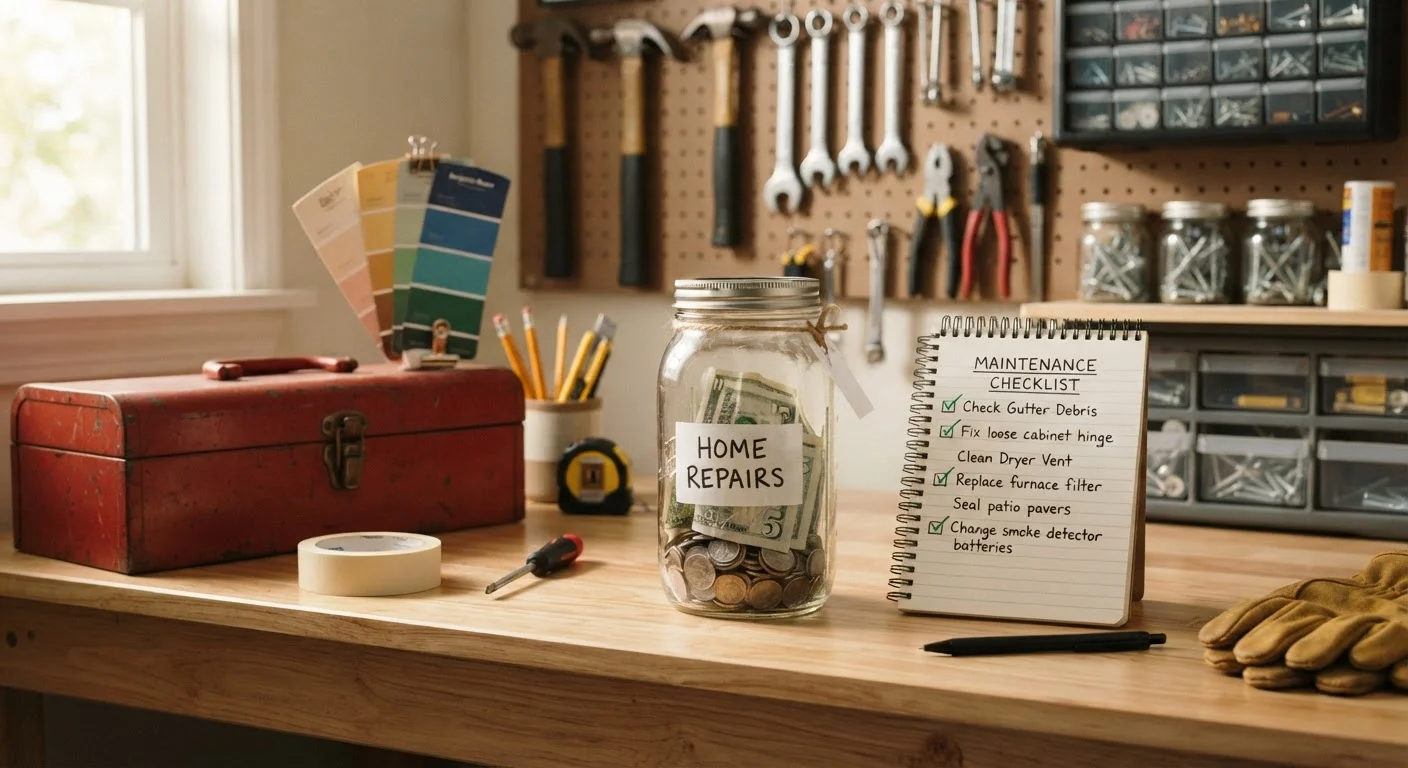
Store your maintenance reserve in a dedicated savings account, separate from your emergency fund and everyday checking. Mixing accounts makes it too easy to spend repair money on unrelated expenses. Labeling the account clearly - such as 'Home Repairs' - reinforces its purpose every time you log in.
How to Size and Build Your Reserve
The most commonly cited guideline is to save 1%-2% of your home's purchase price per year. A home valued at $250,000 suggests a $2,500-$5,000 annual contribution. Some planners prefer calculating by square footage - roughly $1 per square foot annually - which can be more representative for very large or small homes.
Several factors should push your contributions toward the higher end of any range:
- The home is more than 20 years old
- Major systems are approaching the end of their expected lifespan
- The climate includes harsh winters, high humidity, or frequent storms
- The property has a large footprint, pool, or complex landscaping
The most practical approach is to contribute monthly - dividing your annual target into 12 equal deposits into a dedicated savings account. This prevents the psychological friction of large, infrequent transfers and keeps the fund growing steadily. Following a month-by-month maintenance calendar can also reveal which seasons tend to generate the most repair expenses, helping you anticipate draw-downs.
Knowing when to handle a repair yourself versus when to hire a professional also affects how far your reserve stretches. DIY-appropriate tasks - caulking, painting, minor patching - keep costs lower. Licensed work for electrical, gas, or structural issues is non-negotiable for safety and code compliance.
Frequently Asked Questions
A widely cited rule of thumb is 1%-2% of your home's purchase price per year. A home purchased at $300,000 would suggest setting aside $3,000-$6,000 annually. Older homes, larger properties, and those in severe climates may need contributions at the higher end of that range.
No - they serve different purposes. An emergency fund covers sudden, unpredictable life events like job loss or a medical crisis. A maintenance reserve fund anticipates the routine, foreseeable costs of owning a home. Many financial planners recommend maintaining both separately.
Roofing, HVAC systems, plumbing, and electrical panels tend to be the most expensive major replacements. Foundation repairs and siding or window replacement can also be significant. These systems all have finite lifespans, making them ideal targets for reserve fund planning.
Yes - money from a reserve fund can pay for materials, tool rentals, or permits even when you're doing the labor yourself. Just be honest about which tasks are safe to DIY and which require a licensed professional to protect your home and comply with local codes.
A dedicated savings account - separate from your checking and emergency fund - is a practical choice. High-yield savings accounts may offer modest growth while keeping the money accessible when repairs arise.
Yes, though the contribution level may start lower. Newer homes have systems and materials under warranty, but those warranties expire and components still wear over time. Building the habit and the balance early means you're prepared when major expenses eventually arrive.
The content on this site is provided for informational purposes only and should not be considered a substitute for professional advice. While we strive to provide accurate and up-to-date information, we make no guarantees regarding its completeness or accuracy. Always consult a qualified professional for advice specific to your circumstances before making any decisions.