

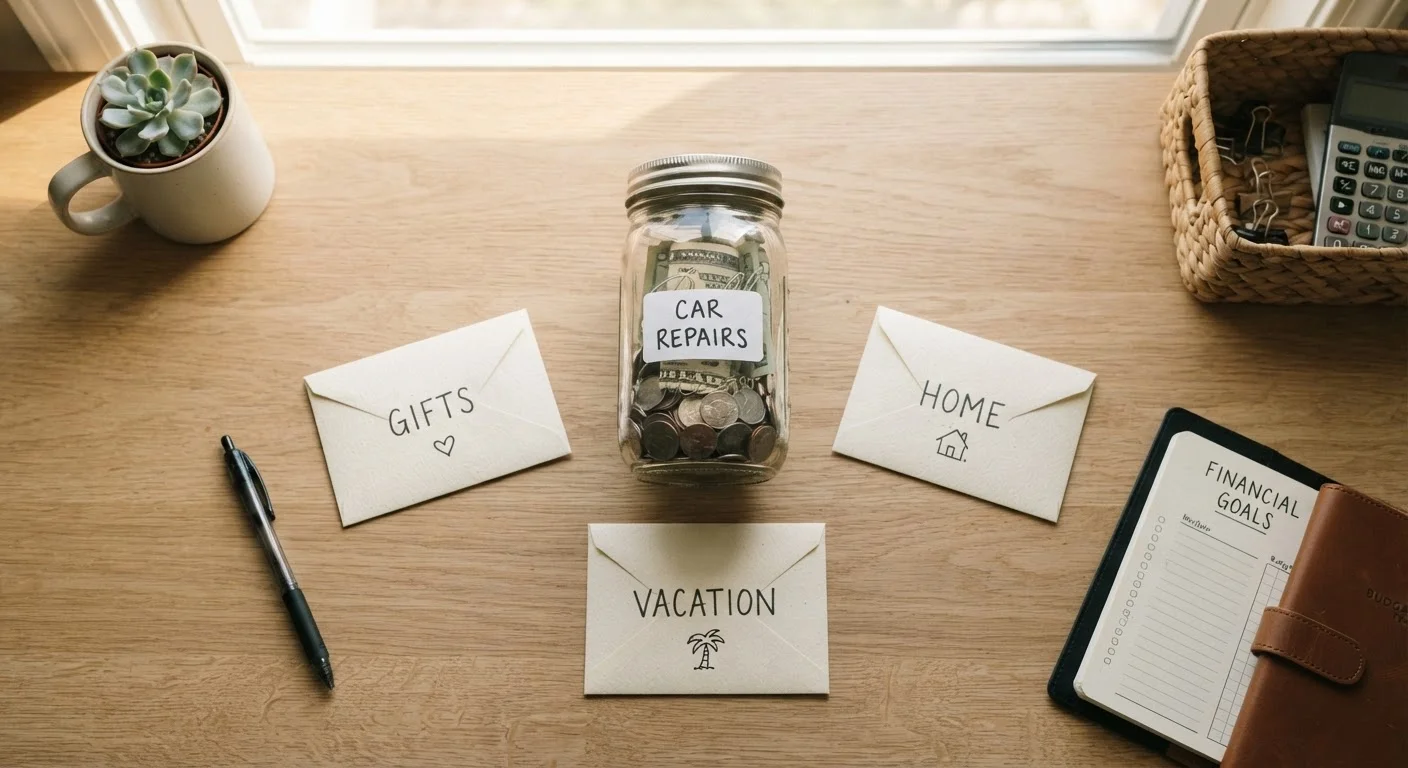
Why Irregular Expenses Break Most Budgets
Most budget failures aren't caused by overspending on daily habits. They happen when a predictable but infrequent bill arrives and there's nothing set aside to cover it. Car registration, holiday shopping, annual subscriptions, back-to-school supplies - these expenses are entirely foreseeable, yet they regularly catch households off guard.
If you've ever wondered why a budget collapses early, irregular expenses are often the culprit. They don't appear in a typical monthly spending review, so they feel like surprises even when they're not. A sinking fund solves this by converting future lump sums into small, predictable monthly contributions that fit naturally into your budget.
How a Sinking Fund Works
The mechanics are straightforward. Identify an upcoming expense, estimate its total cost, decide when you'll need the money, and divide by the number of months remaining. That result is your monthly contribution.
For example: if you expect to spend $600 on holiday gifts and you have 10 months to prepare, setting aside $60 per month gets you there without borrowing or stress. The same logic applies to a $1,200 car maintenance budget - $100 per month across 12 months funds it completely.
~$1,500
Average annual car maintenance cost per vehicle
Industry estimates from automotive research organizations suggest most drivers spend between $1,000 and $2,000 annually on routine maintenance and minor repairs.
$932
Average American holiday spending per person
The National Retail Federation has consistently reported average holiday spending in this range in recent years, underscoring why a dedicated savings fund matters.
1 in 3
Adults who cannot cover a $400 unexpected expense
Federal Reserve surveys have found that a significant share of U.S. adults would struggle to cover a modest unplanned expense without borrowing, highlighting the gap that sinking funds help address.
Once you've calculated the monthly amount, treat it like any fixed bill. Transfer it to a designated savings account on payday so it never competes with your discretionary spending. If your bank allows sub-accounts or savings buckets, use separate labels for each fund so balances stay clear.
This approach integrates naturally with a broader budgeting system. The monthly budget setup checklist is a useful companion for building sinking fund contributions into your spending plan from the start of each month.
Sinking Funds vs. Emergency Funds: A Critical Distinction
These two tools are often confused, but they serve entirely different roles. A sinking fund is for expenses you know are coming. An emergency fund is a financial cushion for events you cannot predict - a sudden job loss, an unexpected medical bill, or an appliance failure with no warning.
Raiding your emergency fund to cover a car registration you knew was coming in April is a common mistake - and it leaves you exposed when a genuine emergency strikes. Learn more about sizing your safety net in our overview of the emergency fund.
Label Each Fund Clearly
When setting up savings sub-accounts, use specific labels like 'Car Registration - April' rather than generic names like 'Savings 2.' Clear labels make it easier to track progress and reduce the temptation to dip into the wrong fund. Many online banks and credit unions support named sub-accounts at no extra cost.
Building both types of savings simultaneously is possible. The article on structuring a budget around savings and debt repayment offers a practical framework for allocating limited income across competing financial priorities.
Common Sinking Fund Categories
Any expense that is irregular but foreseeable is a good candidate. Common categories include:
- Vehicle costs: Registration, tires, oil changes, and general repairs. Drivers who budget proactively for vehicle maintenance avoid the financial shock that comes with a single large repair bill.
- Home maintenance: HVAC servicing, gutter cleaning, appliance replacement.
- Annual subscriptions and memberships: Streaming bundles, gym memberships, software licenses.
- Holiday and gift spending: Christmas, birthdays, weddings, and other planned celebrations.
- Medical and dental costs: Deductibles, elective procedures, glasses or contacts.
- Travel: A dedicated vacation fund prevents trips from going on a credit card.
Start with one or two categories where you've been caught off guard in the past. As the habit becomes routine, you can layer in additional funds without disrupting the rest of your budget.
Getting Started: A Simple First Step
If you're new to structured budgeting, begin with the core budgeting concepts before adding sinking funds to the mix. Once you understand your income and fixed expenses, you'll have a clearer picture of how much you can realistically direct toward future costs each month.
From there, list every irregular expense you faced in the past 12 months - or expect in the next 12. Estimate each cost, divide by months remaining, and add those line items to your monthly budget. Open a savings account (or use sub-accounts) to keep the money separate, and automate the transfer so it happens without a decision each month.
Sinking funds won't eliminate every financial challenge, but they reliably turn irregular expenses from emergencies into non-events. That shift in experience - from financial shock to calm preparation - is one of the most immediate benefits of structured budgeting.
This article is for general informational and educational purposes only and does not constitute personalized financial advice. Consult a qualified financial professional for guidance specific to your situation.
Frequently Asked Questions
An emergency fund covers unexpected, unplanned events - like a sudden job loss or medical bill. A sinking fund covers costs you know are coming, such as annual car registration or holiday gifts. Both are important, and they serve different purposes in a healthy budget.
There is no fixed rule, but most people find three to six manageable. Start with your most predictable and high-cost irregular expenses, such as car maintenance or home repairs, and add more funds as your budget stabilizes.
A separate savings account - or sub-accounts if your bank allows them - works well because the money stays distinct from your everyday checking balance. Look for an account with no monthly fees; interest earned is a bonus but not the primary concern.
Keep the surplus in the fund to reduce what you need to save next cycle, or reallocate it toward another sinking fund or savings goal. Unspent balances are never a problem - they simply reduce future pressure.
Yes. Even $10-$20 a month directed toward a specific future expense reduces how much you'd need to cover it in a single payment. The key is starting early so small contributions have time to accumulate.
No special account is required - a basic savings account works. What matters is that the money is separated from your spending money so it isn't accidentally used before the intended expense arrives.
The content on this site is provided for informational purposes only and should not be considered a substitute for professional advice. While we strive to provide accurate and up-to-date information, we make no guarantees regarding its completeness or accuracy. Always consult a qualified professional for advice specific to your circumstances before making any decisions.