

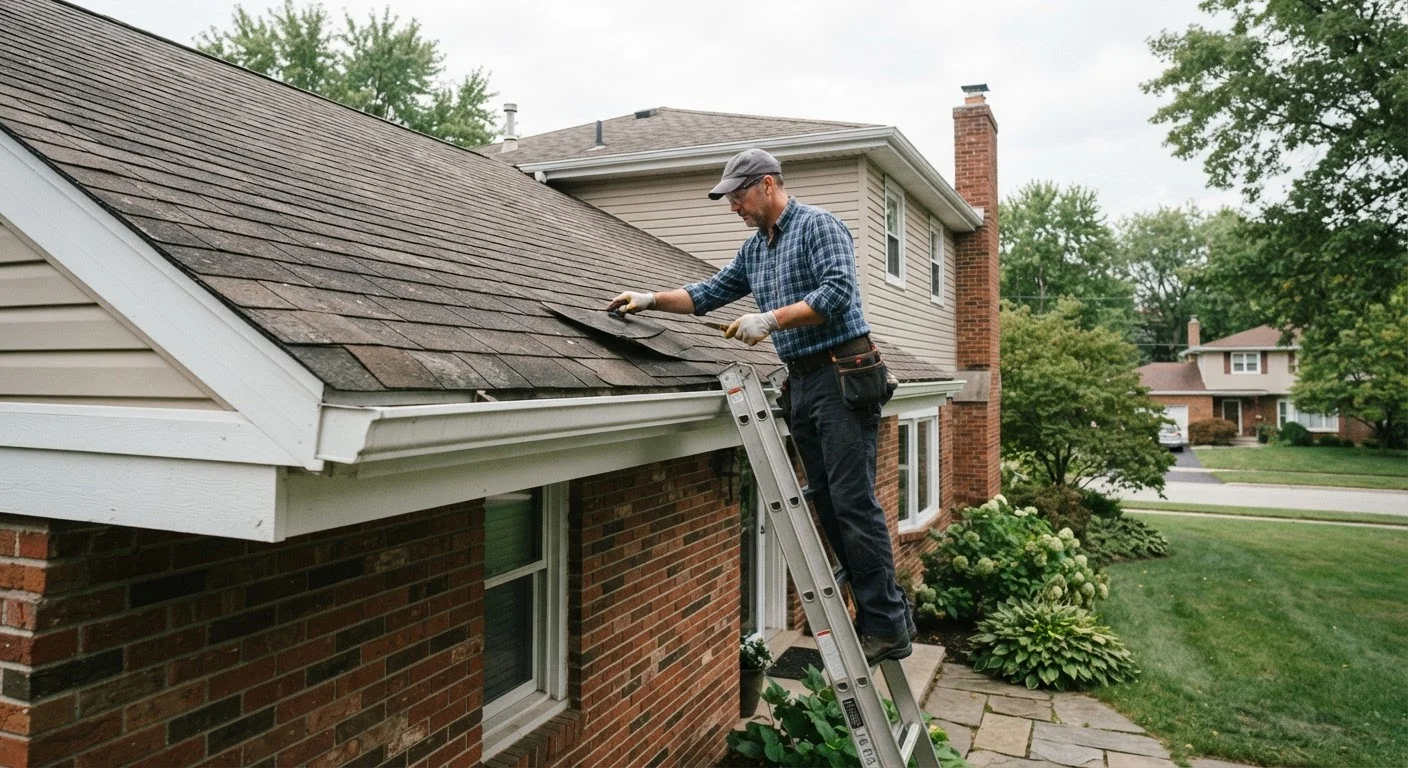
Why Routine Roof Inspections Matter
Your roof is one of the most expensive components of your home to replace, yet it's also one of the least frequently checked. A small problem - a cracked shingle, a loose piece of flashing, a blocked valley - can quietly allow water infiltration that damages insulation, framing, and interior ceilings over months before you notice it indoors.
Scheduling a basic inspection twice a year, plus after any significant hail, wind, or ice event, gives you a consistent window to catch minor deterioration before it compounds. Most early-stage issues cost relatively little to address; the same problem discovered after water damage has spread can multiply repair costs substantially. Building inspection into your seasonal home care calendar - much like a home maintenance reserve fund helps you plan financially for repairs when they do arise.
40%
Of home insurance claims involve water and freezing damage
Water intrusion - often entering through roof defects - consistently ranks among the most common sources of homeowner insurance claims, according to industry loss data.
20-30 years
Typical lifespan of asphalt shingles
Standard three-tab asphalt shingles are generally rated for 20-25 years; architectural shingles may last somewhat longer depending on climate, ventilation, and maintenance history.
Ground-Level and Ladder-Edge Checks: What You Can Do Safely
You don't need to walk your roof to conduct a meaningful inspection. In fact, for most homeowners - especially on steep-pitched roofs or older shingles that can be slippery - staying at ground level or at the top of a ladder at the eave line is both safer and sufficient for spotting the majority of warning signs.
What to Examine from the Ground
- Shingle condition: Look for shingles that are visibly curling at the edges (cupping) or bowing upward in the middle (clawing). Both indicate age-related wear or moisture problems beneath the shingle layer.
- Missing or displaced shingles: Gaps in coverage are visible even from street level with binoculars.
- Sagging areas: Any visible dip in the roofline may indicate decking or structural issues underneath - this warrants a professional assessment.
- Moss or algae growth: Dark streaks or green patches trap moisture against shingles and accelerate deterioration.
What to Check at the Eave Line
- Granule accumulation in gutters: Asphalt shingles shed granules as they age. A heavy deposit in your gutters after rain is a sign the shingles may be nearing end of life.
- Flashing condition: Metal flashing seals the joints where the roof meets chimneys, vents, skylights, and walls. Look for lifted edges, rust staining, or cracked caulk.
- Soffit and fascia: Rotting or stained wood along the roofline often signals water has been running behind the gutter or over it.
Gutter health is closely tied to roof performance. Clogged gutters can contribute directly to roof damage by causing water to back up under shingles at the eave.
Inspect your roof twice a year and after every major storm.
Seasonal changes - particularly freeze-thaw cycles in winter and UV exposure in summer - cause cumulative wear that compounds if left unchecked. Post-storm checks catch acute damage before water has time to penetrate.
Document what you find with dated photos each inspection.
A photo record lets you track whether a problem is new, growing, or stable. It also provides documentation that can be useful when filing an insurance claim or hiring a contractor.
Check flashing at every transition point on the roof.
Flashing failure is one of the leading causes of residential roof leaks. These metal seals are exposed to constant expansion and contraction and can lift, crack, or corrode well before surrounding shingles show wear.
Clear debris from valleys and low-slope transition areas.
Roof valleys - the V-shaped channels where two roof planes meet - channel large volumes of water. Accumulated leaves and debris slow drainage and hold moisture against the roofing material.
Verify attic ventilation is unobstructed at every inspection.
Poor ventilation allows heat and moisture to accumulate in the attic, which degrades shingles from the underside, promotes mold growth, and contributes to ice dams in cold climates.
Interior Clues and Attic Inspection
Some of the clearest roof-related warning signs appear not outside but inside your home. A quick attic check should accompany any exterior inspection.
On a dry day, enter your attic with a flashlight and look for:
- Daylight visible through the roof boards - any pinhole of light means a gap that water can also use.
- Water stains or dark streaks on rafters and sheathing - these indicate past or ongoing leaks, even if the surface appears dry at the time of your visit.
- Soft or spongy decking - if you can press against the underside of the roof deck and it flexes, the wood may be rotting.
- Adequate ventilation: Blocked ridge vents or soffit vents cause heat and moisture buildup that significantly shortens shingle lifespan and can cause ice dams in winter.
Best Time to Check Your Attic
Inspect your attic on a bright, sunny day a few hours after any recent rain has dried. This gives you the best chance of spotting active dampness versus old staining. Bring a bright flashlight and wear a dust mask - attics can contain fiberglass particles and dust that irritate the lungs.
When to Call a Professional
DIY inspection has real limits. Certain findings - and certain roof types - require a licensed roofing contractor to assess and address safely. Do not attempt to walk a wet roof, a steep-pitch roof, or one with known structural damage.
Hire a professional when you find:
- Active or recent indoor water intrusion
- Sagging or uneven roofline sections
- Widespread shingle deterioration suggesting the roof is near end of life
- Damaged or separated flashing at chimneys or skylights
- Signs of ice dam damage after winter
If you're purchasing a home, note that a standard home inspection may not catch every roof condition. As our guide to what a home inspection covers and omits explains, specialist roof inspections are sometimes worth ordering separately. When you're ready to hire, use a structured vetting process - our contractor vetting checklist can help you verify licenses, insurance, and references before work begins.
The content on this site is provided for informational purposes only and should not be considered a substitute for professional advice. While we strive to provide accurate and up-to-date information, we make no guarantees regarding its completeness or accuracy. Always consult a qualified professional for advice specific to your circumstances before making any decisions.