

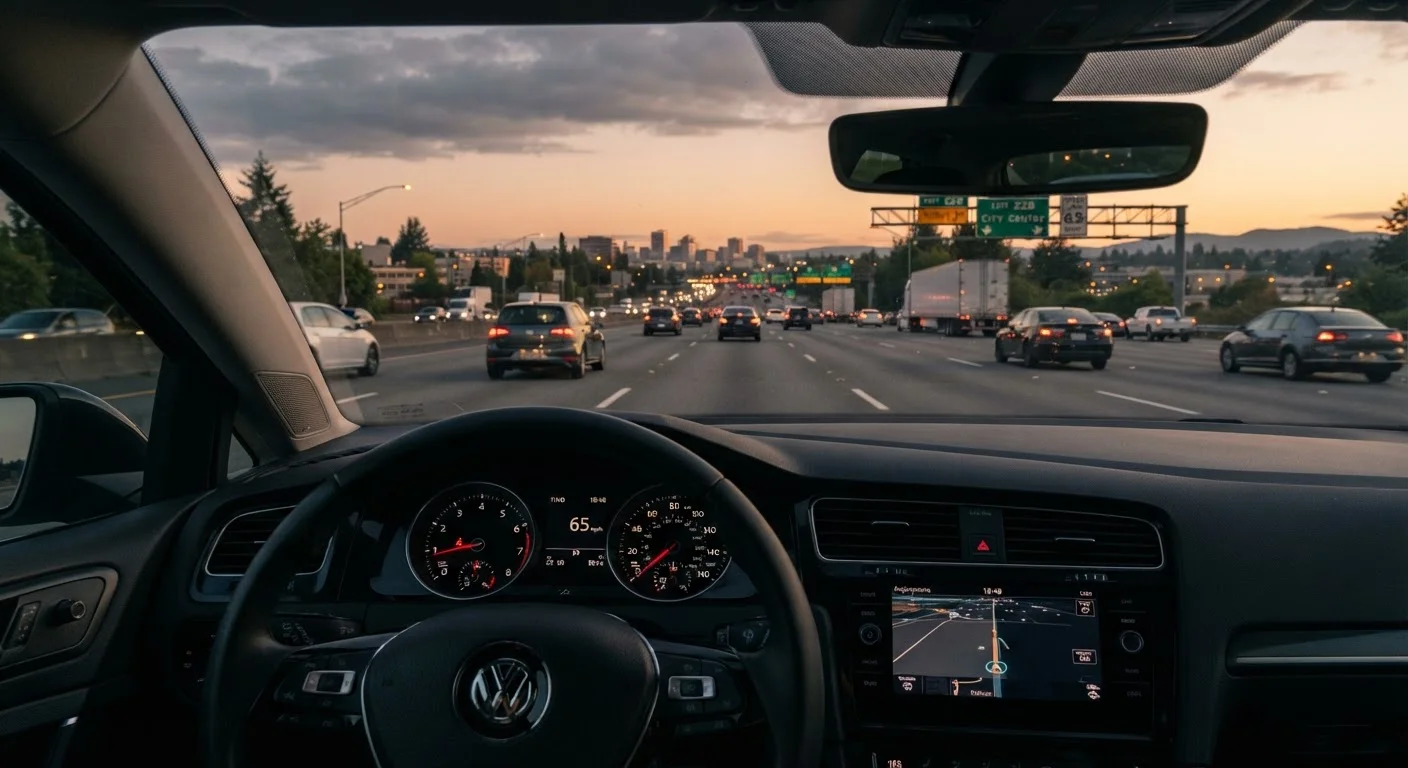
Beyond the Rules: What Defensive Driving Really Means
Most drivers learn to follow traffic laws - stop at red lights, yield at merges, signal before turning. That's the baseline. Defensive driving asks for considerably more: it requires you to actively manage your environment, not just comply with it.
The core idea is anticipation over reaction. A defensive driver doesn't wait for another vehicle to drift into their lane before responding - they notice the drift beginning, create space, and prepare an exit. They're scanning the road well ahead, not fixating on the bumper directly in front of them.
This mindset also means accepting that other drivers will make mistakes. Tailgating, failing to signal, running late yellows - these are predictable parts of the driving environment. Defensive driving treats them as known hazards to account for, not surprises to be outraged by. See how this contrasts with emotionally reactive driving in our article on road rage vs. assertive driving.
Start With One Habit at a Time
Defensive driving can feel like a lot to adopt at once. Driver safety educators generally recommend focusing on one principle - such as consistent mirror checks or maintaining following distance - until it becomes automatic before adding the next. Incremental habit-building is more durable than trying to change everything simultaneously.
The Core Principles Defensive Drivers Apply
Defensive driving isn't a single technique - it's a cluster of habits applied consistently. The most fundamental include:
- Space management: Keeping adequate distance from surrounding vehicles in all directions gives you time and room to respond. The three-second following distance rule is a practical minimum; add more in rain, fog, or heavy traffic. Our guide on speed limits and safe stopping distance explains the physics in detail.
- Scanning and situational awareness: Effective drivers scan 10-15 seconds ahead, check mirrors every 5-8 seconds, and regularly assess what's happening in their blind spots - not just immediately ahead.
- Controlling speed to conditions: Posted limits are legal maximums for ideal conditions. Wet roads, low visibility, and heavy pedestrian zones all demand lower speeds regardless of posted limits.
- Eliminating distractions: Cognitive and visual distraction degrades hazard perception significantly. A phone interaction - even hands-free - diverts mental resources away from driving.
- Predicting other drivers' behavior: Watching for signals of intent - slowing brake lights two cars ahead, a vehicle hesitating at a merge - allows early adjustments before the situation forces one.
94%
Crashes involving human choice or error
According to the National Highway Traffic Safety Administration (NHTSA), approximately 94% of serious crashes involve human error as a critical factor.
3-4 sec
Minimum recommended following distance
Traffic safety researchers and driver education programs commonly recommend a minimum following distance of three to four seconds under normal conditions, increasing in adverse weather.
~25%
Fatal crashes occurring at intersections
NHTSA data indicates that roughly one in four fatal crashes in the U.S. occurs at or near an intersection, underscoring the need for heightened vigilance at controlled crossings.
Where Defensive Driving Makes the Biggest Difference
Defensive habits have the greatest payoff in situations where hazard density is highest. Highways demand consistent mirror discipline and smooth lane-change technique - skills covered in depth in our guide to highway merging and blind spots. Intersections - even controlled ones - require a second look before proceeding on a green, since crossing traffic running a late red is among the most common collision scenarios.
Night driving amplifies nearly every hazard. Reduced visibility, increased likelihood of impaired or fatigued drivers sharing the road, and slower hazard recognition all demand heightened attention. Fatality rates rise sharply after dark, and defensive habits are among the most effective countermeasures available.
Unfamiliar road layouts - roundabouts in particular - catch many American drivers off guard. Understanding right-of-way rules before encountering them is itself a form of defensive preparation. Our article on how roundabouts work is a useful reference.
“The goal of defensive driving is not to assume everyone else on the road is incompetent - it's to drive in a way that keeps you safe even if they are.”
— National Safety Council, U.S. nonprofit organization focused on eliminating preventable deaths
Vehicle Condition Is Part of the Picture
Defensive driving isn't only about behavior behind the wheel - it extends to the vehicle itself. Worn tires reduce traction and extend stopping distances. Faulty brake lights prevent following drivers from responding in time. Dirty or cracked windshields degrade the visibility that scanning depends on.
Keeping your vehicle mechanically sound is a foundational component of road safety. Routine maintenance habits - from tire pressure checks to brake inspections - directly support your ability to execute defensive maneuvers when it counts. A well-maintained car responds predictably; a neglected one introduces uncertainty at exactly the moments you need reliability most.
This article provides general driver education information and is not a substitute for formal driver training or a certified defensive driving course. Consult your state's licensing authority or a certified driving instructor for guidance specific to your situation.
Frequently Asked Questions
No. Defensive driving principles apply to all drivers regardless of age or experience. Research consistently shows that crash risk is not eliminated by familiarity alone - complacency and habitual inattention can develop over time and increase risk in experienced drivers.
Not necessarily. Defensive driving means matching your speed to conditions - which sometimes means slowing down, but always means staying within a range where you can respond to hazards in time. Traveling far below posted limits can itself create hazards in flowing traffic.
Defensive driving prioritizes space, patience, and hazard anticipation. Aggressive driving prioritizes speed and positioning at the expense of safety margins. The two are fundamentally incompatible approaches to road behavior.
The three-second rule is a common method for maintaining following distance. You pick a fixed point ahead, watch when the vehicle in front passes it, then count - you should reach that same point no sooner than three seconds later. In poor conditions, that gap should increase.
Many insurers do offer discounts for completing an approved defensive driving course. However, terms, eligibility, and discount amounts vary by provider and state. Check directly with your insurer and verify course approval before enrolling with that expectation.
The content on this site is provided for informational purposes only and should not be considered a substitute for professional advice. While we strive to provide accurate and up-to-date information, we make no guarantees regarding its completeness or accuracy. Always consult a qualified professional for advice specific to your circumstances before making any decisions.