

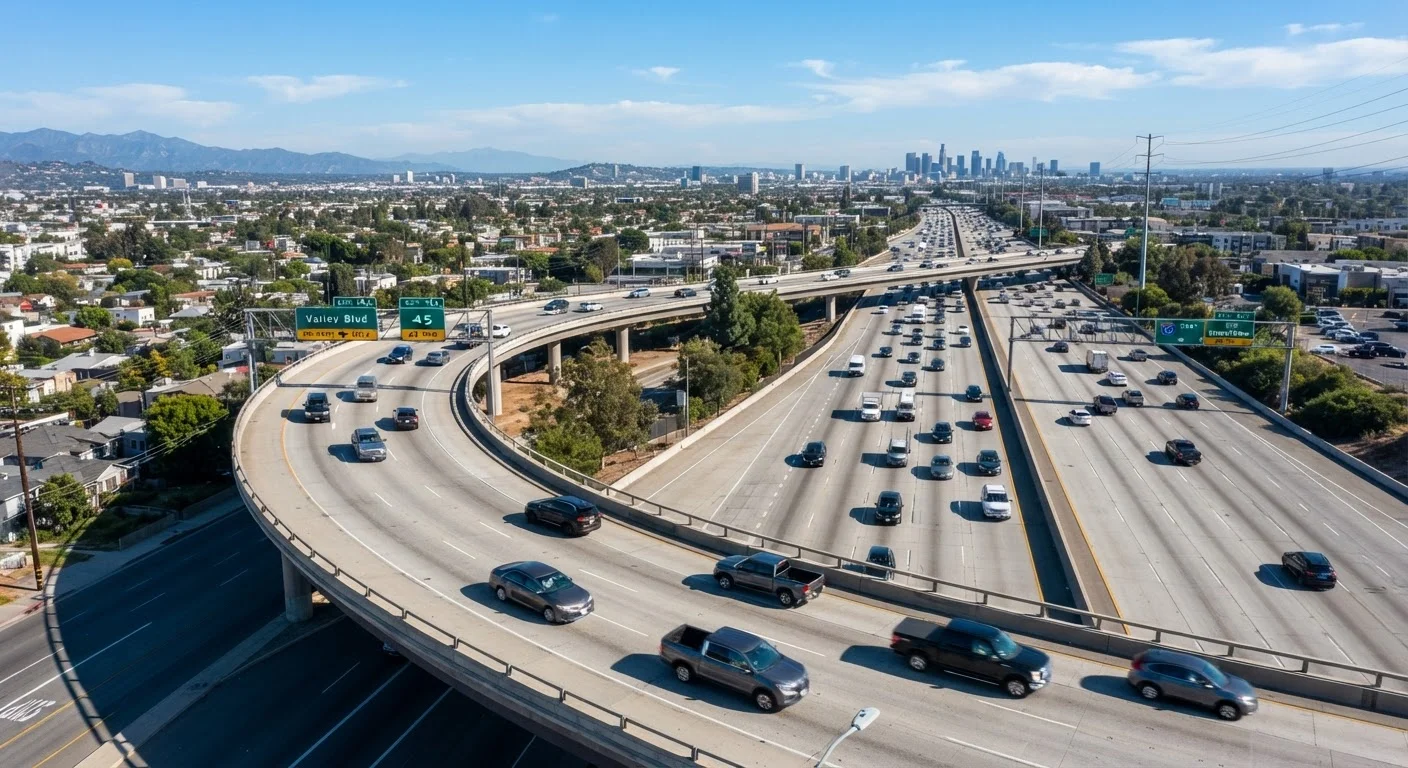
Why Highway Merging Goes Wrong
Merging onto a highway is a high-speed, multi-step maneuver that many drivers treat as an afterthought. The result is predictable: abrupt lane changes, speed mismatches, and near-misses that could be avoided with basic technique. Understanding what the rules actually require - and why - is the first step toward doing it right every time.
A common misconception is that highway drivers must yield to merging traffic. In the vast majority of U.S. states, right-of-way on the highway belongs to vehicles already traveling in the travel lane. The on-ramp driver bears the responsibility to find a gap, match speed, and merge safely. That said, experienced highway drivers often facilitate smooth merges by adjusting their speed or position - this is a matter of cooperative driving, not legal obligation.
Poor mirror habits compound the problem. Many drivers glance briefly at their side mirrors without accounting for the blind spot - the zone beside and slightly behind the vehicle that mirrors do not capture. This is where lane-change collisions typically occur. For a broader look at anticipating hazards before they become emergencies, see our guide to defensive driving.
Cooperative Merging Benefits Everyone
If you're already on the highway and see a driver struggling to find a merge gap, moving to the center lane - when safe to do so - creates space without requiring anyone to brake sharply. This kind of cooperative driving reduces the accordion effect that causes phantom traffic jams. It's not legally required, but it reflects sound highway etiquette.
Before You Reach the On-Ramp
Good merging starts before the acceleration lane. As you approach the on-ramp, assess the traffic conditions on the highway. Look for gaps, note the speed of vehicles in the right lane, and begin planning which gap you'll target. This pre-entry awareness shortens the decision window once you're accelerating.
Ensure your mirrors are properly adjusted. Your side mirrors should eliminate as much overlap with the center rearview mirror as possible, reducing - though not eliminating - the blind spot. A correctly adjusted side mirror shows just a sliver of your own vehicle's rear quarter panel. If you can see a large portion of your own car, the mirror is angled too far inward.
What you will need
Step-by-Step: How to Merge Safely
Follow these steps every time you merge onto a highway. They are ordered deliberately - skipping or reordering them increases risk.
Use the full length of the acceleration lane
The on-ramp's acceleration lane exists for one purpose: reaching highway speed before you enter the travel lane. Use all of it. Begin accelerating smoothly and early so you're approaching highway traffic speed well before the lane ends. Waiting until the last third of the ramp to accelerate forces abrupt speed adjustments and limits your options.
Signal before you check - not after
Activate your turn signal as soon as you intend to merge. This communicates your intention to highway drivers before you've committed to the move, giving them time to adjust. Many drivers wait until they've already begun moving into the lane - at that point, the signal is no longer a warning, it's an announcement of something already happening.
Check mirrors in sequence
Scan your center rearview mirror, then your right side mirror. This gives you a read on traffic approaching from behind and in the right lane. Note the speed and position of any vehicles near your target gap.
Turn your head to clear the blind spot
Mirrors alone are not enough. Turn your head briefly toward your right shoulder to visually scan the blind spot - the area your mirrors cannot capture. A vehicle partially in that zone may be invisible in your mirrors but clearly visible with a direct head check. This step is non-negotiable.
Match speed and commit to the gap
Identify a gap in highway traffic that is large enough to enter without requiring other drivers to brake or swerve. Once you've confirmed the gap is clear, move into it smoothly and at the same speed as surrounding traffic. Avoid merging at a significantly lower speed - this is one of the most common causes of rear-end collisions on entrance ramps.
Cancel your signal and stabilize
Once you are fully in the travel lane, cancel your turn signal if it hasn't self-cancelled, and match the flow of traffic. Maintain a following distance of at least three seconds from the vehicle ahead - more in heavy traffic or adverse weather. Avoid immediately changing lanes again; let traffic around you re-establish its pattern.
Never Force a Merge
If the gap you targeted closes before you complete the merge, do not force your vehicle into the lane. Reduce speed, let the vehicle pass, and identify the next available gap. Forcing a merge when the gap is insufficient is a leading cause of sideswipe collisions on highway on-ramps. Your priority is a safe entry, not a fast one.
Lane Changes on the Highway: The Same Principles Apply
Mid-highway lane changes follow the same core logic as on-ramp merges: signal, check, verify with a head turn, then move. The main differences are speed and traffic density. At highway speeds, gaps close faster and the margin for error shrinks.
Space your checks properly. Check the center mirror first to understand traffic behind you, then the relevant side mirror, then turn your head briefly to scan the blind spot. This sequence gives you a full picture. Moving before completing all three checks is where most lane-change errors originate.
Avoid the two most common mistakes: drifting slowly into a lane without committing, and making rapid, jerky lane changes. Both behaviors create uncertainty for surrounding drivers. Once you've verified the gap is clear, move smoothly and at a consistent speed.
Right-of-way confusion doesn't end on the highway. If you find four-way stops or intersections equally unclear, see what drivers get wrong about four-way stops for a practical breakdown of those rules.
Adverse Conditions and Special Situations
Rain, fog, and snow change merging calculus significantly. Reduced visibility means you may not see vehicles in your target lane until they are dangerously close. Wet or icy roads extend stopping distances, making speed mismatches more consequential. In these conditions, take more time on the acceleration ramp to find a larger gap before committing. Our guide to driving in rain, snow, and fog covers the full range of technique adjustments worth knowing.
Construction zones present a related challenge. Lanes narrow, traffic patterns shift, and speed limits drop - sometimes abruptly. Treat lane merges in construction zones with heightened caution and follow posted signs early rather than at the last moment. For the rules governing construction zones and other special road environments, review the applicable rules every driver should know.
This article provides general driver education and is not a substitute for your state's official driver's manual or formal driver training. Traffic laws vary by jurisdiction; always verify the rules that apply in your state.
The content on this site is provided for informational purposes only and should not be considered a substitute for professional advice. While we strive to provide accurate and up-to-date information, we make no guarantees regarding its completeness or accuracy. Always consult a qualified professional for advice specific to your circumstances before making any decisions.