

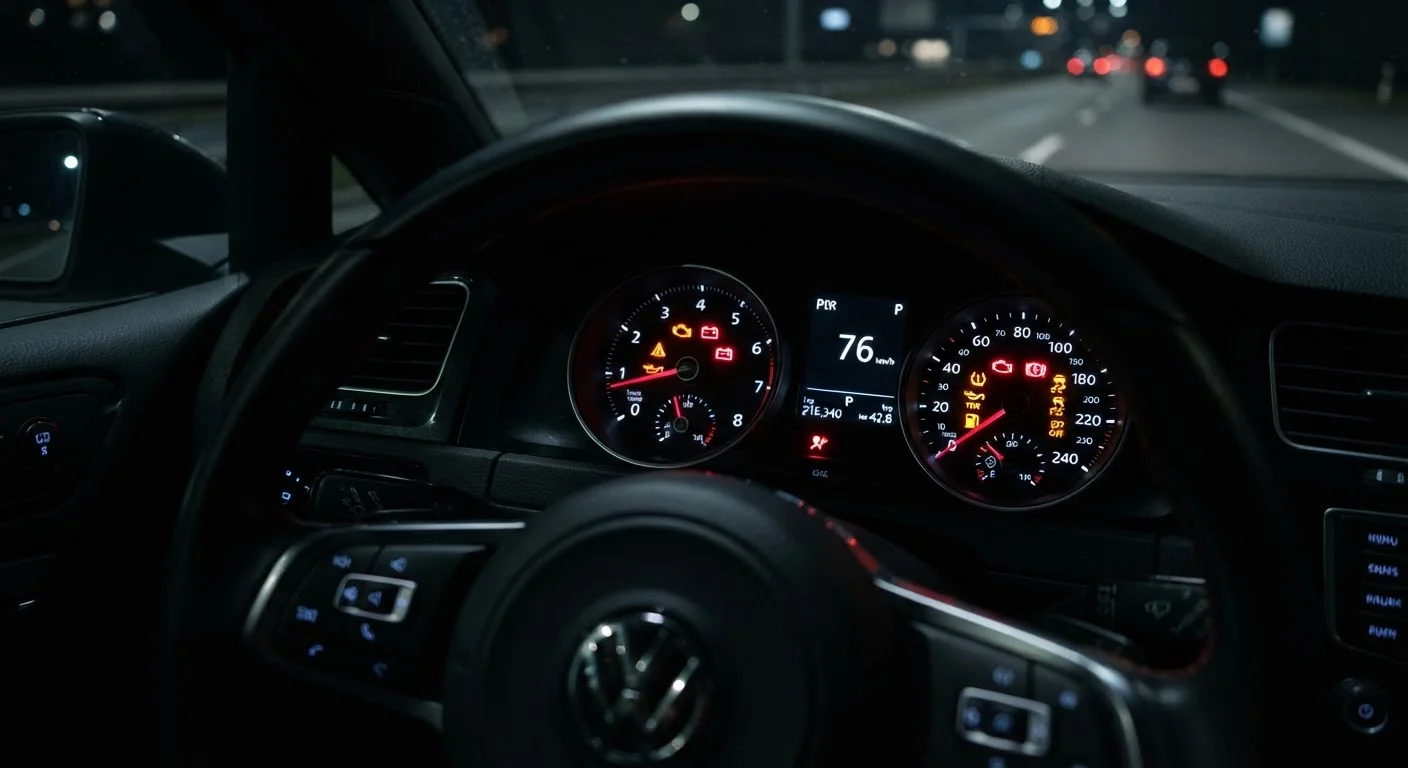
The Color Code: What Red, Amber, and Green Mean
Dashboard warning lights follow a broadly consistent color-coding system across the industry. Understanding that system is the fastest way to gauge urgency without opening your owner's manual mid-drive.
- Red lights demand immediate attention. They typically indicate a condition that poses a risk to you, your passengers, or the vehicle right now - such as low oil pressure, high engine temperature, or a brake system fault. When a red warning illuminates, reduce speed and pull over safely as soon as conditions allow.
- Amber or yellow lights signal a caution or system advisory. The issue may not be urgent, but it should be investigated within a reasonable timeframe - generally within a day or two, or before your next long drive.
- Green or blue lights are informational, not warnings. They confirm that a feature is active, such as high beams, cruise control, or a turn signal.
This framework covers the vast majority of situations. Pair it with your owner's manual - which remains the authoritative reference for your specific vehicle - and you have a solid foundation for responding calmly. See how to read your owner's manual effectively for guidance on making the most of that resource.
The Lights That Require Immediate Action
Several warning lights consistently signal conditions that can lead to significant engine damage or a safety risk if ignored. Treat each of the following as a prompt to stop driving as soon as safely possible:
- Low Oil Pressure (oil can icon)
- This is one of the most critical red lights. Low oil pressure means engine components are not being lubricated adequately. Continuing to drive can cause severe, often irreparable engine damage within minutes. Turn off the engine when safe and check the oil level before proceeding. See our guide on driveway fluid checks if you're unsure how.
- Engine Temperature Warning (thermometer icon)
- Indicates the engine is overheating. Pull over, turn off the engine, and allow it to cool before opening the hood or checking coolant. Never open a hot radiator cap.
- Battery/Charging System (battery icon)
- The alternator or battery is failing to maintain adequate voltage. The vehicle may continue running briefly on battery reserve, but electrical systems will begin shutting down. Drive directly to a service location if possible, or pull over and call for assistance.
- Brake System Warning (exclamation mark in circle)
- If this light appears and your parking brake is fully released, treat it as a potential hydraulic brake system fault. Have the vehicle inspected immediately before driving further.
Amber Lights: Monitor, Don't Panic
Amber lights indicate issues that warrant attention but rarely require you to stop on the side of the road immediately. Common examples include:
- Check Engine Light (MIL) - When illuminated steadily, it signals a stored fault code that should be diagnosed with an OBD-II scanner. A flashing check engine light indicates an active misfire that can damage the catalytic converter - reduce speed and have it checked promptly.
- TPMS (flat tire with exclamation mark) - One or more tires are significantly underinflated. Check tire pressure at the nearest gas station. Note that TPMS alerts at a threshold well below optimal pressure, so tires may already be quite low when the light activates.
- Traction Control / Stability Control - A flashing light typically means the system is actively working to correct wheel slip. A steady light often means the system has been manually disabled or has detected a fault.
- ABS Warning - Your standard brakes still work, but the anti-lock function is compromised. Avoid hard braking situations until the system is inspected.
Many amber light scenarios are connected to maintenance patterns. Reviewing your vehicle maintenance fundamentals can help you address them proactively, before a light ever appears.
Building a Calm, Consistent Response Habit
The goal isn't to diagnose your car yourself - it's to respond proportionately. A few habits make that significantly easier:
- Note the color and symbol immediately. Red means act now; amber means act soon. Take a quick mental snapshot before the stress of the moment takes over.
- Check whether anything feels different. Is the car pulling, making noise, or handling differently? Warning lights paired with unusual driving sensations carry more urgency than a lone amber light on an otherwise normal-feeling vehicle. For a broader look at pre-failure signals, see warning signs your car gives before a breakdown.
- Use your owner's manual or a manufacturer app. Many automakers now offer smartphone apps that decode warning lights specific to your vehicle's VIN, removing guesswork entirely.
- Don't reset lights without diagnosing them. Clearing a code without addressing the underlying cause only delays the problem and may cause you to miss a worsening condition.
Dashboard warning lights exist to keep you informed, not to alarm you. With a basic understanding of color codes, a few high-priority symbols, and a consistent response habit, you can handle nearly any illuminated dashboard with confidence rather than anxiety. Before every drive, a quick visual scan of the dashboard is a smart habit - pair it with a full pre-trip safety checklist for complete peace of mind.
The content on this site is provided for informational purposes only and should not be considered a substitute for professional advice. While we strive to provide accurate and up-to-date information, we make no guarantees regarding its completeness or accuracy. Always consult a qualified professional for advice specific to your circumstances before making any decisions.