

Summary
22 items · 10-20 minutes
Why a Pre-Trip Check Is Worth 15 Minutes of Your Time
Most vehicle breakdowns and a meaningful share of traffic accidents involve factors a driver could have detected before leaving the driveway. Underinflated tires, burned-out brake lights, low engine oil - these are not unpredictable failures. They are conditions that develop gradually and announce themselves to anyone paying attention.
This checklist gives you a systematic way to verify your vehicle is road-ready before every trip. It's not about being overly cautious - it's about spending a few minutes to protect yourself, your passengers, and other road users. For a broader view of how scheduled servicing fits alongside daily checks, see our guide on routine car maintenance and when each task is actually due.
The checklist below is organized into six areas. For everyday commuting, a condensed version covering tires, lights, fluids, and warning lights takes under 10 minutes. Before longer trips or driving in adverse weather, run the full list.
Tires & Wheels
Lights & Visibility
Fluids & Under the Hood
Controls & Mirrors
Dashboard & Warning Systems
In-Vehicle Emergency Readiness
How to Use This Checklist Effectively
Start outside the vehicle - walk around it before getting in. You will catch more issues (low tires, exterior damage, fluid puddles under the car) with a quick walk-around than you will from the driver's seat. Then complete the under-hood checks before starting the engine, since oil and coolant readings are most accurate when the engine is cold.
Once inside, start the engine and let it idle for 30 seconds while watching the dashboard. This is where reading your car's dashboard warning lights without panic becomes practical - knowing which symbols are minor and which demand immediate action is a skill every driver should develop.
Tire Pressure Changes with Temperature
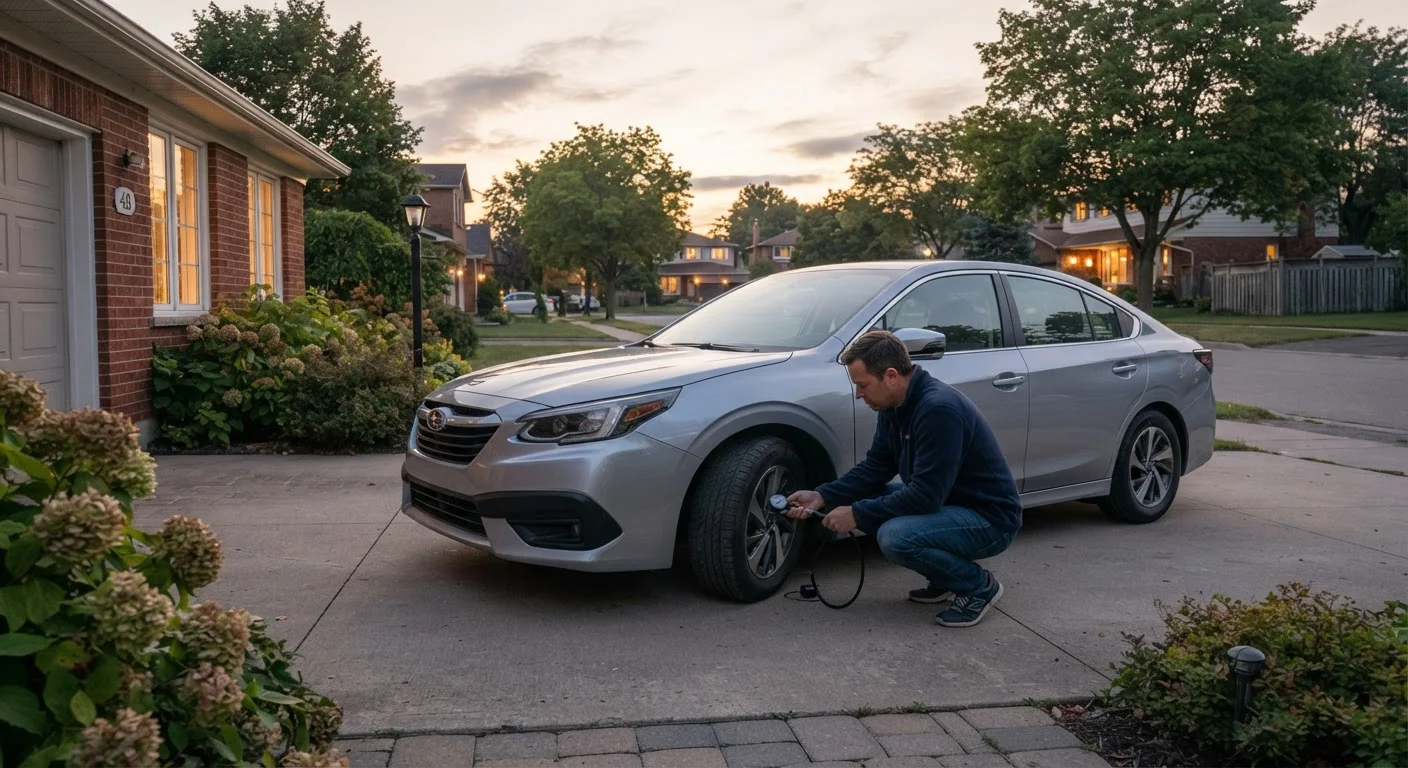
Tire pressure drops approximately 1 PSI for every 10°F decrease in outside temperature. This means tires that were correctly inflated in summer may be noticeably underinflated on a cold winter morning. Always check pressure when tires are cold - before driving more than a mile - and recheck after significant temperature swings. Under-inflation is a leading contributor to blowouts and reduced fuel efficiency.
The tools you need are minimal. Most drivers already own everything on the list below, or can acquire them inexpensively. Keep them in your vehicle so they are available when needed.
Tire Pressure Gauge
Accurately measure inflation levels in all four tires and the spare to match the manufacturer's recommended PSI.
Flashlight or Headlamp
Illuminate dark areas under the hood and around tires during early morning or evening inspections.
Penny (for tread depth test)
Provide a quick, no-tool method for assessing whether tire tread depth has reached a critical wear level.
Engine Oil Dipstick
Check oil level and quality directly from the engine - usually built into the vehicle, requires no additional purchase.
Jumper Cables or Portable Jump Starter
Restart a vehicle with a dead battery, either independently or with the help of another driver.
Reflective Warning Triangles or Road Flares
Alert approaching traffic if you need to stop on the roadside due to a breakdown or flat tire.
If you detect an issue you are unsure how to interpret - an unusual sound at startup, a warning light you do not recognize, or a brake pedal that feels different than usual - consult our guide on warning signs your car gives before a major breakdown before dismissing it.
For drivers preparing for longer travel, this pre-trip check pairs well with fatigue planning. Long road trips and driver fatigue covers how to build a driving schedule that accounts for rest - an equally important part of road safety. And if you're heading into challenging seasonal conditions, review driving in rain, snow, and fog to make sure your habits match the conditions ahead.
Never Drive with a Flashing Check Engine Light
A steadily illuminated check engine light may indicate a minor issue such as a loose gas cap, but a flashing or blinking check engine light typically signals an active engine misfire that can cause catalytic converter damage within minutes. Pull over safely and consult a qualified mechanic before continuing. Learn more in our guide on what your check engine light is actually telling you.
Low Brake Fluid Requires Immediate Attention
If the brake fluid reservoir is significantly low, do not assume it simply needs topping off. A sudden drop in brake fluid often points to a leak in the brake system or severely worn brake pads. Both conditions can compromise stopping ability and require professional inspection before the vehicle is driven.
The content on this site is provided for informational purposes only and should not be considered a substitute for professional advice. While we strive to provide accurate and up-to-date information, we make no guarantees regarding its completeness or accuracy. Always consult a qualified professional for advice specific to your circumstances before making any decisions.