

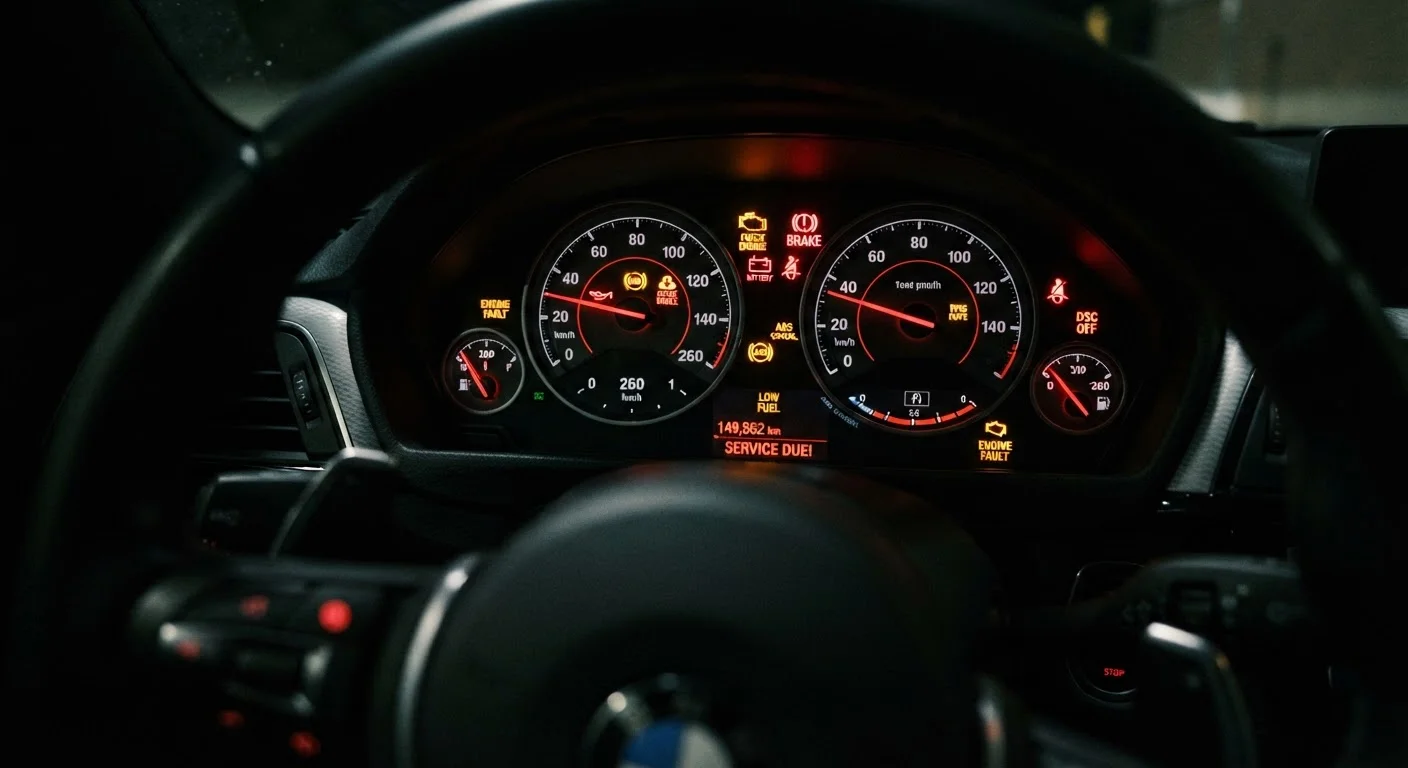
Your Car Communicates - If You Know How to Listen
Most major vehicle breakdowns don't happen without warning. In the days, weeks, or even months before a catastrophic failure, the average car produces a series of subtle - and sometimes not-so-subtle - distress signals. The problem is that many drivers either miss them or convince themselves the symptom will go away on its own.
Understanding these early indicators doesn't require a mechanical background. It requires paying attention to how your car sounds, smells, feels, and performs compared to its normal baseline. The moment something feels off, that's your cue to investigate - not to wait and see.
This list covers the most common pre-breakdown warning signs and what each one typically points to. For symptoms that appear on your instrument cluster, our guide on reading dashboard warning lights is a useful companion resource.
Grinding or Squealing Brakes
A high-pitched squeal when braking is usually a wear indicator - a small metal tab built into the brake pad that contacts the rotor when pad material runs low. It's a deliberate warning, and it means you likely have a short window before the pad wears through entirely.
Grinding - a harsher, metallic scraping sensation - typically means the pad is already gone and metal is contacting metal. This accelerates rotor damage rapidly. Either symptom warrants a brake inspection without delay. Brakes are not a system to defer.
Squealing brakes are a built-in warning; grinding means the warning has already been ignored too long.
Vibration or Pulling While Driving
If your steering wheel vibrates at highway speeds, the most common culprits are unbalanced tires or worn wheel bearings. Vibration felt through the seat or floor at lower speeds can indicate drivetrain or suspension issues.
A car that pulls consistently to one side - without you compensating - often points to uneven tire pressure, misaligned wheels, or a sticking brake caliper. Alignment and suspension problems compound over time, causing uneven tire wear and reducing vehicle control. Have it checked before it escalates.
Persistent pulling to one side is rarely trivial - it signals alignment, tire, or brake issues that worsen with mileage.
Warning Lights That Appear and Disappear
An intermittent warning light is often dismissed because it goes away. That's a mistake. Flickering lights - particularly the check engine, oil pressure, or battery warning - can indicate a developing fault that isn't yet severe enough to trigger consistently.
Intermittent symptoms are actually harder to diagnose once they become chronic, so reporting them to a mechanic while they're occasional gives you an advantage. Our article on what the check engine light is actually telling you explains which codes are urgent and which allow more time.
An intermittent warning light is still a warning - don't wait for it to stay on permanently before acting.
Unusual Smells Inside or Outside the Car
Smell is one of the most reliable pre-breakdown indicators. Burning oil - a sharp, acrid smell - often means oil is leaking onto hot engine components. A sweet, syrupy smell usually indicates coolant (antifreeze) leaking, which can lead to overheating and serious engine damage if left unaddressed.
A sulfur or rotten-egg smell can point to a failing catalytic converter or a battery issue. Burning plastic or rubber from inside the cabin may indicate an electrical fault. Any persistent or unfamiliar smell from a vehicle should be taken seriously and diagnosed promptly.
A sweet smell from under the hood is almost always coolant - and coolant leaks can quickly become engine failures.
Difficulty Starting or Sluggish Cranking
If your engine cranks slowly before starting, or requires multiple attempts, the battery, alternator, or starter motor is likely underperforming. Batteries typically give several weeks of increasingly poor performance before failing completely - often at the worst possible moment.
Cold weather amplifies weak battery symptoms, but a battery that struggles in mild temperatures is already past its reliable service window. Most auto parts stores can test battery health for free, and a mechanic can assess whether the alternator is properly charging the system.
Slow cranking in mild weather is a battery nearing the end of its reliable life - don't wait for a no-start situation.
Fluid Spots Beneath Your Parked Car
A dry driveway is a good sign; spots or puddles are not. Clear water dripping from the underside after running the air conditioner is normal condensation. Everything else warrants identification.
Dark brown or black fluid is typically engine oil. Bright green, orange, or pink fluid is usually coolant. Red or brown fluid near the front of the vehicle often indicates power steering or transmission fluid. Brake fluid is clear to light yellow and has a slightly oily feel. The location of the spot relative to the vehicle can help a mechanic narrow down the source quickly - so take note before moving the car.
Identifying the color and location of a fluid leak gives a mechanic a significant head start on diagnosis.
Act Early, Spend Less
The pattern across almost every warning sign on this list is the same: early intervention costs a fraction of what delayed intervention does. A grinding brake pad replaced promptly might cost a couple hundred dollars. Ignored long enough, it can destroy the rotor and caliper, multiplying the repair bill several times over.
Build a Simple Symptom Log
When you notice something unusual - a sound, a smell, a handling change - write it down with the date and approximate mileage. Note whether it happens at certain speeds, temperatures, or driving conditions. This log gives your mechanic a precise picture of the symptom's history, which often shortens diagnostic time and reduces guesswork.
If you're a newer driver still building your familiarity with car ownership fundamentals, our guide for first-time car owners covers the maintenance expectations that dealers often gloss over. And before every trip, running through a pre-trip safety checklist keeps you ahead of developing issues.
Your car is a complex machine, but it's rarely silent when something is wrong. Trust what you sense, get a qualified mechanic involved when you're unsure, and make early action a habit rather than an afterthought.
The content on this site is provided for informational purposes only and should not be considered a substitute for professional advice. While we strive to provide accurate and up-to-date information, we make no guarantees regarding its completeness or accuracy. Always consult a qualified professional for advice specific to your circumstances before making any decisions.