

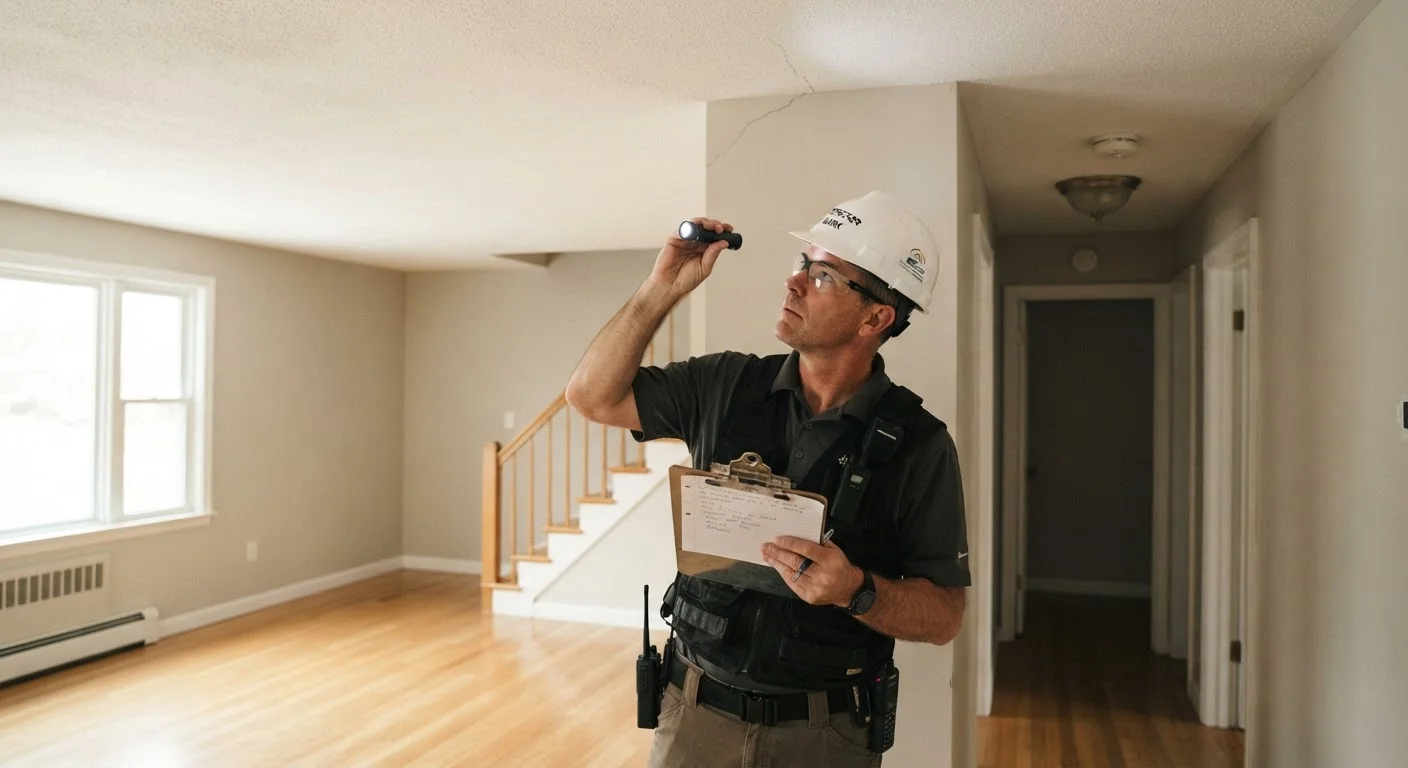
What a Standard Home Inspection Actually Covers
A licensed home inspector performs a visual assessment of the property's major systems and structural components that are safely accessible on the day of the inspection. The goal is to identify material defects - conditions that significantly affect value, safety, or habitability - and document them in a written report.
Systems and components typically included in a standard inspection:
- Structural components: Foundation, framing, floors, walls, ceilings, and roof structure (viewed from interior)
- Roofing: Visible roof covering, flashing, gutters, and drainage - usually assessed visually, not by walking the entire surface
- Electrical system: Service panel, visible wiring, outlets, switches, and grounding
- Plumbing: Visible supply and drain lines, fixtures, water heater, and functional flow/pressure
- HVAC: Heating and cooling equipment, accessible ductwork, thermostats, and filters
- Interior: Windows, doors, stairs, railings, and built-in appliances included in the sale
- Exterior: Siding, trim, grading, decks, patios, and attached garages
The inspector documents conditions as they exist - not as they might develop over time. Think of it as a detailed snapshot, not a warranty.
~86%
Homebuyers who commission an inspection
According to the National Association of Realtors, the overwhelming majority of buyers include a home inspection as part of their purchase process.
$300-$500+
Typical inspection cost range
Industry data suggests average inspection fees vary significantly by property size, age, and geographic market.
4+ hours
Inspection time for larger homes
InterNACHI guidance notes that inspection duration scales with property square footage and the number and complexity of accessible systems.
What the Inspector Will Not Examine
Understanding the exclusions is just as important as knowing what is covered. A standard inspection is limited to what is visible and safely accessible at the time of the visit. Inspectors are not required - and in most cases are not qualified - to evaluate the following:
- Behind walls, under flooring, or inside ceilings: Concealed wiring, pipes, and structural elements are not assessed unless there is visible evidence of a problem
- Detached structures: Sheds, freestanding garages, or outbuildings may be excluded unless specifically agreed upon
- Swimming pools and hot tubs: Typically require a separate specialist inspection
- Septic systems and private wells: These require dedicated testing by a specialist
- Chimneys and fireplaces beyond basic visual check: A chimney sweep or Level II camera inspection provides far greater detail
- Environmental hazards: Radon, asbestos, lead paint, mold, and underground oil tanks are not part of a standard inspection
- Pest and wood-destroying organisms: Termite or WDO inspections are separate and often required by lenders in certain regions
Just as an auto insurance policy has defined coverage limits - a concept explored in our breakdown of auto insurance coverage types - a home inspection report operates within a defined, documented scope. Know what's inside and outside those lines.
Attend the Inspection in Person
Buyers who attend the inspection gain far more value than those who simply read the report afterward. Walking through with the inspector lets you see conditions firsthand, ask questions in context, and understand which findings are significant versus routine. Most inspectors encourage buyer attendance and will take time to explain what they are observing.
When to Order Specialist Inspections
A general inspection report will often flag items that warrant closer examination by a specialist. Buyers should treat these referrals seriously, not as upselling. Common specialist evaluations worth considering:
- Radon testing
- Radon is an odorless radioactive gas that can accumulate in homes, particularly in certain geographic regions. Short- or long-term test kits - or specialist testing - are widely available and relatively low cost.
- Sewer scope inspection
- A camera is threaded through the main sewer line to check for root intrusion, cracks, or blockages. Particularly important in homes with mature trees or older clay sewer lines.
- Mold assessment
- If the inspector notes water intrusion, staining, or musty odors, an industrial hygienist can test air and surface samples to quantify the problem.
- Roof specialist
- When the general inspector flags potential issues or cannot fully access the roof, a licensed roofing contractor can provide a more comprehensive evaluation. Our roof inspection fundamentals guide outlines what that deeper look involves.
- Foundation or structural engineer
- Significant cracking, bowing walls, or uneven floors warrant a licensed structural engineer's review, not just a general inspector's note.
The cost of specialist reports - often a few hundred dollars each - is typically modest relative to the potential cost of undiscovered problems after closing. Consider them part of your due diligence budget, not optional extras.
Using the Inspection Report Strategically
Receiving a lengthy inspection report with dozens of findings is normal - and not necessarily alarming. Inspectors are thorough by design; their job is to document, not to alarm. The key is distinguishing between safety concerns and deferred maintenance, and between items that are negotiable and those that simply need budgeting.
After reviewing the report, buyers generally have several options:
- Request repairs before closing, typically through a formal repair addendum
- Negotiate a price reduction or seller credit to offset the cost of addressing issues independently
- Accept the home as-is with full awareness of the findings
- Exercise the inspection contingency to exit the contract if findings are unacceptable
If repairs are agreed upon, vet any contractor the seller brings in - or hire your own. Our homeowner's contractor vetting checklist walks through the key questions to ask before any work begins. For ongoing reference, understanding what home warranties cover versus exclude can also help set expectations once you're in the home.
This article is for general informational purposes only and does not constitute legal, financial, or professional home inspection advice. Consult a licensed inspector and relevant professionals for guidance specific to your property and situation.
Frequently Asked Questions
Most inspections take two to four hours, depending on the size and age of the home. Larger or older properties with more complex systems generally require more time. Buyers are encouraged to attend so they can ask questions and understand findings firsthand.
In the vast majority of U.S. transactions, the buyer pays for and arranges the inspection. Costs typically range from roughly $300 to $500 or more, varying by property size, location, and inspector. Some sellers commission a pre-listing inspection, but buyers usually conduct their own independently.
Yes. An inspection report does not legally obligate the seller to make repairs. Buyers can negotiate - requesting repairs, a price reduction, or credits at closing - but the seller may decline. If negotiations stall, the buyer can walk away if the contract includes an inspection contingency.
A home inspection is generally not required by lenders (unlike an appraisal), but it is strongly advisable. Some loan types, such as FHA or VA loans, have their own property condition requirements that may overlap with inspection findings but are conducted separately.
An appraisal estimates the market value of the home for the lender's benefit; an inspection evaluates the physical condition of the property for the buyer's benefit. They are separate processes conducted by different licensed professionals with different purposes.
Inspectors will visually assess the roof from the ground or from the roofline if safely accessible, but a standard inspection is not a specialist roof evaluation. For a thorough roof assessment, consider a dedicated specialist - see our <a href="/home-garden/home-maintenance/roof-inspection-fundamentals-what-to-look-for-before-problems-start">guide to roof inspection fundamentals</a> for more detail.
The content on this site is provided for informational purposes only and should not be considered a substitute for professional advice. While we strive to provide accurate and up-to-date information, we make no guarantees regarding its completeness or accuracy. Always consult a qualified professional for advice specific to your circumstances before making any decisions.