

What Gutters Actually Do - and Why Clogs Are Dangerous
Gutters seem simple: metal or vinyl channels that collect rainwater and direct it away from your house. But that single function protects nearly every major system in your home - the roof, the siding, the foundation, and even interior spaces like basements and crawl spaces.
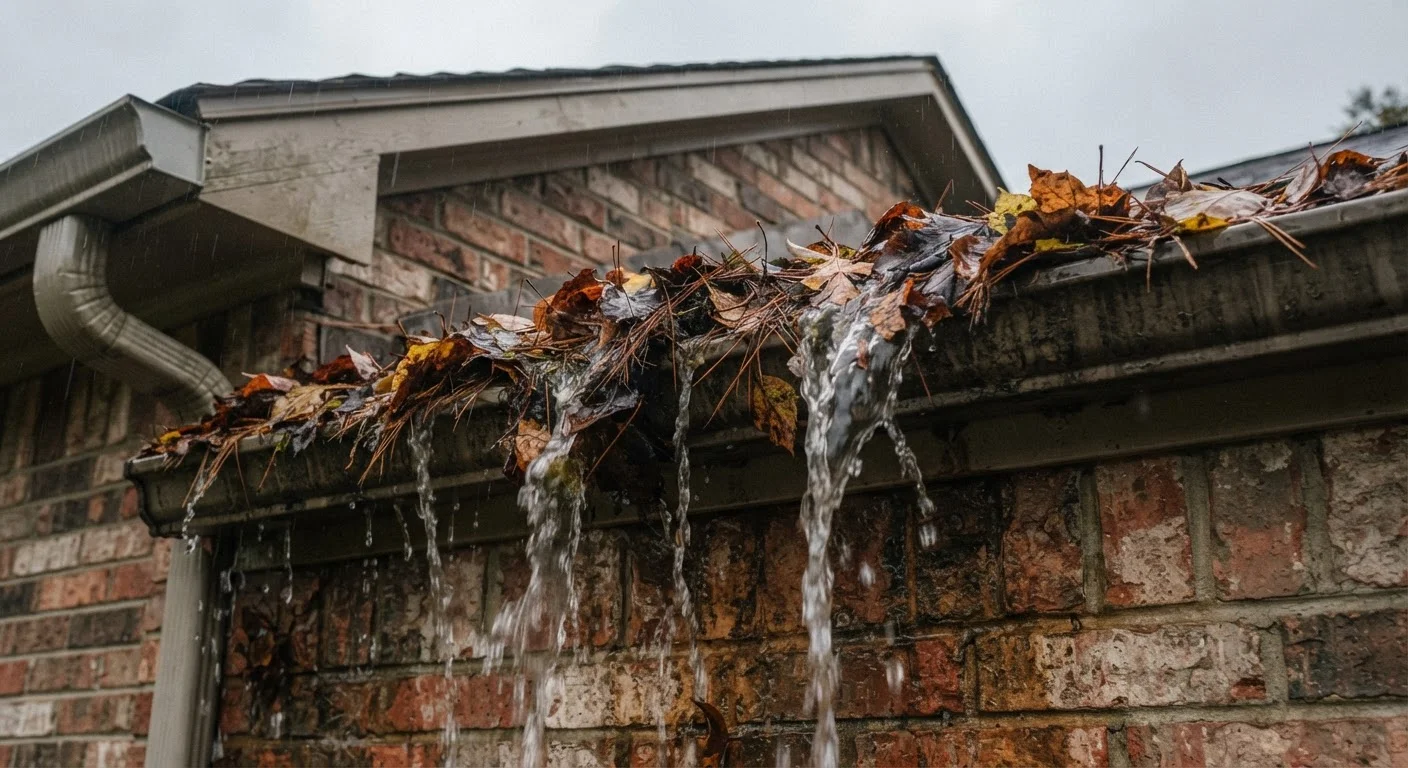
When gutters clog, water has nowhere to go. It sits in the channel, adds significant weight, and eventually spills over the edge in sheets. That overflow doesn't fall harmlessly to the ground. It soaks the fascia boards directly behind the gutter, seeps under roof shingles at the eaves, runs down the siding, and pools against the foundation. Over repeated rain events, each of those contact points becomes a vulnerability. For a deeper look at how skipped maintenance tasks compound over time, see how deferred maintenance escalates into major repairs.
~$10,000+
Average foundation repair cost
Foundation repairs driven by water intrusion - often linked to poor drainage - commonly run into the tens of thousands of dollars according to general contractor estimates.
2x/year
Recommended minimum cleaning frequency
Home maintenance experts and gutter professionals generally recommend cleaning gutters at least twice annually for the average U.S. home.
40%
Of basement water issues tied to drainage
Industry estimates suggest a significant share of basement moisture problems originate from inadequate surface drainage, including overflowing gutters, rather than subsurface sources.
The Real Damage Clogged Gutters Cause
The consequences of clogged gutters tend to be hidden until they're expensive. Here's where damage typically shows up:
- Roof rot and shingle damage: Backed-up water sitting at the roofline can work its way under shingles and saturate the roof decking (the plywood layer beneath). Rot here often isn't visible from the ground and can spread before it's discovered. Pair gutter maintenance with periodic roof inspections to catch problems early.
- Fascia and soffit damage: The wooden boards that support gutters are directly exposed to overflow. Prolonged moisture causes them to soften, rot, and eventually fail - sometimes taking the gutter itself down with them.
- Foundation erosion and cracking: Water cascading off overflowing gutters concentrates near the base of the house. Over time, this saturates and erodes soil, increasing hydrostatic pressure against foundation walls - a common cause of basement leaks and, in severe cases, foundation cracking.
- Basement and crawl space flooding: Poor drainage at the foundation is one of the most common pathways for water to enter interior spaces below grade.
- Pest infestations: Standing water in gutters attracts mosquitoes, and decomposing leaf matter can become habitat for birds, rodents, and insects that may eventually find their way into the home.
A homeowner in a heavily wooded neighborhood notices water spilling over the front gutter during every rain, but only addresses it when paint starts peeling from the fascia board.
After a wet autumn with no gutter cleaning, a homeowner discovers pooled water in the basement corner closest to the downspout.
A homeowner installs mesh gutter guards and stops cleaning entirely for three years, then finds a thriving community of seedlings rooted in accumulated fine debris on top of the guards.
Following a late-summer wind storm, a homeowner cleans the gutters and discovers a significant volume of dark granules from the roof shingles mixed in with the debris.
How Often to Clean - and What Affects the Schedule
The standard guidance for most U.S. homes is twice a year: once in late spring and once in late fall. But several factors can push that frequency higher:
- Nearby trees: A home surrounded by mature oaks or pines may need cleaning three or four times per year. Pine needles in particular pack tightly and block downspouts quickly.
- Storm frequency: After significant wind or hail events, gutters can fill rapidly with shingle debris, twigs, and washed-in dirt.
- Gutter size and pitch: Narrower or shallower gutters clog faster than wider ones. Gutters with insufficient pitch (slope toward downspouts) allow debris to accumulate faster.
- Roof material: Asphalt shingle roofs shed granules continuously, and these particles accumulate in gutters, contributing to blockages over time.
Incorporate gutter inspection into your broader home maintenance rhythm. A monthly home maintenance calendar can help you schedule these tasks so nothing falls through the cracks.
Inspect While You Clean
Gutter cleaning is the ideal time to check for sagging sections, separated joints, rust spots, or loose hangers. Catching these small issues early - and addressing them with caulk or a replacement hanger - prevents bigger failures during heavy rain. Make a quick visual pass along the full run of the gutter before you put the ladder away.
DIY Cleaning: What You Need and How to Stay Safe
For single-story homes, cleaning gutters is a reasonable weekend task. Here's what the process generally involves:
- Gather equipment: A sturdy extension ladder, thick work gloves, a small plastic scoop or trowel, a bucket or tarp, and a garden hose with a spray nozzle.
- Start at the downspout: Work away from it so you're pushing debris toward the opening rather than past it.
- Scoop out debris: Remove leaves, packed grit, and buildup by hand or with a scoop. Drop debris into a bucket rather than letting it fall against the house.
- Flush with water: Run a hose through the gutter toward the downspout to clear remaining particles and test flow. If water backs up, the downspout is likely blocked.
- Clear downspouts: A strong hose jet directed downward usually clears moderate blockages. Persistent clogs may need a plumber's snake.
Ladder safety is non-negotiable. Use a four-legged stepladder for low sections and a properly angled extension ladder for higher areas. Never lean or stretch beyond your shoulders. Have a second person present to stabilize the ladder. For two-story homes or steeply pitched roofs, hiring a professional is strongly recommended - the risk of a fall is not worth the savings.
Frequently Asked Questions
Most homes benefit from gutter cleaning at least twice a year - once in late spring and once in late fall after leaves have dropped. Homes near pine trees or in storm-prone regions may need cleaning three to four times annually. When in doubt, inspect after any major storm.
Over time, debris dams force water to back up under roof shingles, saturate fascia boards, and spill against the foundation. This can lead to rot, mold, cracked foundations, and basement flooding - all repairs that typically cost far more than routine maintenance.
Yes, for single-story homes it's generally a manageable DIY task using a sturdy ladder, work gloves, a bucket, and a garden hose. Always follow ladder safety guidelines and never lean or overreach. For multi-story homes or steeply pitched roofs, hiring a professional is the safer choice.
Gutter guards reduce how often you need to clean but rarely eliminate the need entirely. Fine debris, seeds, and shingle grit can still accumulate on top of or inside many guard systems. Plan to inspect and clean at least once a year even if guards are installed.
Look for paint peeling near the roofline, staining on siding, soft or discolored fascia boards, puddles pooling near the foundation, or water marks in the basement after rain. These are common signs that gutters have been overflowing or leaking.
Late fall - after most leaves have dropped but before winter freezes - is the single most important cleaning window. A spring cleaning clears winter debris and seeds before summer storms arrive. Together, these two sessions cover the majority of homes in most U.S. climates.
The content on this site is provided for informational purposes only and should not be considered a substitute for professional advice. While we strive to provide accurate and up-to-date information, we make no guarantees regarding its completeness or accuracy. Always consult a qualified professional for advice specific to your circumstances before making any decisions.