

Start here
How Your Home Plumbing System Is Organized
Next
Shutoff Valves: Your First Line of Defense
Then
Drain Traps, Vents, and the DWV System
Build on it
Common Minor Issues Homeowners Can Handle
Know your limits
When to Stop and Call a Licensed Plumber
How Your Home Plumbing System Is Organized
Your home's plumbing is divided into two distinct systems that work in opposite directions. The supply system delivers pressurized clean water from the municipal main or a private well to every fixture in your home. The drain-waste-vent (DWV) system removes used water and sewage by gravity, channeling it to the municipal sewer or a septic tank.
Supply pipes are almost always under pressure, which is why even a small leak can release a significant amount of water quickly. DWV pipes are not pressurized - they rely on proper slope and venting to move waste efficiently. Understanding this distinction helps you respond appropriately: a leak in a supply line is more urgent than a slow drain.
Supply system
The network of pressurized pipes that brings fresh, clean water into your home from the municipal main or a private well.
Drain-waste-vent (DWV)
The non-pressurized system of pipes that carries used water and sewage away from fixtures by gravity, assisted by air vents.
P-trap
A curved section of pipe under a sink or fixture that holds water to create a seal preventing sewer gases from entering the home.
Shutoff valve
A valve that stops water flow either to the entire house (main shutoff) or to a single fixture, allowing you to control water during repairs or emergencies.
Vent pipe
A pipe connected to the drain system that runs to the roof, allowing air in so wastewater flows freely and traps stay filled.
Flapper
The rubber seal inside a toilet tank that controls when water flows from the tank into the bowl; a common cause of running toilets when worn.
Your water heater sits between these two systems, receiving cold water from the supply and sending hot water to fixtures on demand. If you are weighing options for your heater, the comparison of tankless vs. traditional water heaters covers energy use, cost, and maintenance differences.
Shutoff Valves: Your First Line of Defense
Every homeowner should know the location of two types of shutoff valves before a problem ever occurs.
- Main shutoff valve: Stops all water flow into the house. Find it where the supply line enters the foundation, in a utility room, or near the water meter. In an emergency - a burst pipe, a major leak - this is the valve you reach for first.
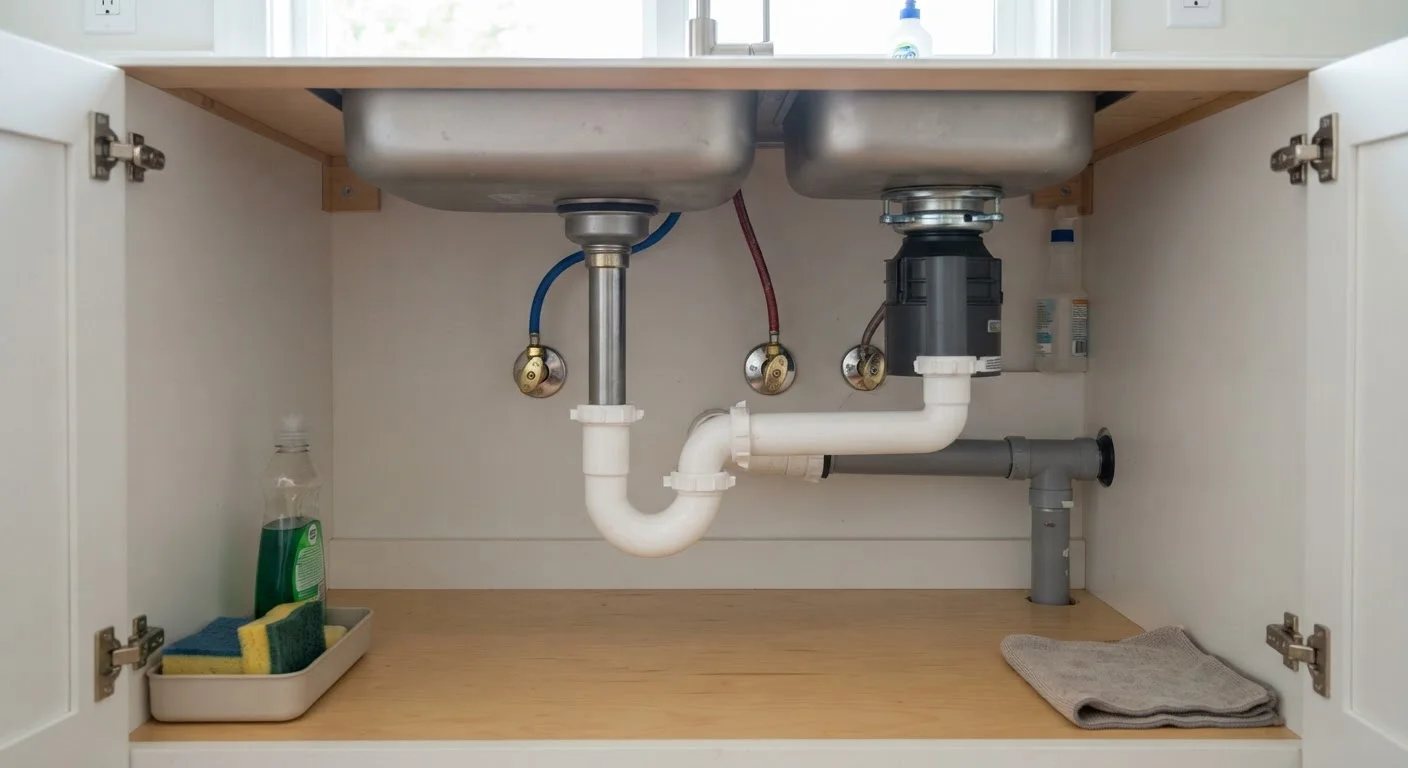
- Fixture shutoff valves: Small valves located directly behind or beneath individual fixtures (toilets, sinks, dishwashers). Turning one off isolates that fixture without affecting the rest of the house.
Test each valve once a year by turning it fully off and then back on. Valves that haven't moved in years can seize or fail to seat properly when you need them most. If a valve is stiff, corroded, or drips when operated, have a plumber replace it - do not force it.
Locate and Label Your Valves Now
Take fifteen minutes to walk your home and find every shutoff valve - under sinks, behind toilets, near the water heater, and at the main. Label them with a strip of masking tape and a marker. If you share your home with others, make sure everyone knows where the main shutoff is and how to operate it.
Keeping a simple sketch of valve locations, or even a photo on your phone, can save critical minutes during a leak. This practice fits naturally into a year-round home maintenance calendar.
Drain Traps, Vents, and the DWV System
The curved pipe visible beneath every sink is called a P-trap. Its purpose is to hold a small reservoir of water that physically blocks sewer gases - including hydrogen sulfide - from traveling back up through the drain into your living space. If you smell a rotten-egg or sulfur odor near a drain, a dried-out trap (common in guest bathrooms or utility sinks used infrequently) is the most likely cause. Running the fixture for a few seconds replenishes the seal.
The DWV system also includes vent pipes that run up through the walls and exit through the roof. These vents allow air into the drain system so water flows freely rather than gurgling and siphoning traps dry. Blocked vents - often caused by debris or bird nests - can produce slow drains and gurgling sounds across multiple fixtures simultaneously.
Most P-trap replacements under a sink are manageable DIY tasks; the parts slip together with hand-tightened nuts and no soldering is required. However, anything involving pipes inside walls, the main stack, or roof penetrations should be handled by a licensed plumber.
Common Minor Issues Homeowners Can Handle
Building basic plumbing confidence starts with recognizing which tasks are genuinely low-risk for a careful homeowner.
- Running toilet
- Usually caused by a worn flapper - the rubber seal at the bottom of the tank. Replacement flappers are inexpensive and snap into place without tools. Turn off the fixture shutoff first, flush to empty the tank, and swap the part.
- Slow or clogged sink drain
- Hair and soap buildup near the drain stopper or inside the P-trap is the most common cause. Remove the stopper (usually just a lift-and-twist), clear the debris, and run hot water. Avoid chemical drain cleaners used too frequently - they can degrade older pipes over time.
- Dripping faucet
- A worn washer, O-ring, or cartridge is often the culprit. Identify your faucet type (ball, cartridge, or compression) to find the correct replacement part before disassembling anything.
For a broader look at which repairs cross the line into professional territory, see when to DIY a repair vs. call a professional.
When to Stop and Call a Licensed Plumber
Some plumbing situations require professional expertise - not because the concept is complex, but because the risks of an error are significant. Call a licensed plumber for:
- Any work on the main water supply line or main sewer line
- Pipe replacement or rerouting inside walls, floors, or ceilings
- Water heater installation or gas-line connections
- Persistent leaks behind walls (indicated by staining, soft drywall, or mold odor)
- Any project that your local municipality requires a permit for - permits exist to ensure work meets safety codes
Never Ignore Signs of Hidden Water Damage
Soft or discolored drywall, persistent musty odors, or unexplained spikes in your water bill can all point to a leak inside a wall or under a slab. Do not delay investigating these signs. Mold growth can begin within 24-48 hours of sustained moisture exposure, and structural damage compounds quickly. Contact a licensed plumber promptly if you suspect a concealed leak.
If you are purchasing a home and want to understand which plumbing red flags matter most during inspection, the guide to homebuying myths addresses how buyers often underestimate infrastructure issues. Similarly, kitchens with plumbing relocations are addressed in the kitchen renovation roadmap if you're planning a remodel.
When in doubt, a plumber's diagnostic visit costs far less than repairing water damage caused by a repair attempt gone wrong. Knowing your limits is itself a form of home maintenance expertise.
Frequently Asked Questions
In most U.S. homes it is located where the main water line enters the house - often near the foundation in a basement, crawl space, or utility room. In warmer climates it may be outside near the water meter. Walk your home now to locate it before you ever need it in an emergency.
The most common cause is a dried-out P-trap. The trap needs a small amount of standing water to seal out sewer gas. Running the fixture regularly, or pouring a cup of water down infrequently used drains, usually resolves the smell quickly.
Many dripping faucets can be fixed by replacing a worn washer, O-ring, or cartridge - parts available at most hardware stores. Turn off the supply shutoff under the fixture first. If you are unsure of the faucet type or encounter corroded parts, calling a plumber is the safer choice.
A visual inspection of exposed pipes, valves, and fixtures every season is a reasonable habit. Checking for moisture, corrosion, or slow drains early often prevents costlier repairs later. Many homeowners build this into a broader maintenance schedule.
Replacing or rerouting supply or drain pipes, working on the main sewer line, and any work involving gas lines typically require permits and a licensed contractor in most jurisdictions. Requirements vary by state and municipality, so always verify local codes before starting any significant plumbing project.
A slow drain is often caused by a simple buildup of hair or soap near the drain cover, which is easy to remove. However, if multiple fixtures drain slowly at once, the problem may be in the main drain line - a situation that warrants a professional evaluation.
The content on this site is provided for informational purposes only and should not be considered a substitute for professional advice. While we strive to provide accurate and up-to-date information, we make no guarantees regarding its completeness or accuracy. Always consult a qualified professional for advice specific to your circumstances before making any decisions.