

Summary
24 items · 2-4 hours spread across a weekend
Why Fall Weatherization Is Worth Your Weekend
Heating costs typically spike in the winter months, and a significant portion of that expense escapes through gaps, uninsulated surfaces, and poorly maintained equipment - not through normal use. A systematic fall walkthrough of your home lets you address the most common heat-loss and damage points before cold weather arrives and options become limited.
This checklist covers five areas of your home: air sealing and insulation, HVAC systems, plumbing, the roof and exterior, and safety equipment. It is designed to be worked through by most homeowners over a weekend, though some items - particularly gas appliance servicing and roofing repairs - should be delegated to licensed professionals. For a broader look at how fall tasks fit into the full year, see your home's annual maintenance calendar.
Gas Appliances Require a Licensed Professional
Never attempt to service, repair, or adjust gas furnaces, boilers, or water heaters yourself. Improper work on gas appliances can result in carbon monoxide leaks, fire, or explosion. Always hire a licensed HVAC technician or plumber for any work involving gas lines or burner components.
Roof Work Carries Serious Fall Risk
Walking on a sloped or wet roof without proper equipment and training is a leading cause of serious fall injuries. Limit your inspection to ground level or from a ladder positioned at the eaves. Any repairs that require roof access should be completed by a licensed roofing contractor.
What You'll Need Before You Start
Gather your supplies before beginning so you can work through the checklist without interruption. Most items below are widely available at hardware stores and require no special skills to use safely.
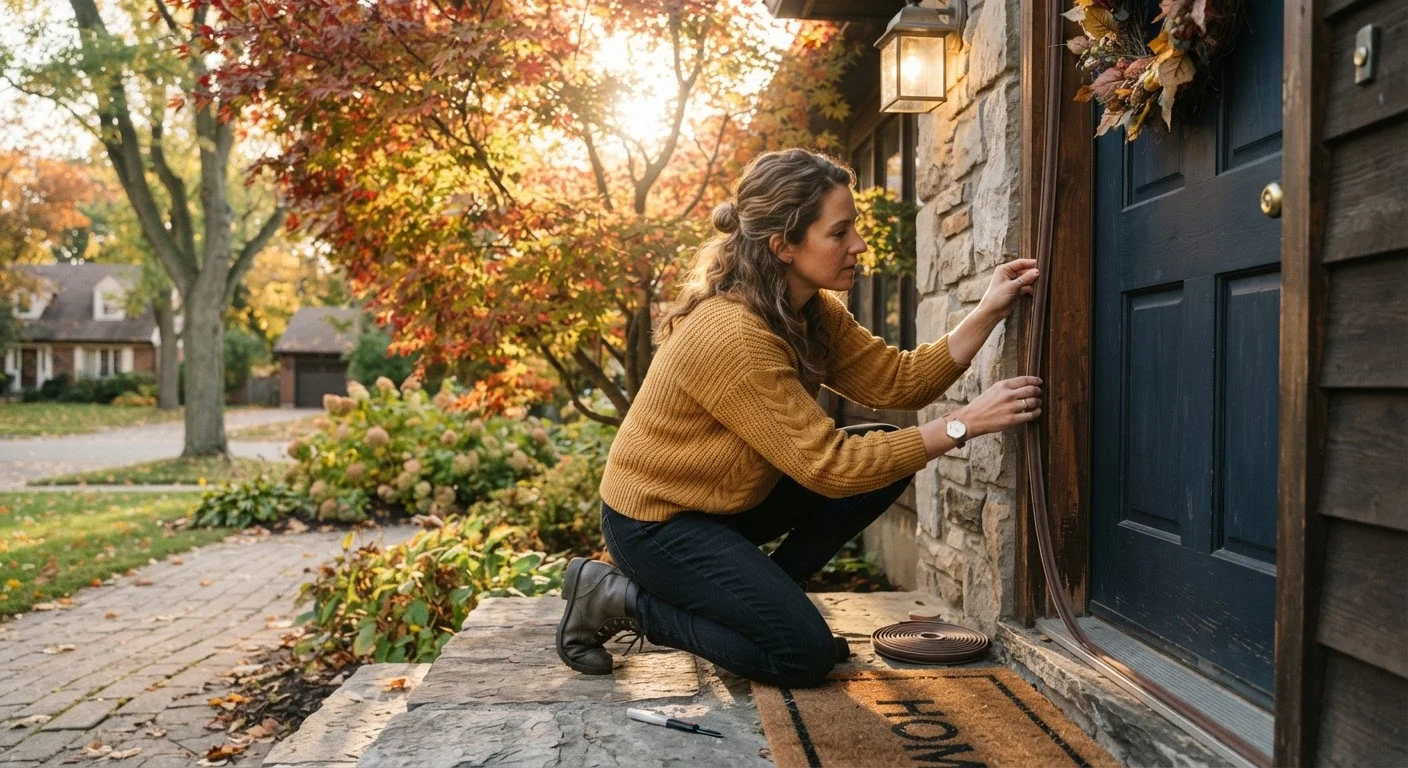
Weatherstripping & Door Sweeps
Used to seal gaps around door frames and thresholds that allow cold air infiltration.
Exterior-Grade Caulk
Applied around window frames, door casings, and exterior penetrations to block air and moisture intrusion.
Expanding Spray Foam
Fills larger irregular gaps around pipes, cables, and structural openings in exterior walls.
Foam Pipe Insulation
Wraps exposed pipes in unheated areas to reduce freeze risk during cold snaps.
Replacement HVAC Filter
Swapped in at the start of heating season to maintain airflow and system efficiency.
Gutter Scoop or Trowel
Removes compacted leaf debris from gutters more effectively than a garden hose alone.
Binoculars
Allows a safe ground-level roof inspection without climbing a ladder.
Carbon Monoxide Detector
Detects dangerous CO levels from heating appliances - replace units older than 7 years.
If your home has older weatherstripping or caulk that has never been replaced, budget extra time for removal and surface prep. For a deeper guide to locating and sealing drafts, sealing air leaks around windows and doors walks through the process room by room. Understanding your insulation options before buying materials is also worthwhile - insulation types, R-values, and where each one belongs is a useful reference.
The Full Fall Weatherization Checklist
Work through the groups below in order - air sealing first, safety systems last. Check off each item as you go, and note any tasks that require a follow-up professional visit rather than skipping them entirely.
Air Sealing & Insulation
HVAC & Heating Systems
Plumbing & Water Systems
Roof, Gutters & Exterior
Safety Systems
Frozen Pipes Can Cause Thousands in Damage
Water expands when it freezes, and pipes that burst can release significant amounts of water into walls, floors, and ceilings before the leak is noticed. Draining outdoor hose bibs and insulating exposed interior pipes are among the highest-return tasks on this entire checklist. If you are unsure which pipes in your home are vulnerable, consult a licensed plumber before temperatures drop.
After the Checklist: What to Monitor All Winter
Completing this checklist once is a strong start, but some items benefit from a mid-season check. Inspect gutters again after any major windstorm or heavy snowfall. Swap HVAC filters every one to three months during active heating season rather than waiting until spring. If you notice condensation on interior window glass, new drafts, or an unexplained spike in your energy bill, those are signals that additional air sealing or insulation attention may be warranted.
Drivers heading into winter may also find value in reviewing vehicle readiness alongside home prep. The seasonal car maintenance checklist covers cold-weather tire, fluid, and battery checks that complement your home preparation efforts.
This article provides general home maintenance information for educational purposes. Costs, material performance, and local code requirements vary by region. For work involving gas systems, electrical components, structural elements, or roof access, consult a licensed, qualified professional and verify permit requirements with your local building authority.
The content on this site is provided for informational purposes only and should not be considered a substitute for professional advice. While we strive to provide accurate and up-to-date information, we make no guarantees regarding its completeness or accuracy. Always consult a qualified professional for advice specific to your circumstances before making any decisions.