

Summary
28 items · 30-60 minutes per seasonal review
Why Seasonal Maintenance Is the Smart Driver's Habit
Most vehicle breakdowns don't happen randomly - they happen because a problem that developed gradually was never caught. Seasonal maintenance creates four natural checkpoints per year to inspect the systems most affected by changing temperatures, road conditions, and driving patterns.
This checklist is designed to be practical, not overwhelming. You don't need a lift or a full toolset for most of these items. A flashlight, a tire pressure gauge, and a few minutes of focused attention will cover the majority of checks. For anything that requires a qualified mechanic - brake hardware, suspension components, or emissions systems - we note that clearly.
For a complete picture of how often each maintenance task recurs over a vehicle's life, see our routine car maintenance schedule. And if you want to track every service event, a vehicle maintenance log pays dividends when it comes time to sell or diagnose a recurring issue.
Spring Checks (After Winter)
Summer Checks (Before Peak Heat)
Fall Checks (Before Cold Weather)
Winter Checks (During Cold Months)
Tools You'll Want on Hand
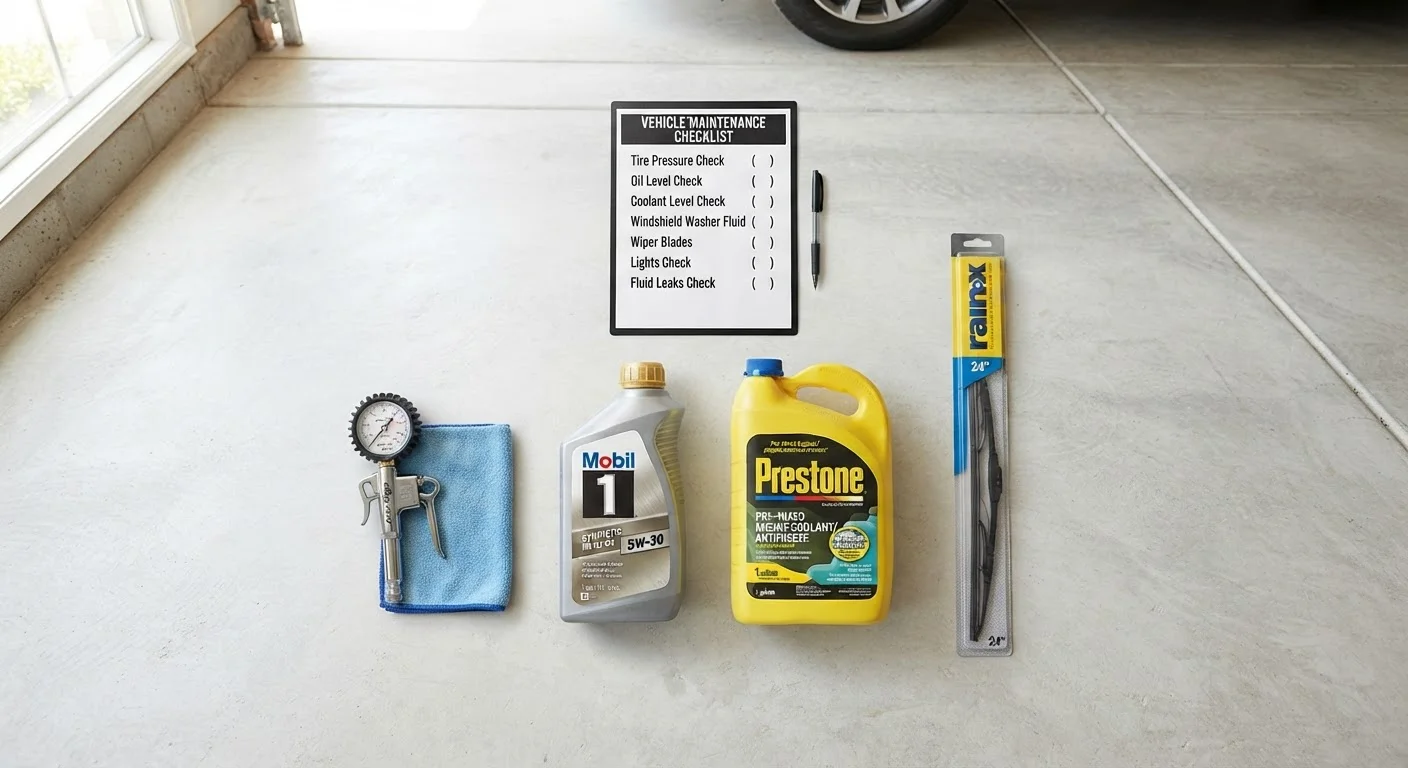
Before diving into the seasonal checks, gather a few basic items. Most can be kept in your trunk or garage shelf so they're available whenever you need them.
Tire Pressure Gauge
Measures tire PSI so you can adjust to the manufacturer's recommended pressure each season.
Flashlight or Headlamp
Illuminates hard-to-see areas under the hood, beneath the vehicle, and inside wheel wells.
Coolant/Antifreeze Tester
Checks antifreeze concentration to confirm the coolant is rated for your region's low winter temperatures.
Battery Load Tester
Evaluates battery health and charging system output - many auto parts stores will test your battery for free.
Tread Depth Gauge
Measures tire tread depth in 32nds of an inch to determine whether tires are safe for continued use.
Mechanic's Mirror (Inspection Mirror)
Allows visual inspection of hard-to-reach areas such as brake hardware and undercarriage components.
Critical Safety Reminders Before You Start
Never Ignore These Safety-Critical Warnings
A soft or spongy brake pedal, grinding or squealing when braking, significant tire sidewall bulging, or a battery warning light that stays on are not symptoms to monitor - they require immediate professional attention. Driving on compromised brakes or tires dramatically increases the risk of a collision or loss of vehicle control. If in doubt, have the vehicle inspected before your next drive.
Always inspect your vehicle on a flat, stable surface with the engine off and cooled down before opening the hood or checking fluid levels. For any check that requires lifting the vehicle - such as examining brake hardware or inspecting the undercarriage - use proper jack stands rated for your vehicle's weight. A floor jack alone is not a safe support for working underneath a car.
If you discover a brake fluid leak, a severely worn tire, or a brake pedal that feels soft or low, do not drive the vehicle until a qualified mechanic has inspected it. These are safety-critical systems.
For a quick pre-drive review before any long trip, the pre-trip safety checklist is a useful companion to this seasonal guide.
Hot Engines and Pressurized Coolant Are Dangerous
Never open a coolant reservoir cap or radiator cap on a hot engine. The system is pressurized, and opening it while hot can cause scalding fluid to spray out forcefully. Wait at least 30 minutes after driving before inspecting cooling system components. If you see steam coming from under the hood, pull over safely and call for roadside assistance rather than opening the hood.
Don't Substitute Visual Checks for Professional Inspections
Many brake, suspension, and steering wear points are not visible without lifting the vehicle and removing wheels. A visual check from outside the car can catch obvious problems, but it is not a substitute for a periodic professional inspection of safety-critical systems. Follow your owner's manual's recommended inspection intervals regardless of how the vehicle feels to drive.
Keeping Your Records and Next Steps
Once you've worked through a seasonal review, note the date, mileage, and any findings in a maintenance log. This creates a running record that makes future diagnostics faster and demonstrates diligence to a potential buyer. For a deeper look at why this habit pays off, see why keeping a vehicle maintenance log matters.
Tire condition and pressure deserve particular attention across all four seasonal checks. Temperature swings alone can shift tire pressure by several PSI, affecting handling, fuel economy, and tire wear. Our plain-English tire guide covers how to read PSI, assess tread depth, and know when a rotation is overdue.
For a broader framework on keeping your vehicle dependable year after year - from documentation habits to emissions compliance - the guide on keeping a car safe, road-legal, and reliable long-term ties these seasonal habits into a long-term ownership strategy.
This article provides general vehicle maintenance information for educational purposes. Always consult your owner's manual and a qualified mechanic for guidance specific to your vehicle's make, model, and condition.
The content on this site is provided for informational purposes only and should not be considered a substitute for professional advice. While we strive to provide accurate and up-to-date information, we make no guarantees regarding its completeness or accuracy. Always consult a qualified professional for advice specific to your circumstances before making any decisions.