

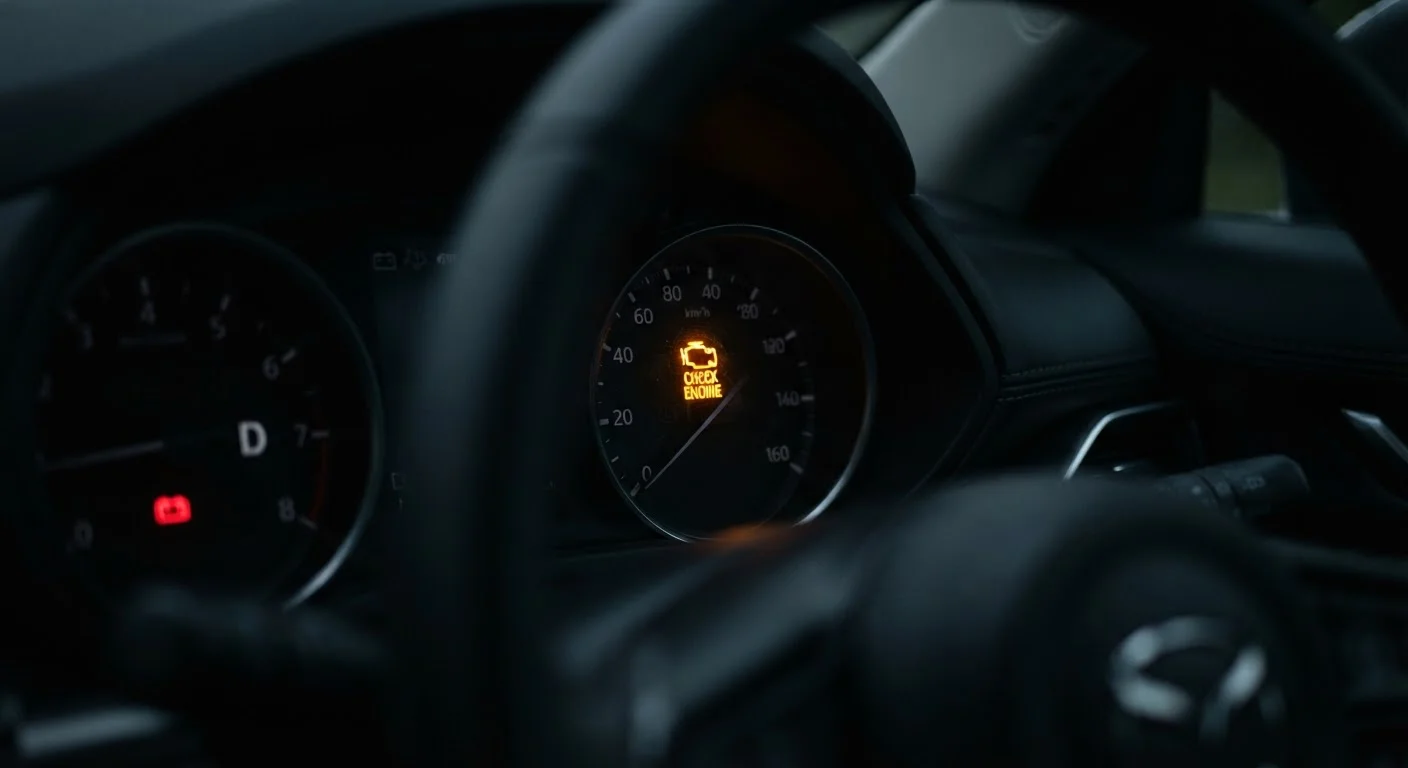
What the Light Actually Means
Despite its alarming appearance, the check engine light is not a single warning about one specific problem. It's a notification that your car's Engine Control Module (ECM) - essentially the vehicle's main computer - has detected a reading outside expected parameters in one of dozens of monitored systems.
Those systems include the engine, transmission, exhaust emissions controls, fuel delivery, and ignition. When a sensor reports an anomaly, the ECM logs a diagnostic trouble code and illuminates the MIL. Without a scanner, you cannot know whether that code points to a $10 gas cap or a $1,200 catalytic converter replacement.
For context on other warning lights and what they signal, see how to read your car's dashboard warning lights without panic.
7 of 10
Drivers who delay check engine light response
Industry surveys from automotive service organizations have consistently found that a majority of drivers continue operating their vehicle for weeks or longer after a check engine light appears before seeking diagnosis.
$200-$500
Typical oxygen sensor replacement cost
Oxygen sensor replacement is one of the most common check engine repairs; costs vary by vehicle make, sensor location, and labor rates in your area.
$900-$2,500+
Catalytic converter replacement cost range
The EPA and automotive industry data indicate catalytic converter replacement is among the most expensive check engine outcomes, often worsened by delayed treatment of upstream faults.
Steady vs. Flashing: A Critical Distinction
The behavior of the check engine light carries important diagnostic information even before you plug in a scanner.
- Steady light: Indicates a fault the ECM has flagged but considers non-catastrophic in the immediate term. Examples include a failing oxygen sensor, evaporative emissions leak, or a loose fuel cap. You generally have time to schedule a proper inspection - but don't wait weeks.
- Flashing or blinking light: Signals an active, serious fault - most commonly an engine misfire severe enough to damage the catalytic converter. This is not a situation to defer. Reduce speed, avoid heavy acceleration, and have the vehicle inspected promptly.
Other physical cues matter here too. If the check engine light is on alongside rough idling, stalling, loss of power, or unusual smells, that combination warrants faster action. Warning signs your car gives before a major breakdown covers how to read those additional signals.
Get a Free Code Read Before You Panic
Many national auto parts retailers offer complimentary OBD-II code reads in the parking lot. While a code alone isn't a full diagnosis - a P0420 code, for example, can have multiple causes - it narrows the field considerably and helps you have a more informed conversation with a mechanic. Bring the code number with you to any service appointment.
Most Common Triggers
While only a scanner gives a definitive answer, some causes appear far more frequently than others across most makes and model years:
- Loose or damaged gas cap: A compromised fuel cap allows fuel vapors to escape the evaporative emissions system, triggering a leak code. It's the simplest fix - re-tighten or replace the cap and monitor whether the light clears.
- Oxygen sensor failure: O2 sensors monitor exhaust gases to help the ECM optimize the fuel-air mixture. A failing sensor reduces fuel efficiency and, left unaddressed, can shorten catalytic converter life.
- Catalytic converter failure: Often a downstream consequence of ignored oxygen sensor faults or persistent misfires. Catalytic converter replacement is among the more expensive check engine repairs.
- Spark plug or ignition coil issues: Worn spark plugs or failing coils cause misfires, which reduce power, worsen fuel economy, and can damage the catalytic converter.
- Mass airflow sensor fault: This sensor measures the volume of air entering the engine. Failures affect performance and efficiency noticeably.
Keeping up with your manufacturer's maintenance intervals significantly reduces the likelihood of several of these faults developing. Reading your owner's manual maintenance schedule explains how to interpret those intervals correctly.
A driver notices the check engine light comes on shortly after filling up at the gas station. The car runs and feels completely normal.
A driver's check engine light begins flashing during highway driving, accompanied by a noticeable shudder from the engine.
A used car buyer runs an OBD-II scan before purchasing a vehicle and discovers stored codes for a failing oxygen sensor, even though the seller says the car 'runs fine.'
What Ignoring It Costs You
A check engine light left unaddressed rarely resolves itself. More often, a minor fault cascades: an ignored oxygen sensor fault stresses the catalytic converter; an unaddressed misfire accelerates catalytic converter damage; deferred maintenance compounds to the point where multiple systems are compromised at once.
Beyond repair costs, a lit check engine light typically means an automatic failure at state emissions inspections in most U.S. states. It can also affect the resale value of the vehicle, as buyers and dealers commonly check for stored codes during pre-purchase inspections.
What happens when you skip routine car maintenance lays out in detail how deferred upkeep compounds into serious, expensive problems over time.
This article provides general vehicle information for educational purposes. For diagnosis and repair of specific vehicle faults, consult a qualified, licensed mechanic.
Frequently Asked Questions
It depends on whether the light is steady or flashing. A steady light generally means you can drive cautiously to a mechanic in the near term. A flashing or blinking light indicates an active misfire or serious fault - you should reduce speed and get the vehicle inspected as soon as possible to avoid catalytic converter damage or other cascading failures.
Sometimes. If the condition that triggered it resolves - such as re-tightening a loose gas cap - the light may turn off after several drive cycles. However, the underlying code remains stored. If the root cause hasn't been fixed, the light will return.
A faulty or failing oxygen sensor is one of the most frequently cited causes, followed by a loose or damaged gas cap, a worn catalytic converter, and ignition system issues like bad spark plugs. The only reliable way to identify the specific cause is to read the stored DTC with an OBD-II scanner.
You need an OBD-II scanner, which plugs into a port typically located under the dashboard near the steering column. Many auto parts retailers offer free code reads. Basic Bluetooth OBD-II adapters that pair with smartphone apps are also widely available for personal use.
In most U.S. states, a check engine light that is on will cause a vehicle to fail the emissions or safety inspection. State rules vary, so verify your local requirements, but it's generally wise to resolve the underlying fault before bringing the vehicle in for inspection.
The content on this site is provided for informational purposes only and should not be considered a substitute for professional advice. While we strive to provide accurate and up-to-date information, we make no guarantees regarding its completeness or accuracy. Always consult a qualified professional for advice specific to your circumstances before making any decisions.