

Our Verdict
For most drivers, the case for keeping a maintenance log is straightforward: a small, regular habit produces meaningful long-term returns in vehicle reliability, resale value, and diagnostic clarity. The main drawbacks - time investment and the risk of an incomplete record - are manageable with a consistent routine. The log doesn't need to be elaborate to be useful.
Any driver who plans to own a vehicle for several years, maintain warranty coverage, or eventually sell the car privately will benefit most from keeping a detailed service log.
What a Vehicle Maintenance Log Actually Is
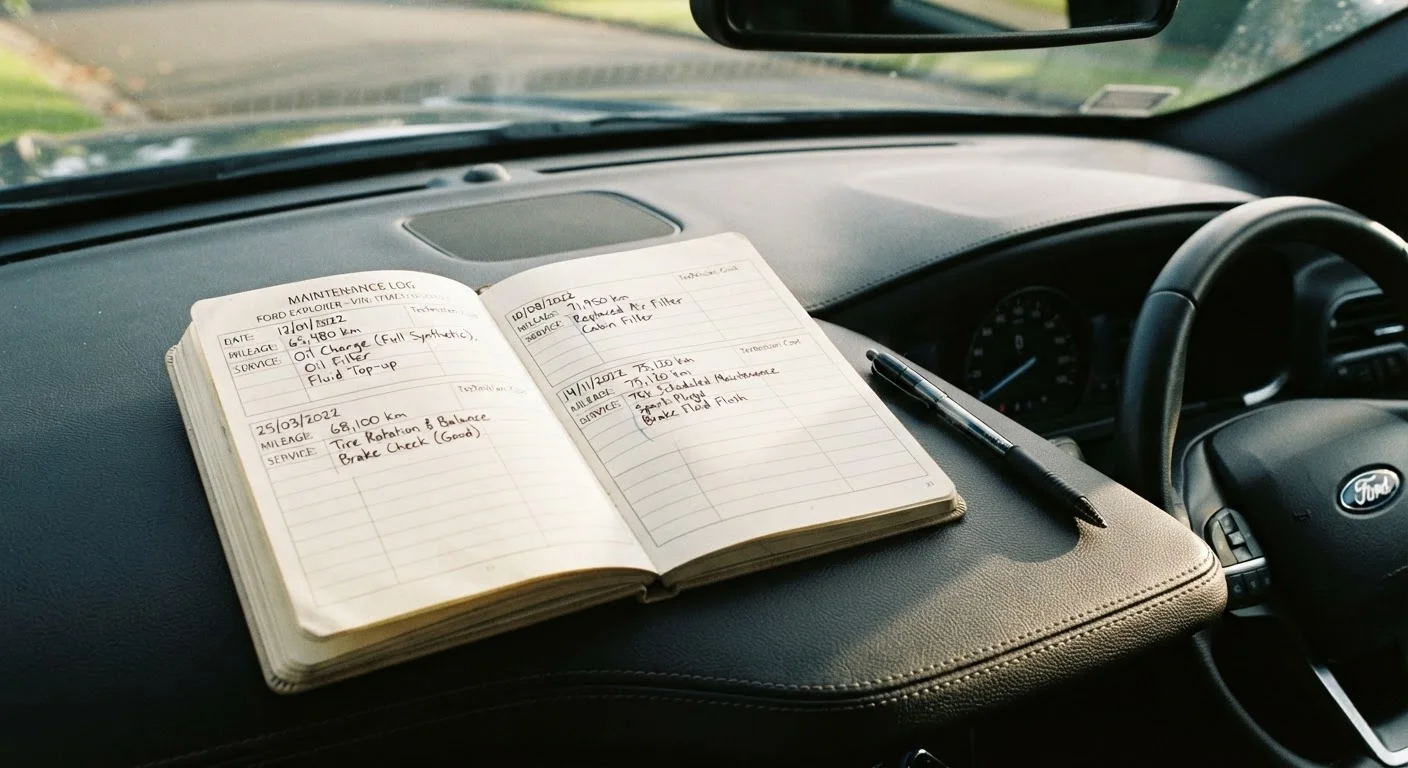
A vehicle maintenance log is a running record of every service event performed on a car - oil changes, tire rotations, brake inspections, fluid top-offs, filter replacements, and any repair work. Each entry typically notes the date, mileage, work performed, parts used, and who completed the service.
Logs can be kept in a small notebook stored in the glovebox, a spreadsheet, or one of several smartphone apps designed for this purpose. The format is largely a matter of personal preference. What matters is that entries are made promptly and consistently after each service event.
Most automakers publish specific service intervals in the owner's manual. Understanding how to read those intervals is the foundation on which a useful log is built - see our guide on interpreting your owner's manual service schedule for a detailed walkthrough.
The Real Advantages of Keeping a Log
The benefits of a maintenance log compound over time. A single oil change entry has modest value. Three years of consistent entries tell a story that can save money and prevent breakdowns.
Faster, more accurate diagnosis by mechanics
A documented service history lets technicians identify patterns - such as recurring coolant loss or repeated brake pad replacements - that would otherwise require more diagnostic time and expense to surface.
Supports resale value with verifiable evidence
Private buyers place meaningful weight on documented care. A complete log can distinguish a well-maintained vehicle from one with an unknown history, often justifying a higher asking price.
Protects warranty coverage with proof of compliance
Many manufacturer and extended warranties require maintenance to have been performed at specified intervals. A log provides the dated, mileage-stamped records needed to support a claim.
Helps owners stay on schedule proactively
Reviewing past entries makes it easy to see when the next oil change, tire rotation, or fluid flush is due - reducing the likelihood of missed service that can lead to preventable failures.
Builds awareness of total ownership costs
Tracking service costs over time gives owners a clearer picture of what a vehicle actually costs to maintain, which informs decisions about repairs versus replacement.
Up to 10%
Potential resale value increase with documented history
Industry observers and automotive appraisers generally note that vehicles with complete, verifiable service records can command a premium over comparable vehicles with no documentation.
30%+
Of used-car buyers cite service records as a key factor
Consumer surveys conducted by automotive research organizations consistently find that documented maintenance history ranks among the top considerations for private used-vehicle buyers.
For drivers managing older vehicles, a detailed log becomes even more critical. Our article on maintenance routines for high-mileage vehicles explains how documented service history helps identify patterns of wear before they become failures.
The Drawbacks Worth Acknowledging
A maintenance log is only as good as the discipline behind it. There are genuine limitations that every driver should consider honestly before assuming the habit will maintain itself.
Requires consistent effort to remain useful
A maintenance log with gaps is significantly less useful than a complete one. Missing even a few entries can leave mechanics and future buyers with an incomplete and potentially misleading picture.
Doesn't capture dealer or shop records automatically
Service performed at a dealership or independent shop may be logged in that business's system but not automatically transferred to the owner's personal record. The owner must make the entry manually.
Paper logs can be lost or damaged
A notebook kept in the glovebox is vulnerable to loss, water damage, or simply being misplaced during a vehicle sale. Digital backups or app-based logging reduce but don't eliminate this risk.
Log alone doesn't verify quality of work performed
A log records that a service occurred, not whether it was done correctly or with appropriate parts. It's documentation of activity, not a quality guarantee.
Digital Logs Have Backup Advantages
Smartphone apps designed for vehicle maintenance tracking automatically timestamp entries and store data in the cloud, making records harder to lose and easier to share. Several also send reminders based on mileage intervals you set. However, they still depend entirely on the owner entering information after each service - the technology doesn't remove the human step.
It's also worth noting that a log recorded entirely in one handwriting style - entered in bulk rather than after each service - may raise credibility questions when presented to a buyer or mechanic. Authenticity and consistency matter as much as completeness.
How a Log Supports Resale Value and Warranty Claims
When selling a vehicle privately, a clean, documented service history is one of the most persuasive tools available. Buyers evaluating a used car are making a trust decision under uncertainty. A logbook shifts that balance by providing verifiable evidence of care. This complements - but does not replace - a formal vehicle history report. Our guide on how to read a used vehicle history report covers what third-party reports reveal and where they fall short.
On the warranty side, manufacturers may require proof that maintenance was performed at specified intervals when evaluating a claim. A log with dated, mileage-stamped entries - especially from a licensed shop - provides that documentation. Without it, a warranty dispute can become difficult to resolve in the owner's favor.
For a broader view of how documentation habits fit into long-term vehicle ownership, see our overview on keeping a car safe, road-legal, and reliable long-term.
Making the Habit Stick
The most effective maintenance logs are built around triggers rather than willpower. Tying a log entry to an existing routine - adding a note immediately after a service appointment, before leaving the parking lot - removes the friction that causes gaps.
Pairing the log with a seasonal checklist makes it easier to stay on schedule with what needs to be recorded. Our seasonal car maintenance checklist provides a practical reference for what to check - and therefore what to log - at each point in the year.
Whether the log lives in a glove compartment notebook or a cloud-synced app, the goal is the same: a complete, honest record that reflects the actual life of the vehicle. That record, maintained consistently, is one of the most practical investments a car owner can make.
This article is for general informational purposes only and does not constitute professional mechanical or legal advice. Consult a qualified mechanic for guidance specific to your vehicle.
The content on this site is provided for informational purposes only and should not be considered a substitute for professional advice. While we strive to provide accurate and up-to-date information, we make no guarantees regarding its completeness or accuracy. Always consult a qualified professional for advice specific to your circumstances before making any decisions.