

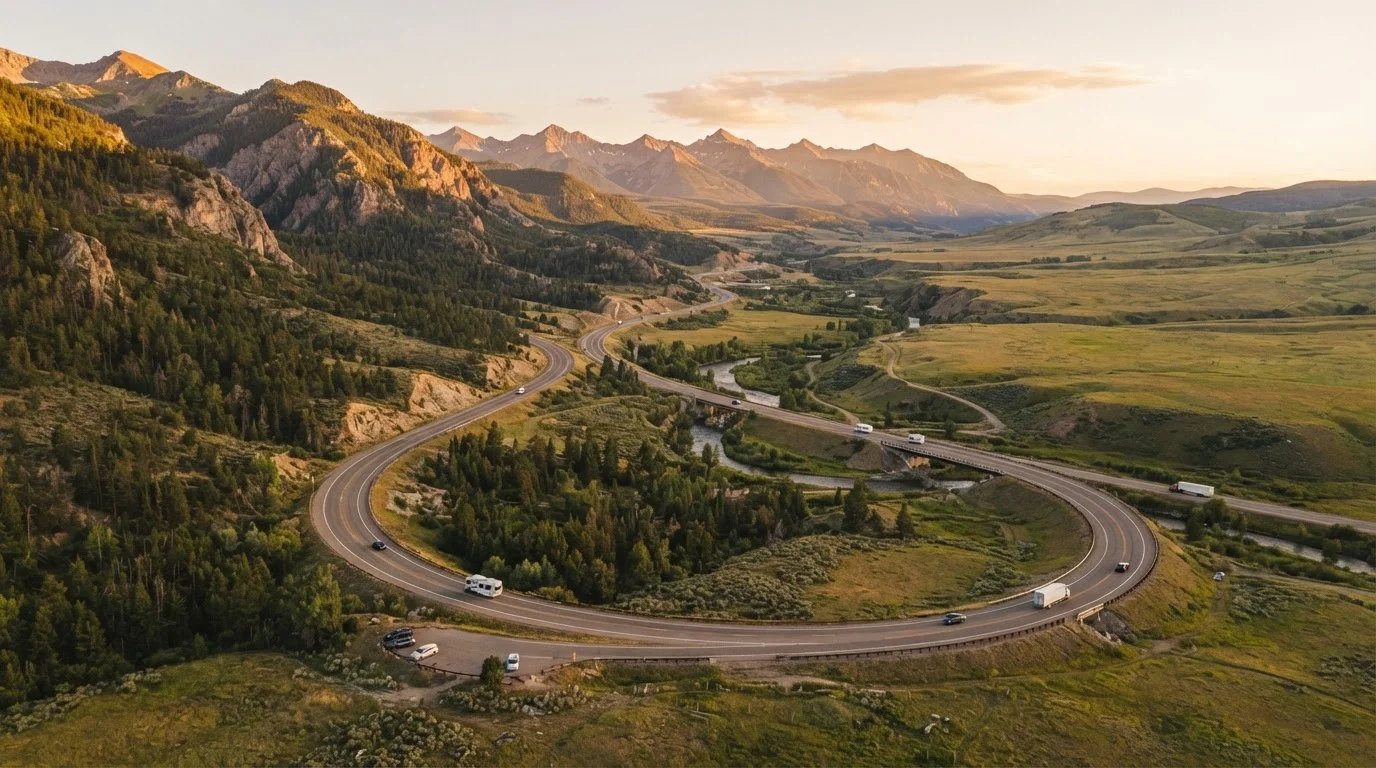
Choosing Your Destination
The destination decision shapes every other choice you'll make. Yet many travelers pick a place based on a social media post or a vague bucket-list item, then discover it doesn't fit their budget, travel party, or time window. A more useful starting point: work backward from your constraints.
Start with how many days you actually have - counting travel days honestly, not just nights at the destination. Then consider your group's composition. A solo traveler optimizing for flexibility has entirely different needs than a family with young children or a couple seeking rest over adventure. Factor in physical ability, dietary needs, and how much structure versus spontaneity the group genuinely wants.
Next, narrow by region. The continental US offers striking variety: coastal cities, high-altitude national parks, desert landscapes, river towns, and rural farmland. Each comes with its own logistical profile. A trip to a national park requires advance reservations and tolerance for limited amenity options. A city trip demands transit research and neighborhood selection. See our common city trip mistakes guide for a sobering look at what goes wrong when urban planning is done casually.
Before committing to a destination, list the three things you most want to do or experience there - then verify those things are actually achievable given your dates, budget, and group. Mismatched expectations are the root cause of most trip disappointments.
Many travelers fall in love with an idealized version of a destination rather than the logistical reality of visiting it on a specific budget and timeline.
When researching shoulder season dates, look at school calendar patterns in your destination's primary feeder markets - not just nationally. A beach town near a major metro may have its own local peak that doesn't align with the national calendar.
Regional feeder markets drive occupancy and pricing in ways that generic 'peak season' guides often miss, meaning you can find genuine off-peak windows that aren't obvious from standard advice.
Timing Your Trip Right
When you go matters nearly as much as where you go. Peak season at any destination - usually summer and major holidays - brings the highest prices, the longest lines, and the most crowded infrastructure. Traveling in shoulder season (the weeks just before or after peak) typically means lower accommodation rates, easier reservations, and a more authentic experience.
Seasonality isn't uniform across the country. The Pacific Northwest is most pleasant from July through September; Florida's coast is best avoided during summer humidity and hurricane season (June through November); the desert Southwest is hospitable in spring and fall but extreme in July and August. Research the specific climate rhythm of your destination, not just the generic idea of 'summer travel.'
For national parks especially, timing is a high-stakes decision. Some of the most visited parks now require timed entry reservations that sell out months in advance. Our guide on visiting national parks without the crowds covers reservation systems, lesser-known alternatives, and entry strategies in detail.
87%
Share of US leisure trips that are domestic
According to the US Travel Association, the vast majority of American leisure trips each year take place within the United States.
3-6 months
Advance booking window for busy national parks
Timed-entry reservations at the most visited US national parks frequently sell out months in advance, particularly for summer weekends.
15-25%
Typical cost premium for peak-season travel
Industry data consistently shows accommodation and airfare rates rise substantially during peak travel periods compared to shoulder and off-peak windows.
Transportation: Driving vs. Flying and Everything In Between
Transportation is usually the largest single variable in domestic trip planning - and the trade-offs are real. Flying saves time on long distances but introduces airport friction, baggage fees, and less flexibility once you land. Driving preserves that flexibility but costs more in fuel and time for trips over 400-500 miles. Amtrak is worth considering on select corridors (Northeast, Pacific Coast) where train travel is actually competitive in time and price.
The calculation changes based on your group size. A family of four driving a sedan from Denver to the Grand Canyon may spend less than four separate airfares - and arrive with their own vehicle. Two solo travelers from New York to Chicago may find a fare plus a rental car totals more than they'd expect. Run the full math, including parking, rental fees, and how you'll get around once you're there.
For a structured comparison, see our road trip vs. flying trade-offs breakdown covering cost, comfort, travel time, and flexibility by trip type.
Lodging and Accommodation Strategies
Where you stay affects more than your nightly rate - it determines your access to transportation, the pace of your days, and how much you'll spend on meals and activities nearby. Start by identifying which neighborhoods or areas are actually convenient for what you plan to do, rather than defaulting to the lowest price in the metro area.
Hotels, vacation rentals, and hostels each carry different trade-offs. Hotels offer predictable amenity standards and easier cancellation policies, but often cost more per night. Vacation rentals work well for groups or longer stays where having a kitchen meaningfully reduces food costs. Understand cancellation terms before booking - non-refundable rates can look appealing but leave you exposed if plans shift.
Non-Refundable Rates Carry Real Risk
Non-refundable accommodation rates can be 10-20% cheaper, but they offer zero recourse if your plans change. Unless your travel dates are completely fixed and you have travel insurance that covers cancellation, weigh that savings against the risk of losing the entire amount. Read cancellation terms before you book, not after.
Booking directly through a property's own website sometimes surfaces rates or perks not available on third-party platforms. It also tends to make dispute resolution easier if something goes wrong during your stay. This isn't a universal rule, but it's worth checking before completing a booking elsewhere.
Building a Realistic Budget
Underestimating trip costs is the most common source of post-trip regret. The solution isn't spending less - it's knowing what you'll actually spend before you go. A useful travel budget has five line items: transportation (to and at destination), lodging, food, activities and admissions, and a miscellaneous buffer of 10-15% for the unexpected.
Each category requires real research, not guesses. Look up actual restaurant prices in your destination, not just national averages. Get exact quotes for car rentals including fees and insurance. Check admission prices for attractions you plan to visit - many have increased significantly in recent years.
Our dedicated guide on building a US travel budget that holds up walks through each category with a step-by-step approach you can apply before any trip.
Packing with Purpose
Overpacking is a nearly universal beginner mistake, and it creates compounding problems: checked baggage fees on flights, slower movement through airports and transit, and the physical burden of carrying more than you need. The discipline of packing light is a skill worth developing deliberately.
A carry-on can cover most domestic trips of one to two weeks when you plan clothing choices around a consistent color palette and account for laundry access. The key is resisting the impulse to pack 'just in case' items that almost never get used. See our carry-on packing strategies guide for a practical system that works for trips of varying lengths.
Beyond clothing, prioritize documents (ID, reservation confirmations, insurance cards), any medications you take regularly, and a basic first-aid kit. Power adapters and phone chargers are worth double-checking - losing one mid-trip is a disproportionate disruption.
Handling the Unexpected
Even well-planned trips encounter disruptions: flight delays, illness, weather events, or accommodations that don't match expectations. The travelers who navigate these situations calmly are usually the ones who anticipated them at a high level before leaving.
Keep digital and paper copies of key documents - booking confirmations, travel insurance policy numbers, and emergency contacts - accessible offline. Know your airline's delay and cancellation policies before you're standing at the gate needing to invoke them. If you booked through a third-party platform, understand how disputes are handled on that platform versus directly with the property or carrier.
Travel insurance is worth understanding as a general category. Policies vary significantly in what they cover - trip cancellation, medical emergencies, baggage loss - and under what conditions. Read the terms of any policy before purchasing rather than assuming standard coverage. This is general information; consult policy documents and a licensed adviser for guidance specific to your situation.
Finally, build time buffers into your itinerary. Leaving the last day before departure as a light day - rather than scheduling it fully - provides recovery time and prevents a single delay from cascading into a missed flight or an exhausted return home.
This article provides general travel planning information for educational purposes. Prices, conditions, entry requirements, and policies change frequently - always verify details directly with providers and relevant government sources before traveling.
The content on this site is provided for informational purposes only and should not be considered a substitute for professional advice. While we strive to provide accurate and up-to-date information, we make no guarantees regarding its completeness or accuracy. Always consult a qualified professional for advice specific to your circumstances before making any decisions.