

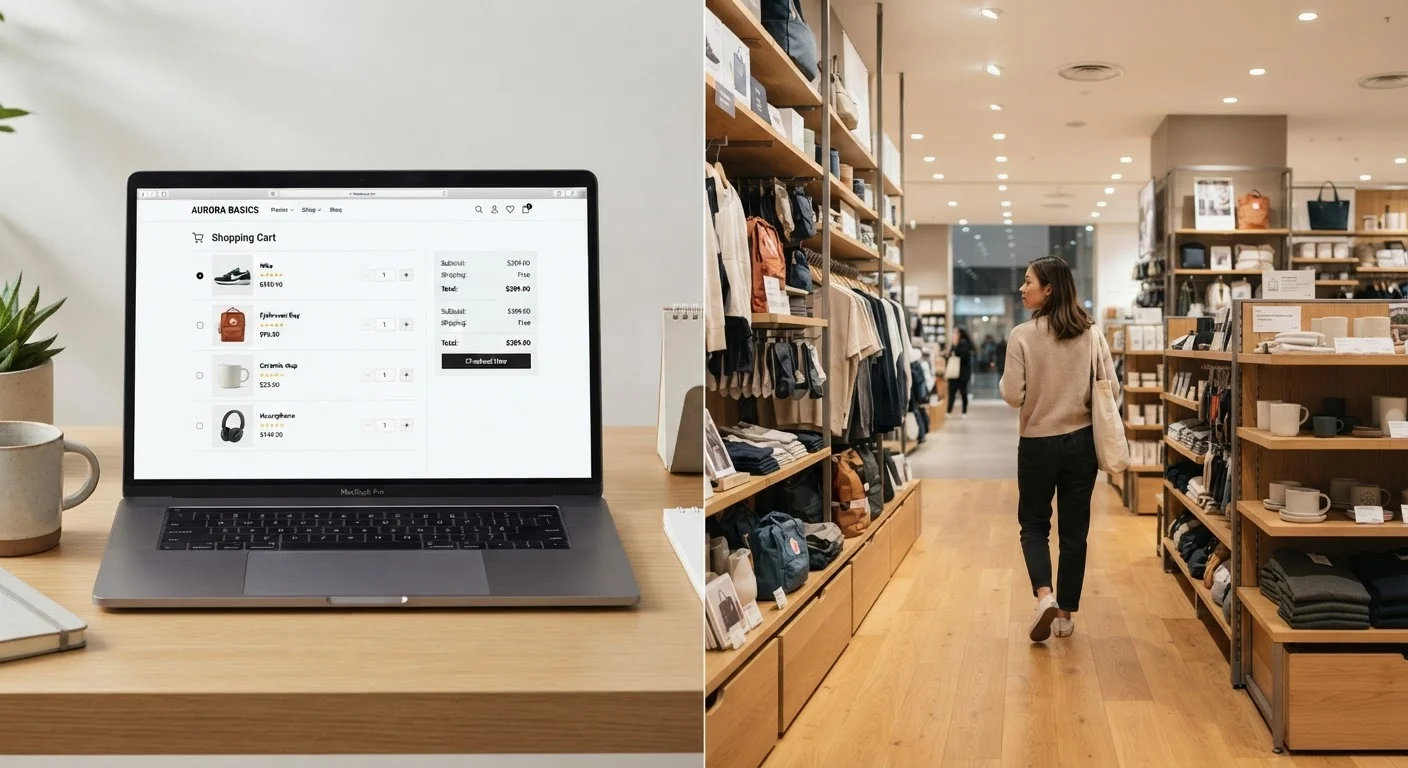
Option A
Online Shopping
The convenient, comparison-friendly channel.
Best for: Researched purchases, standardized goods, price-sensitive buyers with flexible delivery timelines.
Option B
In-Store Shopping
The hands-on, immediate-gratification option.
Best for: Fit-dependent items, same-day needs, and purchases where tactile evaluation matters.
The Core Trade-Off: Convenience vs. Confidence
Online shopping's primary advantage is frictionless access - you can browse hundreds of options, read reviews, and compare prices without leaving home. That efficiency is real and valuable, particularly for commodity goods where what you see is reliably what you get: phone cases, books, household staples, and clearly-specced electronics.
In-store shopping offers something harder to quantify: sensory confirmation. You can assess fabric weight, judge whether a sofa's cushions are too firm, or verify that a lamp's finish actually works in warm light. For categories where physical evaluation changes your decision, the trip to a store isn't wasted time - it's due diligence.
The practical question isn't which channel is better overall, but which suits the specific product and your specific risk tolerance for being wrong. For a deeper look at how this plays out category by category, see choosing where to buy based on what you're purchasing.
| Criterion | Online Shopping | In-Store Shopping |
|---|---|---|
| Price transparency | High - easy to compare across sites | Limited to what's on the shelf |
| Product selection | Very broad, including niche items | Limited to store inventory |
| Sensory evaluation | Not possible before purchase | Full tactile and visual assessment |
| Speed of acquisition | Hours to days depending on shipping | Immediate - leave with the item |
| Return ease | Requires repacking and shipping | Direct in-person return |
| Hidden costs | Shipping fees, return postage | Travel time, parking, impulse buys |
| Fit-dependent categories | Higher risk of needing a return | Try before you commit |
Where Each Channel Has a Clear Edge
Online advantages: Price visibility is genuinely better online. You can verify whether a listed price reflects actual market value in seconds, something that's harder to do mid-aisle. Online also wins on selection depth - retailers don't need floor space, so inventory is broader. For buyers with accessibility constraints or limited local retail options, the internet isn't just convenient, it's often the only practical option.
In-store advantages: Immediacy matters more than it's often credited. Shipping delays, porch theft, and packaging damage are genuine downsides of online delivery. In-store purchases also make returns straightforward - you hand it back, you're done. Return logistics for online orders (repackaging, printing labels, drop-off trips) add real friction that doesn't show up in the listed price.
There's also a less obvious in-store edge: salespeople can sometimes surface product information or flag compatibility issues that a product listing won't. That said, sales incentives can also push you toward higher-margin options, so approaching those conversations with a prepared list of questions is worthwhile.
~22%
Average e-commerce return rate in the U.S.
According to the National Retail Federation, online return rates are roughly double those of physical store purchases, with apparel among the highest categories.
2 in 3
Shoppers research online before buying in-store
Surveys from Deloitte's consumer research have consistently found that a majority of in-store shoppers do online research before visiting a physical location.
Hidden Costs That Shift the Comparison
The sticker price is rarely the full story in either channel. Online orders can accumulate shipping fees, especially for heavy or oversized items. Some retailers waive these above a purchase threshold, which can nudge you toward spending more than intended. Returns for fit-dependent items - clothing and footwear especially - often involve a restocking fee or require the buyer to cover return postage.
In-store shopping has its own hidden costs. Driving to a store, parking, and the time investment are real expenses. Impulse additions to a cart (physical or digital) inflate the final total in both channels, but the triggers differ: in-store, it's end-cap displays and checkout-lane products; online, it's recommendation algorithms and bundled offers.
Before committing to any significant purchase, it's worth working through a structured set of questions - including checking return terms, verifying specs, and confirming final landed cost. A pre-purchase checklist can help you avoid the most common oversights.
It's also worth keeping in mind that some common assumptions about deals don't hold up under scrutiny. Shopping myths that cost people money covers several beliefs - about clearance, bulk buying, and online pricing - that are worth re-examining.
When to Use Both Channels Together
Many experienced shoppers treat the two channels as complementary rather than competing. A common pattern: evaluate an item in-store for fit and quality, then buy it online if the price difference is meaningful. The reverse also works - research and compare online to narrow your choices, then visit a store to make a final call with your hands on the product.
This hybrid approach is particularly useful for larger purchases like appliances, mattresses, or furniture, where the investment warrants extra certainty. It's also a reasonable strategy for apparel: use in-store visits to establish your sizing with a brand, then buy confidently online later.
For a broader framework on building consistent, confident purchasing habits - covering everything from research habits to understanding pricing cycles - Smart Shopping From the Ground Up is a useful starting point. And if timing is part of your strategy, seasonal pricing cycles offers context on when categories tend to see meaningful price movement.
Outlet Stores: A Third Option Worth Understanding
If you're considering outlet stores as a middle ground, it's worth knowing that much of the merchandise sold there is manufactured specifically for those locations - not excess inventory from mainline stores. What outlets are actually offering is a useful read before assuming you're getting the same product at a lower price.
The content on this site is provided for informational purposes only and should not be considered a substitute for professional advice. While we strive to provide accurate and up-to-date information, we make no guarantees regarding its completeness or accuracy. Always consult a qualified professional for advice specific to your circumstances before making any decisions.