

Our Verdict
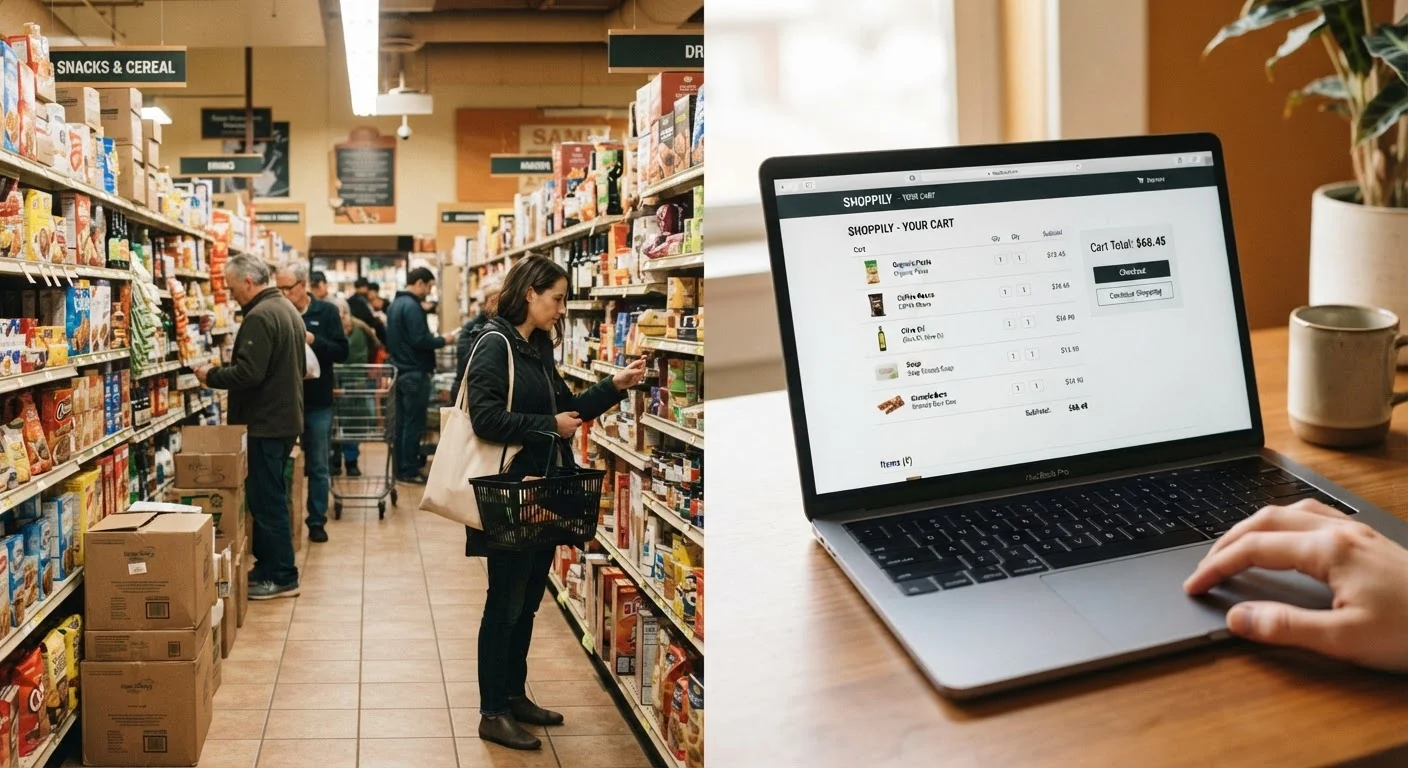
Neither channel consistently outperforms the other - the product being purchased is the deciding factor. Online shopping tends to deliver broader selection and easier price comparison for standardized goods, while in-store shopping reduces risk for items where fit, texture, or immediate use matters most. Smart shoppers treat both channels as tools and deploy each where it gives them the most control.
| Best for | Recommended |
|---|---|
| Buying clothing, shoes, or furniture | In-Store |
| Purchasing electronics, media, or standardized household goods | Online |
| Time-sensitive needs or same-day necessity | In-Store |
| Researching and comparing specs across many models | Online |
Why the Channel Matters Less Than the Category
The debate over in-store versus online shopping is often framed as a lifestyle preference. It isn't - or at least, it shouldn't be. The smarter question is: what are you buying? A product's characteristics - how standardized it is, whether fit matters, how quickly you need it, and how easy it is to return - largely determine which channel serves you better.
Defaulting to one channel for everything costs you. Online-only shoppers sometimes absorb avoidable return shipping hassles on clothing. In-store-only shoppers sometimes overpay for electronics when the same item is cheaper and freely available online. Neither habit is inherently smart. See our guide to building smarter shopping habits for a broader foundation.
Where In-Store Has a Clear Edge
Certain product categories are poor candidates for remote purchasing - not because online stores are untrustworthy, but because the purchase decision itself depends on physical evaluation.
- Clothing and footwear: Sizing inconsistency across brands is well-documented. Trying before buying eliminates the most common reason for returns. If you do buy apparel online, check return policies carefully before checkout.
- Furniture and mattresses: Photos rarely convey scale, firmness, or fabric texture accurately. A sofa that looks neutral on screen may feel stiff or oversized in your actual room. In-person evaluation reduces expensive mistakes.
- Perishables and fresh food: Grocery delivery has expanded dramatically, but quality control on fresh produce, meat, and dairy is harder to guarantee when someone else is selecting it.
- Prescription eyewear and hearing aids: These require professional fitting and measurement that can't be replicated online, regardless of how convenient the ordering process looks.
- Urgent needs: No delivery window beats walking out with the item in hand.
Use Both Channels Together
A common approach is to evaluate a product in-store - checking fit, weight, or build quality - then compare prices online before finalizing a purchase. Retailers sometimes match online prices if asked, so checking both channels before committing costs little beyond a few minutes. This is especially practical for mid-range electronics and furniture.
Where Online Has a Clear Edge
For standardized, spec-driven, or niche products, online purchasing typically delivers advantages that physical retail can't match.
- Consumer electronics: When a model number is the same everywhere, price becomes the primary variable. Online tools make side-by-side price comparison straightforward. That said, verify total cost - shipping, potential sales tax, and return shipping fees affect the final number.
- Books, software, and media: Fully standardized goods with no fit component. Online selection is far broader, and digital delivery eliminates shipping entirely.
- Specialty or hard-to-find items: Physical retail is constrained by shelf space. Online marketplaces carry a vastly wider catalog of niche products, replacement parts, and international goods.
- Bulky household staples: Paper goods, cleaning supplies, and non-perishable pantry items are predictable and often cheaper per unit when bought in volume online with subscription discounts.
Before committing to any online purchase, run through a pre-purchase checklist to verify seller credibility and return terms.
| Criterion | In-Store | Online | |
|---|---|---|---|
| Price transparency | Limited to local inventory | Easy cross-retailer comparison | |
| Product selection | Constrained by shelf space | Vastly broader catalog | |
| Fit and sensory evaluation | Fully available | Not possible before delivery | |
| Immediacy | Walk out with item same day | Delivery window required | |
| Return friction | Typically low; drop off in person | Varies; may include shipping cost | |
| Impulse purchase risk | Higher - environment is designed for it | Lower - but cart abandonment is easier | |
| Best product fit | Clothing, furniture, urgent needs | Electronics, specialty, bulky staples |
Hidden Costs and Trade-offs to Account For
The sticker price is rarely the whole story in either channel.
Online: Shipping costs, return shipping fees (increasingly common), and sales tax collection have narrowed the price gap with physical retail. Delivery windows add delay. And product photos can misrepresent color, scale, and material quality.
In-store: Impulse purchases are more likely in a physical environment designed for them. Inventory is limited to what the location stocks. Weekend crowds, parking, and travel time are real costs even if they don't show on a receipt.
Loyalty programs can influence this calculus in either direction. Rewards programs and cashback apps sometimes favor one channel - or one retailer - enough to tip a close decision.
Discount structures also behave differently by channel. Understanding how percentage-off and bundle deals work helps you evaluate whether an apparent deal is actually favorable.
A Practical Decision Framework
Before choosing where to buy, work through a few quick questions:
- Does fit, texture, or sensory evaluation matter? If yes, in-store is lower risk.
- Is the product fully standardized by model number or SKU? If yes, shop where the verified total price is lower.
- What are the return terms? Free, easy returns reduce online risk substantially. Restocking fees or return-shipping charges increase it.
- Do you need it today? In-store wins on immediacy.
- Is selection limited locally? Online wins for niche or specialty goods.
This framework won't cover every edge case, but it redirects the question away from habit and toward the actual characteristics of what you're purchasing. For larger or more complex purchases - like a vehicle - the channel question is just one layer; see our overview of buying vs. leasing a car for an example of how many factors can be in play at once.
The content on this site is provided for informational purposes only and should not be considered a substitute for professional advice. While we strive to provide accurate and up-to-date information, we make no guarantees regarding its completeness or accuracy. Always consult a qualified professional for advice specific to your circumstances before making any decisions.