

Our Verdict
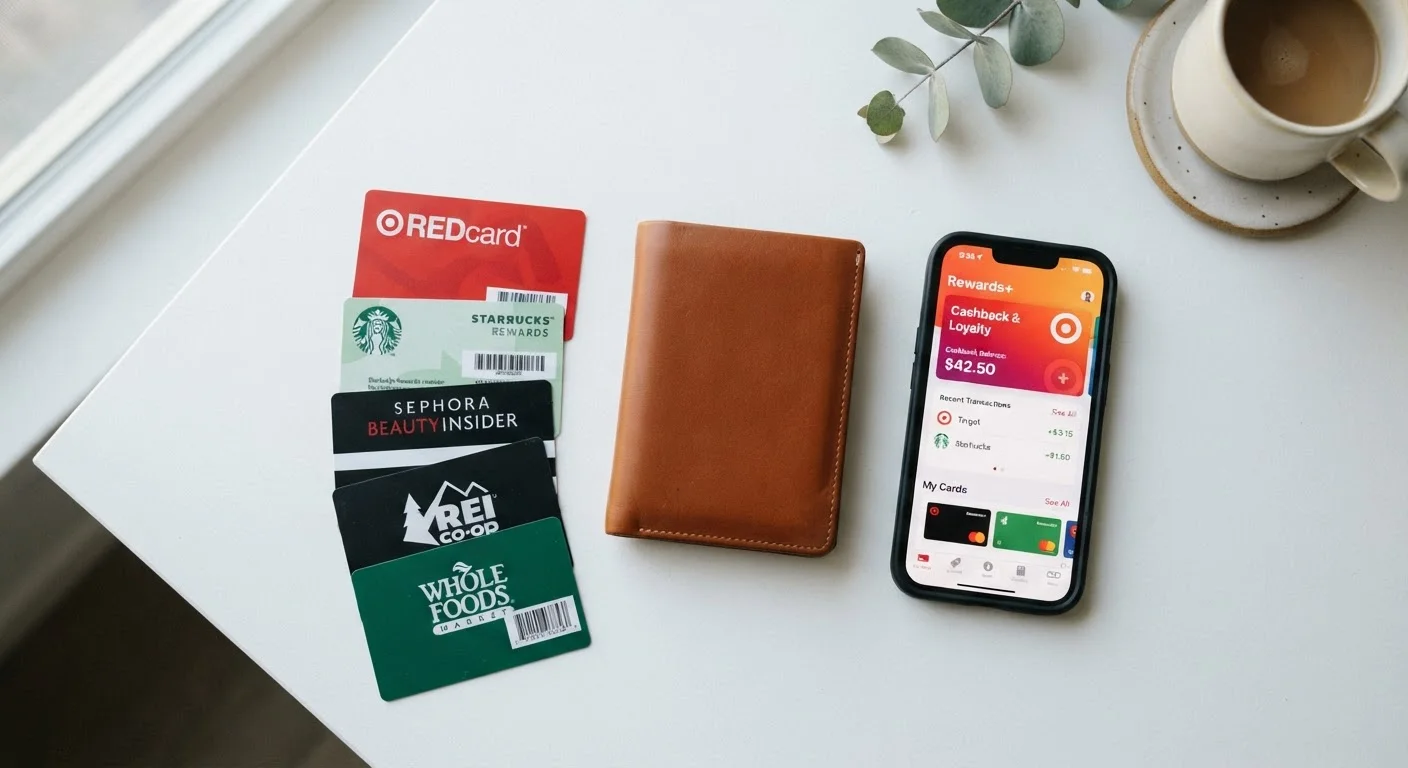
No single savings tool wins outright. Store loyalty programs make the most sense for shoppers with predictable brand habits. Rewards cards deliver the most value for disciplined spenders who pay their balance in full each month. Cashback apps suit casual savers looking for a low-commitment option with no credit implications. Understanding the actual mechanics of each helps you pick the right one - or decide whether layering them is worth the effort.
| Best for | Recommended |
|---|---|
| Shoppers who concentrate spending at one or two retailers | Store Loyalty Programs |
| Disciplined spenders who pay their full balance monthly | Rewards Credit Cards |
| Casual savers who want no credit risk or annual fees | Cashback Apps |
| Organized consumers tracking spending across multiple channels | A deliberate combination of all three |
How Each Tool Actually Works
Before comparing trade-offs, it helps to be clear on the mechanics. Each of these tools generates value differently - and that difference matters a lot in practice.
Store loyalty programs are retailer-run systems that track your purchases and return value in the form of points, credits, or discounts. You opt in, usually for free, and earn rewards only at that specific chain or its partners. The retailer benefits by gaining data on your shopping habits and incentivizing repeat visits.
Rewards credit cards are issued by banks or card networks and return a percentage of your spending - either as points, miles, or direct cashback - on qualifying purchases wherever the card is accepted. Some cards offer flat rates on everything; others apply higher rates to specific categories like groceries or gas. Annual fees vary widely, from none to several hundred dollars, and the value proposition depends heavily on whether you carry a balance. Interest charges on unpaid balances can erase months of accumulated rewards. For a broader look at how credit cards compare to other borrowing tools, see how credit cards stack up against personal loans.
Cashback apps (sometimes called rebate apps) operate as a layer on top of your existing shopping. You activate offers, upload receipts, or link accounts, and receive a percentage back on eligible purchases. They work across multiple retailers but require active engagement - offers must be selected before purchase, and payouts are often modest.
The Core Trade-offs Side by Side
Each tool involves a real exchange. Here's how they compare across the dimensions that matter most to everyday consumers.
| Store Loyalty Programs | Rewards Credit Cards | Cashback Apps | |
|---|---|---|---|
| Cost to join | Free | Free to $500+/year | Free |
| Where rewards apply | One retailer or partners | Anywhere card is accepted | Select retailers and offers |
| Typical return rate | 1-5% in store credits | 1-5% on purchases | 0.5-3% per offer |
| Financial risk | None | High if balance carried | None |
| Effort required | Low - scan at checkout | Low - use card normally | Medium - activate offers |
| Data shared | Purchase history with retailer | Spending data with bank | Receipt or account data |
| Flexibility | Low - retailer-specific | High - broad acceptance | Medium - offer-dependent |
One pattern worth noting: the tools that offer the highest potential return - rewards cards - also carry the highest financial risk. The tools that carry the least risk - cashback apps - tend to return the least. Store programs sit somewhere in the middle, offering solid value for loyal shoppers but penalizing those who spread spending around.
When Combining Tools Makes Sense - and When It Doesn't
It's tempting to stack all three: swipe a rewards card, scan a loyalty barcode, and later submit the receipt to a cashback app. In theory, you'd earn on all three simultaneously. In practice, this only works if a few conditions are met.
Stack Strategically, Not Automatically
Before layering all three tools on a single purchase, verify which rewards actually combine. Some loyalty programs explicitly exclude purchases made with certain credit cards. Others limit cashback app eligibility to specific payment methods. A five-minute check before your first stacked transaction can prevent a disappointing payout.
The combination approach works well for organized spenders who already track where their money goes. If you're not currently monitoring your spending, adding multiple reward systems can create a false sense of savings while masking higher overall expenditure. A tool like those covered in common spending tracking methods can help you see whether the rewards are actually outpacing any behavior changes they're causing.
There's also an opportunity cost question. Time spent managing multiple programs, tracking offers, and redeeming points has real value. If the hourly return on that effort is low, simpler approaches - like a single flat-rate cashback card used consistently - may net you more with less friction.
For shoppers weighing where to spend in the first place, it's also worth thinking about channel. Where you buy affects what rewards apply - some programs favor in-store, others online-only.
Watch Out for These Common Pitfalls
Each tool has a specific failure mode that catches consumers off guard.
- Loyalty programs: Points expire, program terms change without much notice, and the value per point can be devalued over time. Always check expiration policies before banking on a large redemption.
- Rewards cards: Carrying a balance is the single biggest risk. Even a modest interest rate can wipe out an entire year's worth of cashback or points in a matter of months. Cards with large sign-up bonuses often come with minimum spend requirements that can push you to buy things you wouldn't otherwise.
- Cashback apps: The most common pitfall is purchasing something specifically to activate an offer - spending $40 to earn $1.50 back isn't a savings strategy. Offers also change frequently, so assuming an item is covered without checking can mean submitting a receipt for nothing.
Rewards Don't Offset Debt Costs
If you're currently carrying credit card debt, adding a rewards card to your wallet is unlikely to improve your financial picture. Interest charges on revolving balances will almost certainly exceed any rewards earned. It may be worth reviewing your overall approach to saving and debt before prioritizing rewards optimization - a concept explored in the debt vs. savings trade-off.
It's also worth noting that all three tools involve sharing purchase data to varying degrees. Loyalty programs are explicit about this; it's the core of their business model. Cashback apps may aggregate and sell anonymized data. Rewards card spending is tracked by the issuing bank. None of this is hidden, but consumers should be aware that their purchase history is part of the value exchange.
The content on this site is provided for informational purposes only and should not be considered a substitute for professional advice. While we strive to provide accurate and up-to-date information, we make no guarantees regarding its completeness or accuracy. Always consult a qualified professional for advice specific to your circumstances before making any decisions.