

Option A
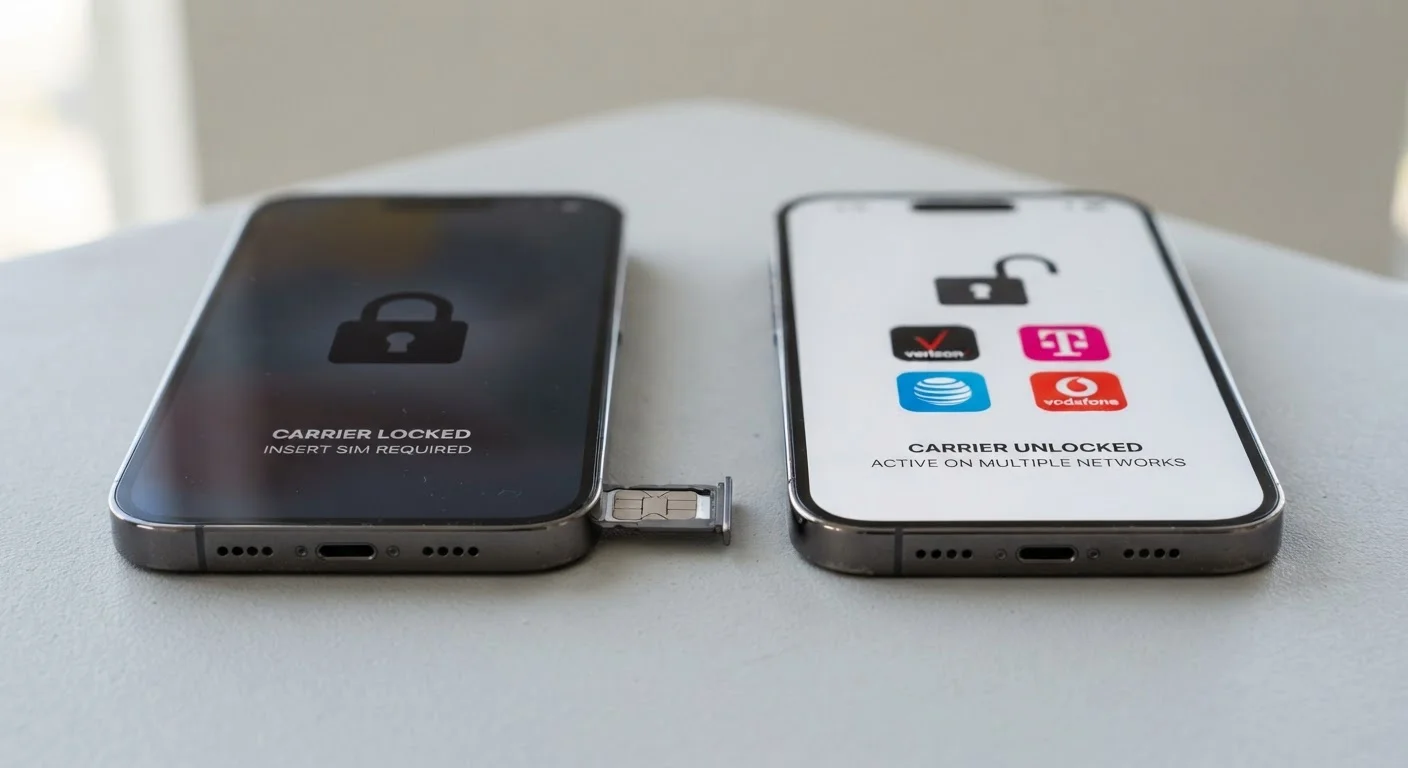
Unlocked Phones
The flexible, network-agnostic choice.
Best for: Consumers who want to switch carriers freely, travel internationally, or use MVNOs without restriction.
Option B
Carrier-Locked Devices
The subsidized, convenience-first option.
Best for: Buyers who prioritize installment financing through a specific carrier and don't anticipate switching networks soon.
What 'Locked' and 'Unlocked' Actually Mean
When a carrier sells you a subsidized or installment-financed phone, they typically install software that restricts the device to their own network. This is what it means for a phone to be carrier-locked - it will reject SIM cards from other providers. The lock is enforced at the software level, not through any physical difference in the hardware.
An unlocked phone, by contrast, carries no such restriction. It can accept a SIM card from any compatible carrier - a major network, a regional provider, or an MVNO. You can learn more about how MVNOs use major network infrastructure in our guide to MVNOs explained.
It's worth clarifying two distinct categories of unlocked phones. A factory-unlocked device was never locked to any carrier - typically sold directly by the manufacturer or a retailer. A carrier-unlocked device started out locked but was subsequently unlocked after meeting the carrier's eligibility conditions. Both function identically for the end user once unlocked.
| Criterion | Unlocked Phone | Carrier-Locked Device |
|---|---|---|
| Network flexibility | Works on any compatible carrier | Restricted to one carrier until unlocked |
| International SIM use | Accepts foreign SIM cards freely | Cannot use foreign SIMs while locked |
| Upfront cost | Often higher (full retail price) | Often lower via installment plans |
| MVNO compatibility | Immediate, no restrictions | Only after carrier unlocks device |
| Resale value | Generally higher - broader buyer pool | Lower while locked; improves once unlocked |
| Switching carriers | Switch anytime | Must meet unlock eligibility first |
| Device financing options | Typically purchased outright | Installment plans typically available |
How Carrier Locking Works - and When It Ends
Carriers lock devices primarily to protect their financial interest when a phone is sold below cost or financed over 24-36 months. Unlocking before the device is paid off would allow a customer to take a subsidized phone to a competitor while still owing money.
Under FCC consumer guidelines and individual carrier policies, carriers are required to unlock devices once certain conditions are met. These typically include: the device being fully paid off, the account being in good standing for a minimum period (often 60 days for postpaid accounts), and the device not being reported as lost or stolen. Prepaid devices usually have their own timelines - often 12 months of active service on that carrier.
Once a phone is unlocked, that status is permanent. The carrier cannot re-lock it. If you're unsure about the difference between prepaid and postpaid account structures, our article on prepaid vs. postpaid wireless breaks down those distinctions clearly.
How to Request an Unlock
To unlock an eligible device, contact your carrier directly - most offer an online unlock request form or a customer service line. You'll typically need to provide the device's IMEI number (found in Settings > About Phone or by dialing *#06#). Processing times vary by carrier but are usually completed within a few business days. Keep your unlock confirmation for your records.
Network Compatibility: The Detail That Matters Most
Unlocking a phone does not automatically guarantee it will work on every carrier. US carriers use different radio frequency bands, and a phone must support the specific bands used by a target network to function properly - particularly for 5G and LTE coverage. For example, a phone originally built for one carrier's band configuration may have limited or degraded performance on another, even if it accepts the SIM.
Before switching carriers with an unlocked phone, verify the device's supported bands against the target carrier's published frequency list. Most carriers provide an online compatibility checker. This step is especially important if you're considering an international device brought into the US market.
For a plain-language explanation of 5G, LTE, and related network terminology, see our guide on carrier jargon decoded. And if you're exploring eSIM-based switching - which eliminates the physical SIM swap entirely - our article on eSIM vs. physical SIM explains how that process works.
~40%
US phones sold unlocked at retail
Industry analysts estimate that roughly 40% of smartphones sold in the US are purchased unlocked directly from manufacturers or retailers, a share that has grown steadily as consumers seek more flexibility.
24-36 months
Typical carrier installment plan length
Most major US carriers offer device financing spread over 24 to 36 months, during which the device generally remains locked to that carrier's network.
Practical Implications for Travelers and Plan Switchers
For international travelers, the locked vs. unlocked distinction has immediate practical consequences. A carrier-locked phone cannot use a local SIM card purchased abroad - meaning you're dependent on your US carrier's international roaming rates or day-pass programs, which can be significantly more expensive. An unlocked phone lets you insert a local SIM from a destination country and pay local rates for calls and data.
For domestic plan switchers, an unlocked phone removes the friction of waiting for carrier approval before moving to a new provider. This flexibility is particularly valuable if you want to explore MVNOs, which often offer lower monthly costs by running on the same physical infrastructure as major carriers. Our guide on choosing a phone plan when you travel internationally covers how to evaluate your options before departure.
Carrier-locked devices aren't without merit - installment financing through a carrier can make a flagship phone accessible without a large upfront payment, and if you're satisfied with your current carrier's coverage and pricing, the lock may never be a practical obstacle. The key is understanding the trade-off before you commit.
The content on this site is provided for informational purposes only and should not be considered a substitute for professional advice. While we strive to provide accurate and up-to-date information, we make no guarantees regarding its completeness or accuracy. Always consult a qualified professional for advice specific to your circumstances before making any decisions.