

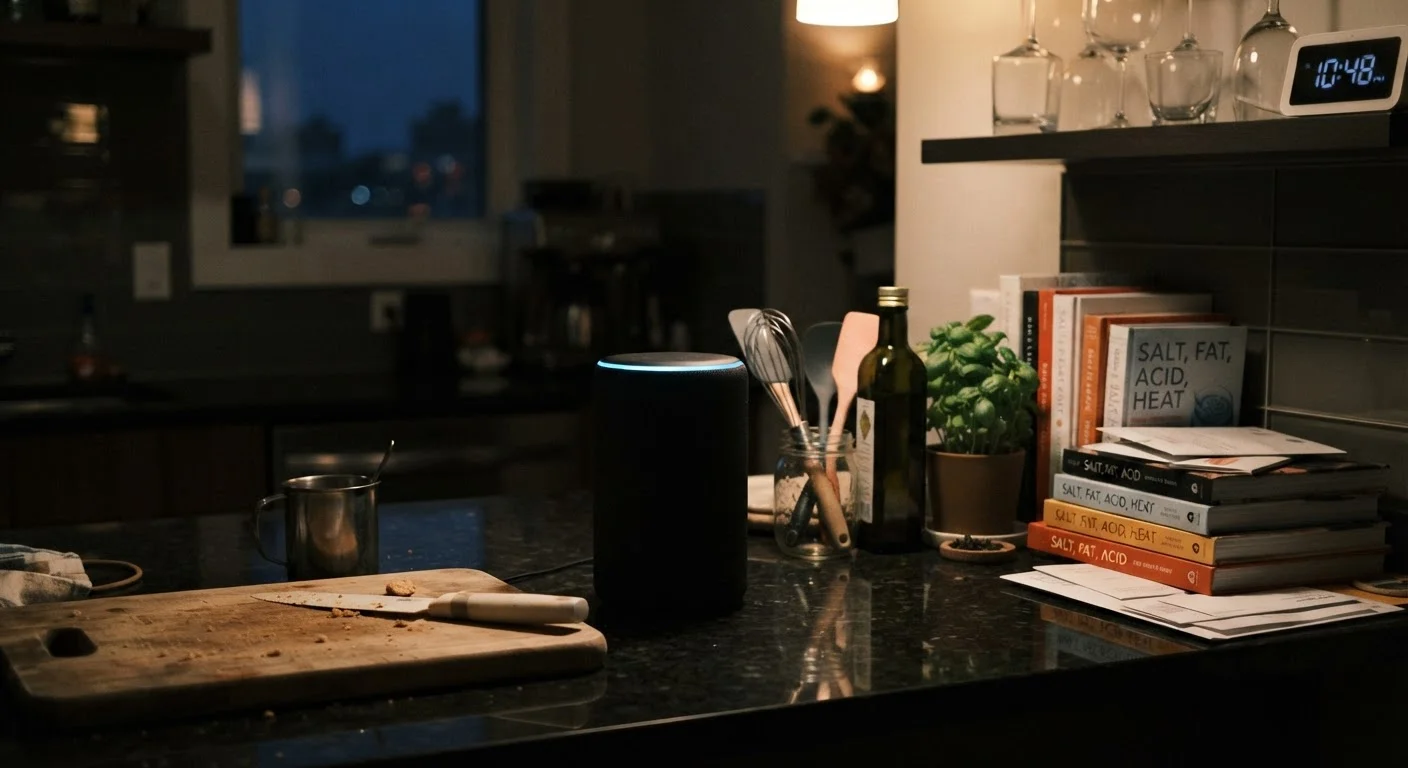
How Smart Speakers Actually Work
Before separating myth from fact, it helps to understand the basic architecture of a smart speaker. These devices contain one or more microphones that continuously sample ambient audio at a low processing level. A dedicated chip compares that audio against a stored acoustic model of the wake word. This all happens on-device, without an internet connection, and without storing any audio.
Only when the wake word is detected does the device begin recording your command and transmitting it - encrypted - to the manufacturer's cloud servers for interpretation. The response is then sent back to your device. This is a fundamentally different model from, say, a phone app that you actively open. Understanding this distinction is the starting point for any honest conversation about privacy.
For a broader look at how connected devices handle your data by default, our breakdown of smart TV data collection illustrates how different the data practices can be across product categories.
Myth
My smart speaker is recording everything I say, all day long.
Fact
Smart speakers process audio locally to detect a wake word; they only send a clip to the cloud after activation.
The microphones in devices like these are always listening in a narrow technical sense - but only for the specific acoustic pattern of a wake word (such as "Hey Siri" or "Alexa"). That processing happens on a low-power chip inside the device itself. Only once that pattern is detected does the speaker begin recording and transmitting audio to the manufacturer's servers. The device does not stream a continuous audio feed to the cloud. Independent security researchers have broadly confirmed this architecture through network traffic analysis, finding no evidence of constant audio uploads during idle periods.
Myth
Smart speakers never accidentally activate - the wake word detection is foolproof.
Fact
False activations are a documented and common occurrence, sometimes triggered by similar-sounding words in conversation or on TV.
Wake word detection is a statistical process, not a perfect one. Researchers at Northeastern University and other institutions have published studies showing that smart speakers can be inadvertently triggered by phrases phonetically similar to their wake words. When that happens, a short recording - typically several seconds - is sent to the cloud just as an intentional command would be. This is one of the most legitimate privacy concerns associated with these devices, and it's worth reviewing your device's activity log periodically to see when activations occurred.
Myth
No human ever listens to what my smart speaker records.
Fact
Major manufacturers have confirmed that human contractors have reviewed a subset of voice recordings for quality and accuracy improvements.
Reports from multiple news organizations, later confirmed by companies including Amazon, Apple, and Google, revealed that human reviewers listened to a small percentage of voice assistant recordings to improve transcription and response accuracy. This practice was typically not prominently disclosed in privacy policies at the time. Since those disclosures, all three companies have updated their policies and now offer users the ability to opt out of having their audio reviewed by humans, and to delete stored recordings. Checking your device's privacy settings is a concrete step you can take today.
Myth
Smart speakers are secretly listening and feeding data to advertisers in real time.
Fact
There is no credible technical or regulatory evidence that smart speakers covertly stream conversations to ad networks.
This is one of the most persistent fears about smart speakers, often fueled by the unsettling experience of mentioning a product and then seeing an ad for it shortly afterward. However, multiple security researchers who have monitored network traffic from these devices have not found evidence of covert audio transmission to advertising platforms. The more likely explanation for seemingly coincidental ads is the extensive behavioral data that ad networks gather from your browsing, app use, location history, and purchase patterns - not audio surveillance. That said, smart speakers do collect usage data (commands, preferences, device interactions) that may inform product development or personalization within the manufacturer's own ecosystem.
Myth
Deleting your voice history from an app fully removes all stored data.
Fact
Deleting recordings from a companion app removes what is accessible to you, but manufacturers' data retention policies vary and full backend deletion cannot always be independently verified.
When you delete your voice history through an app like Amazon Alexa or Google Home, you are removing recordings from the user-facing account storage. Manufacturers state that deletion requests are honored on their servers as well, but independent verification of backend data practices is not possible for consumers. Privacy regulations such as the California Consumer Privacy Act (CCPA) give residents of some states the right to request full deletion of their data. Reviewing the manufacturer's current privacy policy - not just their marketing page - gives the clearest picture of what is actually retained and for how long.
What the Evidence Actually Shows - and Where Real Risks Lie
The confirmed risks around smart speakers are narrower than popular fear suggests, but they are real. Accidental activations, human audio review, and variable data retention policies are documented issues - not speculation. The confirmed risks are distinct from the unconfirmed fears, such as constant surveillance or real-time advertising feeds, which have not been substantiated by independent technical research or regulatory action.
1,700+
Accidental activations recorded in one study
A study by Northeastern University found smart speakers were unintentionally triggered over 1,700 times across test devices exposed to streaming television audio.
~1 in 12
Voice recordings reviewed by humans (Amazon estimate)
Amazon disclosed to U.S. senators that a small fraction of Alexa interactions were reviewed by employees or contractors to improve voice recognition accuracy.
Practically speaking, the steps that give you the most control are straightforward: review and delete your voice history periodically, opt out of human audio review in your device's privacy settings, and use a physical mute button when you want a guarantee the microphone is inactive. These are manufacturer-provided controls, and using them is reasonable regardless of your personal risk tolerance.
It's also worth noting that smart speakers aren't uniquely risky compared to other connected devices. Smartphones, smart TVs, and app ecosystems collect comparable or greater volumes of data. Understanding what app permissions actually grant is an equally important part of managing your digital privacy picture. Similarly, device clutter - old apps and unused accounts - can quietly expand your data footprint in ways that are easy to overlook. Cleaning up your digital clutter is a practical place to start narrowing that exposure.
Physical Mute Is the Most Reliable Safeguard
Software-based privacy modes still rely on the manufacturer's implementation. If you want a hardware guarantee that the microphone is off, use the physical mute button built into most smart speakers - this severs the microphone circuit at the hardware level. No software update or policy change can override a hardware mute switch.
The content on this site is provided for informational purposes only and should not be considered a substitute for professional advice. While we strive to provide accurate and up-to-date information, we make no guarantees regarding its completeness or accuracy. Always consult a qualified professional for advice specific to your circumstances before making any decisions.