

What Makes a Hard Inquiry Different from a Soft Inquiry
When someone accesses your credit report, that access is recorded as an inquiry - but not all inquiries carry the same weight. The distinction comes down to purpose and consent.
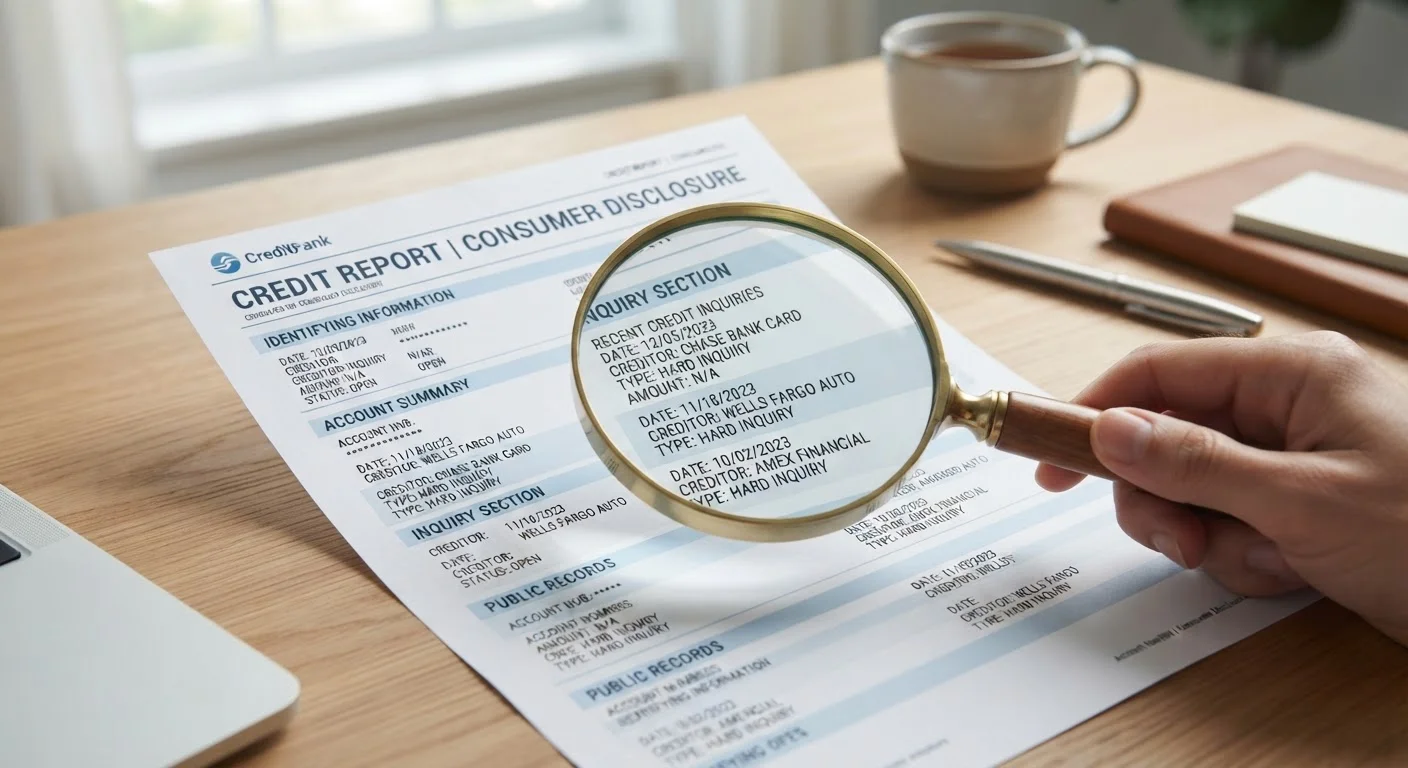
A hard inquiry (also called a hard pull) occurs when a lender or creditor reviews your credit file to make a lending decision. Common triggers include applying for a credit card, auto loan, personal loan, or mortgage. Because you initiated the credit application, you've effectively authorized this review.
A soft inquiry (or soft pull) happens in situations that don't involve you actively seeking new credit. Checking your own credit report, receiving a pre-approved credit offer in the mail, or having an employer run a background check all generate soft inquiries. Crucially, these are invisible to other lenders reviewing your report and carry zero scoring impact.
Many consumers mistakenly believe that any check of their credit will hurt their score. In reality, only hard inquiries can influence your score - and even then, the effect is usually modest and temporary.
Pre-Qualification vs. Pre-Approval
Many lenders offer a pre-qualification or pre-approval step that uses a soft inquiry, letting you see estimated rates and terms before committing to a full application. This is a useful way to compare options without triggering hard inquiries. Always confirm with the lender whether their initial review is a soft or hard pull before proceeding.
How Hard Inquiries Affect Your Credit Score
Hard inquiries fall under the "New Credit" category in FICO's scoring model, which accounts for roughly 10% of your total score. Because of this relatively small weight, a single hard inquiry typically reduces a score by fewer than five points for most people.
That said, context matters. If you already have a strong, established credit history with a long track record and low utilization, one inquiry will barely register. If your credit file is thin or you've recently had other negative events, the same inquiry could feel more significant.
The good news: hard inquiries are temporary. Most scoring models stop factoring them in after 12 months, even though they remain visible on your report for two years. This means the practical damage from any single inquiry is short-lived.
~5 pts
Typical score drop from one hard inquiry
According to FICO, a single hard inquiry lowers most people's scores by fewer than five points, with the impact fading significantly within 12 months.
2 years
How long hard inquiries remain on your report
Hard inquiries are visible on your credit file for 24 months, though their influence on your score generally stops after the first 12 months.
10%
Weight of New Credit in FICO scoring
FICO's publicly disclosed scoring breakdown shows New Credit - which includes hard inquiries - accounts for approximately 10% of your total score.
Rate Shopping Without Damaging Your Score
One of the most consumer-friendly features of modern credit scoring is the rate-shopping window. When you're comparing loan offers - for a mortgage, auto loan, or student loan - applying to multiple lenders in a compressed timeframe is treated as a single inquiry by major scoring models.
FICO's scoring model groups multiple hard inquiries of the same loan type made within a 14-45 day window (depending on the version of the score) into one. VantageScore uses a similar 14-day window. This approach recognizes that shopping around for the best rate is a financially responsible behavior, not a sign of credit distress.
This rate-shopping protection generally applies to mortgages, auto loans, and student loans, but not to credit card applications. Each credit card application typically generates its own separate hard inquiry.
If you're planning a major purchase that requires financing, consider grouping your lender applications within a two-week period to take full advantage of this scoring protection. For more on what lenders evaluate beyond inquiries, see what lenders actually look at when you apply for a loan.
Managing Inquiries as Part of Your Broader Credit Strategy
Hard inquiries are one small piece of a much larger credit picture. Payment history and credit utilization together make up roughly 65% of a FICO score. By comparison, the "New Credit" category - which includes hard inquiries - accounts for only about 10%. Keeping that proportion in mind helps put individual inquiries in perspective.
Practical habits that reduce unnecessary hard inquiries include:
- Only applying for credit when you genuinely need it
- Checking whether a lender offers a soft-pull pre-qualification before submitting a full application
- Monitoring your own credit regularly - which is always a soft inquiry - to catch any unauthorized hard pulls
If you notice a hard inquiry on your report that you don't recognize, you have the right under the FCRA to dispute it with the relevant credit bureau. Unauthorized inquiries can sometimes be a sign of identity theft or an error worth investigating.
For those working on building credit from the ground up, understanding how applications are recorded is an important early step. Secured and unsecured credit cards each have different application requirements, and knowing what triggers a hard inquiry can help you apply strategically.
This article is for general informational and educational purposes only and does not constitute personalized financial or credit advice. Consult a qualified financial professional for guidance specific to your situation.
Frequently Asked Questions
For most people, a single hard inquiry lowers a credit score by fewer than five points. The exact impact varies depending on your overall credit profile. Those with thin or newer credit histories may see a slightly larger dip.
Hard inquiries remain on your credit report for two years. However, scoring models like FICO typically only factor them into your score for about 12 months, so their practical impact fades well before they disappear entirely.
No. Checking your own credit score or report is classified as a soft inquiry and has no effect on your score. You can check it as often as you like without any negative consequences.
Rate shopping means applying with multiple lenders for the same type of loan - such as a mortgage or auto loan - within a short period to compare offers. Major scoring models treat multiple hard inquiries of the same loan type within a 14-45 day window as a single inquiry, minimizing score impact.
You can dispute an unauthorized hard inquiry with the credit bureau if you did not apply for credit with that lender. Legitimate hard inquiries that you authorized cannot be removed before the two-year period ends.
The content on this site is provided for informational purposes only and should not be considered a substitute for professional advice. While we strive to provide accurate and up-to-date information, we make no guarantees regarding its completeness or accuracy. Always consult a qualified professional for advice specific to your circumstances before making any decisions.