

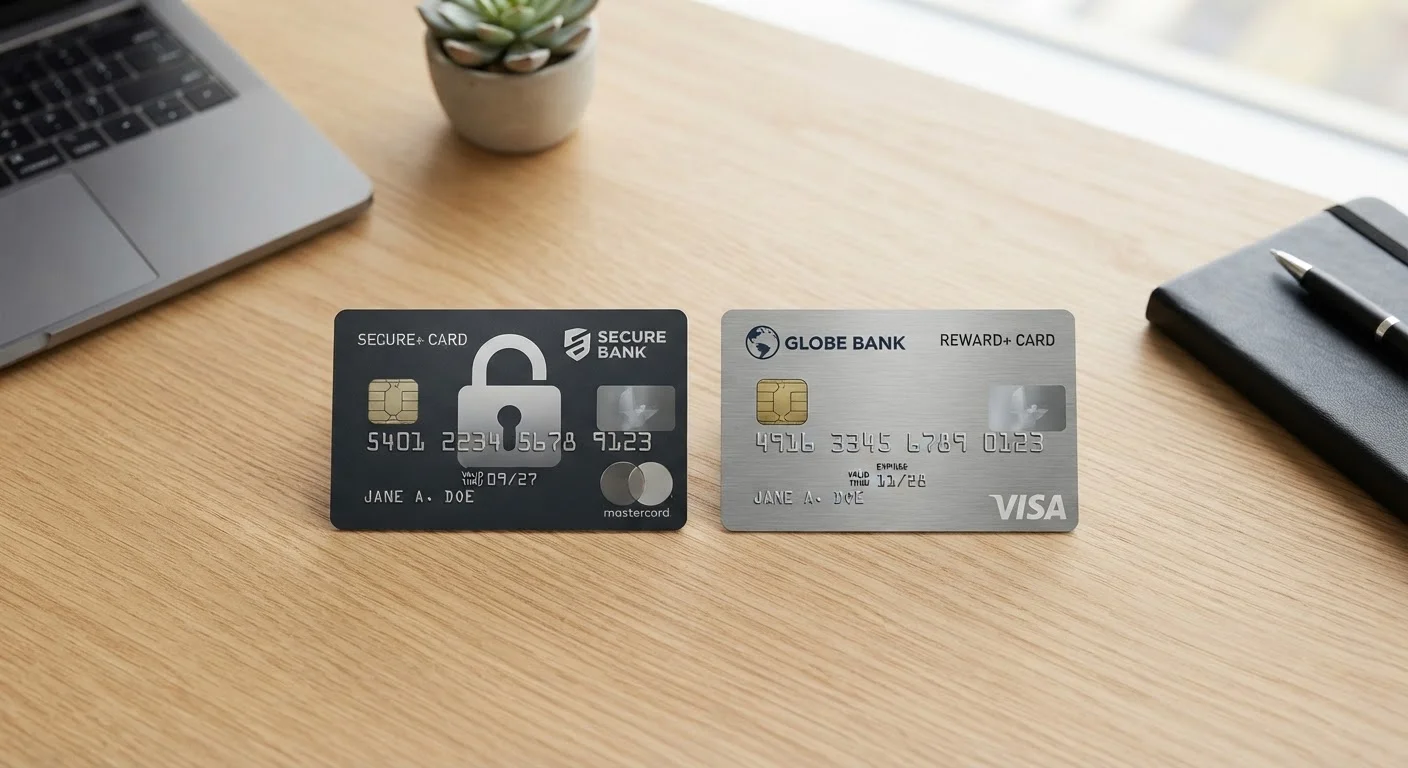
Option A
Secured Credit Card
The deposit-backed card designed for building or rebuilding credit.
Best for: Consumers with no credit history or damaged credit who need a structured starting point.
Option B
Unsecured Credit Card
The traditional card that extends credit based on your financial profile.
Best for: Consumers with an established credit history seeking purchasing power and rewards.
How Each Card Type Works
A secured credit card requires you to make a refundable cash deposit before you can use it. That deposit - commonly ranging from $200 to $500 - typically becomes your credit limit. The card issuer holds the deposit as collateral, reducing their risk if you stop making payments. From a day-to-day standpoint, you use the card just like any other: swipe, receive a monthly statement, and pay your bill.
An unsecured credit card works the same way operationally, but there's no deposit. The issuer extends you a credit line based on your credit history, income, and other financial factors. If you don't pay, the issuer has no collateral to fall back on - which is why approval typically requires a demonstrated track record of responsible borrowing. Understanding how your credit profile affects approval is closely tied to how credit reports and scores differ.
| Criterion | Secured Credit Card | Unsecured Credit Card |
|---|---|---|
| Deposit required | Yes - typically $200-$500 | No deposit needed |
| Credit limit basis | Usually equals your deposit | Based on creditworthiness |
| Approval requirements | Limited or damaged credit accepted | Credit history generally required |
| Typical annual fees | Often higher relative to limit | Varies widely; some have none |
| Rewards programs | Rarely available | Widely available |
| Reports to credit bureaus | Yes - all major bureaus | Yes - all major bureaus |
| Upgrade path | Can graduate to unsecured card | May qualify for better terms over time |
Costs, Fees, and Access
Secured cards tend to carry higher annual fees relative to the credit limit they offer. Some also charge processing or monthly maintenance fees on top of interest charges. Because issuers are targeting applicants with limited or damaged credit, the rates are often higher than those on standard unsecured cards.
Unsecured cards span a wide spectrum - from no-annual-fee options for consumers with average credit to premium cards with substantial fees and extensive perks for those with excellent scores. Rewards programs (cash back, points, miles) are far more common on unsecured cards.
~1 in 5
American adults with no credit score
The Consumer Financial Protection Bureau has estimated that roughly 26 million Americans are "credit invisible," lacking enough history to generate a credit score.
12-18 months
Typical window to qualify for an upgrade
Many secured card issuers begin reviewing accounts for unsecured upgrades after approximately one to one-and-a-half years of on-time payments and low utilization.
30%
Credit utilization threshold often cited by experts
Financial educators generally recommend keeping your card balance below 30% of your credit limit to support a healthy credit score, regardless of card type.
One cost unique to secured cards is the opportunity cost of the deposit itself. That money is tied up and not earning meaningful returns in most cases. It's worth factoring that into the total cost picture alongside any fees.
Credit-Building Potential and the Path Forward
Both secured and unsecured cards report your payment activity to the three major credit bureaus - Equifax, Experian, and TransUnion - when used responsibly. This means both can help you build a positive credit history over time. The key behaviors are the same regardless of card type: pay on time, keep your balance well below your credit limit, and avoid applying for many new accounts in a short window.
When you apply for either card type, expect a hard inquiry on your credit report, which can cause a small, temporary dip in your score. Our guide to hard and soft inquiries explains when these checks occur and how long their impact typically lasts.
What Happens to Your Deposit
When you close a secured card account in good standing - or when the issuer upgrades you to an unsecured card - your deposit is typically refunded in full. However, if there's an outstanding balance at the time of closure, the issuer may apply the deposit to what you owe. Always confirm the specific terms with your card issuer before closing an account.
Many secured card issuers periodically review accounts and may upgrade cardholders to an unsecured product - often returning the deposit in full - after a period of responsible use, commonly 12 to 18 months. This upgrade process is a natural milestone for many people working to establish stronger credit. If you're also weighing how a credit card fits alongside other borrowing tools, comparing personal loans and credit cards can add useful context.
This article is for general informational and educational purposes only and does not constitute personalized financial or credit advice. Individual results will vary. Consult a qualified financial professional regarding your specific situation.
The content on this site is provided for informational purposes only and should not be considered a substitute for professional advice. While we strive to provide accurate and up-to-date information, we make no guarantees regarding its completeness or accuracy. Always consult a qualified professional for advice specific to your circumstances before making any decisions.