

Option A
The 50/30/20 Rule
The simple, percentage-based framework for everyday budgeters.
Best for: People who want a low-maintenance structure that covers needs, wants, and savings without tracking every line item.
Option B
Zero-Based Budgeting
The detail-first method that assigns every dollar a specific purpose.
Best for: People who want full control over their spending and are willing to review and plan each category each month.
How Each Framework Works
If you've ever felt like your paycheck disappears before the month ends, a budgeting framework can help make sense of where it goes. Two methods stand out for their simplicity and broad applicability: the 50/30/20 rule and zero-based budgeting. Each starts with the same raw material - your income - but handles it very differently.
The 50/30/20 rule, popularized by Senator Elizabeth Warren and her daughter Amelia Warren Tyagi in their book All Your Worth, divides your after-tax income into three categories:
- 50% for needs - rent or mortgage, utilities, groceries, minimum debt payments, transportation
- 30% for wants - dining out, subscriptions, hobbies, travel
- 20% for savings and extra debt repayment - emergency fund, retirement contributions, paying above minimums on debt
The appeal is in the simplicity. You don't need to itemize every purchase - you just monitor whether your spending stays within the three buckets. For a deeper look at foundational budgeting concepts, see Personal Budgeting from the Ground Up.
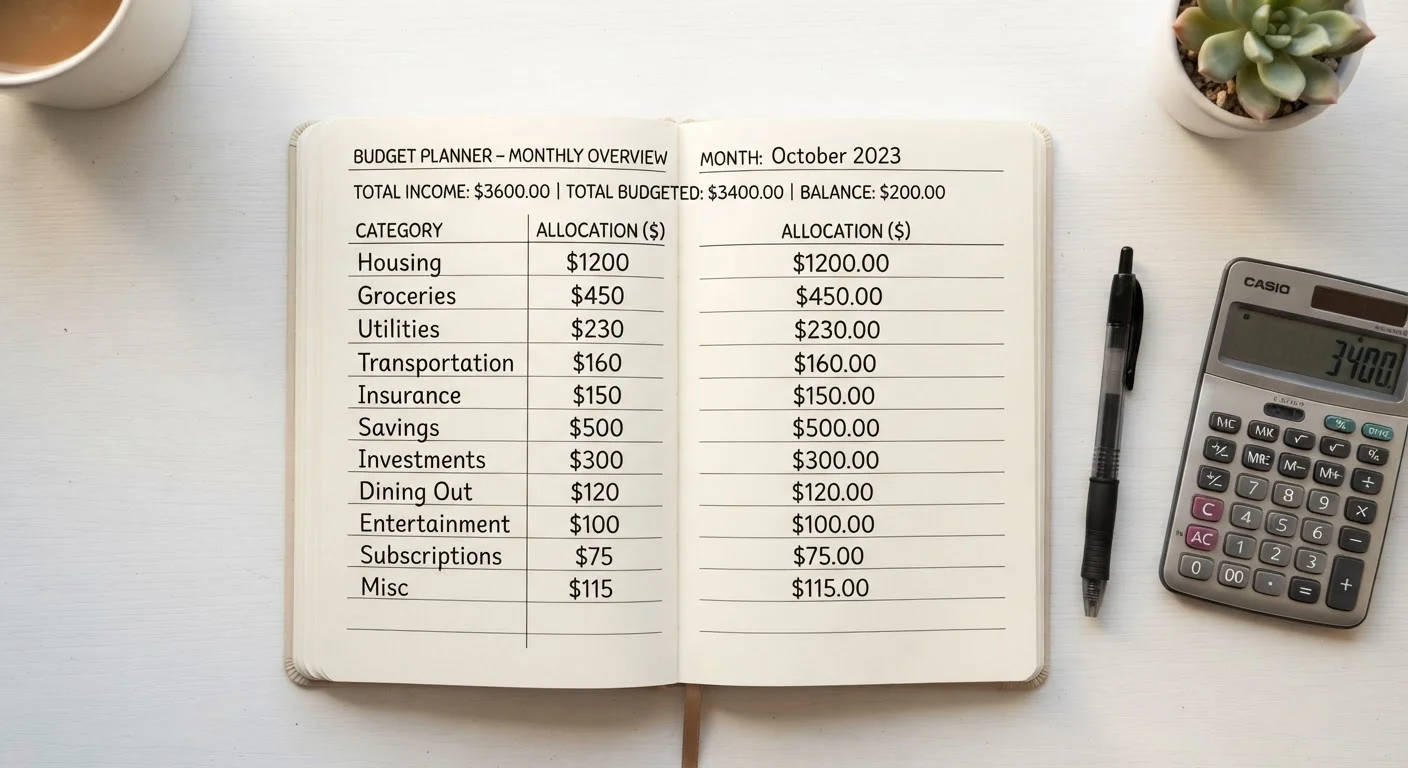
Zero-based budgeting (ZBB) works differently. You start with your expected monthly income and assign a specific dollar amount to every category - rent, groceries, gas, entertainment, savings, debt - until your income minus all planned expenses equals exactly zero. No dollar sits unassigned. Zero-Based Budgeting: Giving Every Dollar a Job covers this method in full detail.
Side-by-Side: Key Differences
Both methods share a common goal - intentional spending - but they diverge sharply in execution. The table below highlights the most important distinctions.
| Criterion | 50/30/20 Rule | Zero-Based Budgeting |
|---|---|---|
| Setup time | Under an hour | 30-60 min per month |
| Category structure | 3 broad buckets | Unlimited custom categories |
| Spending detail | High-level tracking | Every dollar assigned |
| Best income type | Stable, predictable | Stable or variable |
| Flexibility | High - adjust percentages | High - adjust categories |
| Debt payoff precision | Moderate | High |
| Learning curve | Very low | Moderate |
One nuance worth noting: the 50/30/20 rule's categories are guidelines, not rules carved in stone. Someone with high housing costs in an expensive city might find 60% goes to needs and adjust the other buckets accordingly. Zero-based budgeting, on the other hand, is inherently flexible in a different way - the categories are yours to define, but the discipline of accounting for every dollar is non-negotiable.
A Word on the 20% Savings Target
The 50/30/20 rule's 20% savings-and-debt category is meant to cover both building savings and paying extra on debt - not just one or the other. If you carry high-interest debt, it generally makes sense to prioritize aggressive repayment within that 20% before directing much toward long-term investing. The right split depends on your interest rates, emergency fund status, and personal goals. A qualified financial adviser can help you determine the right balance for your circumstances.
Practical Trade-Offs to Consider
Choosing between these frameworks ultimately comes down to your financial situation, your personality, and how much time you're willing to invest each month.
Time commitment: The 50/30/20 rule can be set up in under an hour and reviewed in minutes. Zero-based budgeting typically requires 30-60 minutes of planning at the start of each month, plus regular check-ins as you track spending against your assigned categories.
Debt payoff focus: If eliminating debt is a near-term priority, zero-based budgeting gives you more precision - you can direct every surplus dollar toward a specific loan. For a practical framework that addresses saving and debt simultaneously, see Structuring a Monthly Budget Around Both Savings and Debt Repayment.
Behavioral fit: Some people thrive with structure and find that naming each dollar motivates them to stick to their plan. Others feel restricted by granular categories and are more likely to sustain a broader, simpler system. Neither preference is wrong - consistency beats perfection.
Irregular income: Freelancers, gig workers, and anyone with a variable paycheck may find zero-based budgeting more reliable, since it's rebuilt each month around actual expected earnings rather than fixed percentages of an assumed income.
Once you've selected a method, a step-by-step Monthly Budget Setup Checklist can help you implement it completely before the month begins.
This article is for general informational purposes only and does not constitute personalized financial advice. For guidance tailored to your specific situation, consider consulting a licensed financial professional.
The content on this site is provided for informational purposes only and should not be considered a substitute for professional advice. While we strive to provide accurate and up-to-date information, we make no guarantees regarding its completeness or accuracy. Always consult a qualified professional for advice specific to your circumstances before making any decisions.