

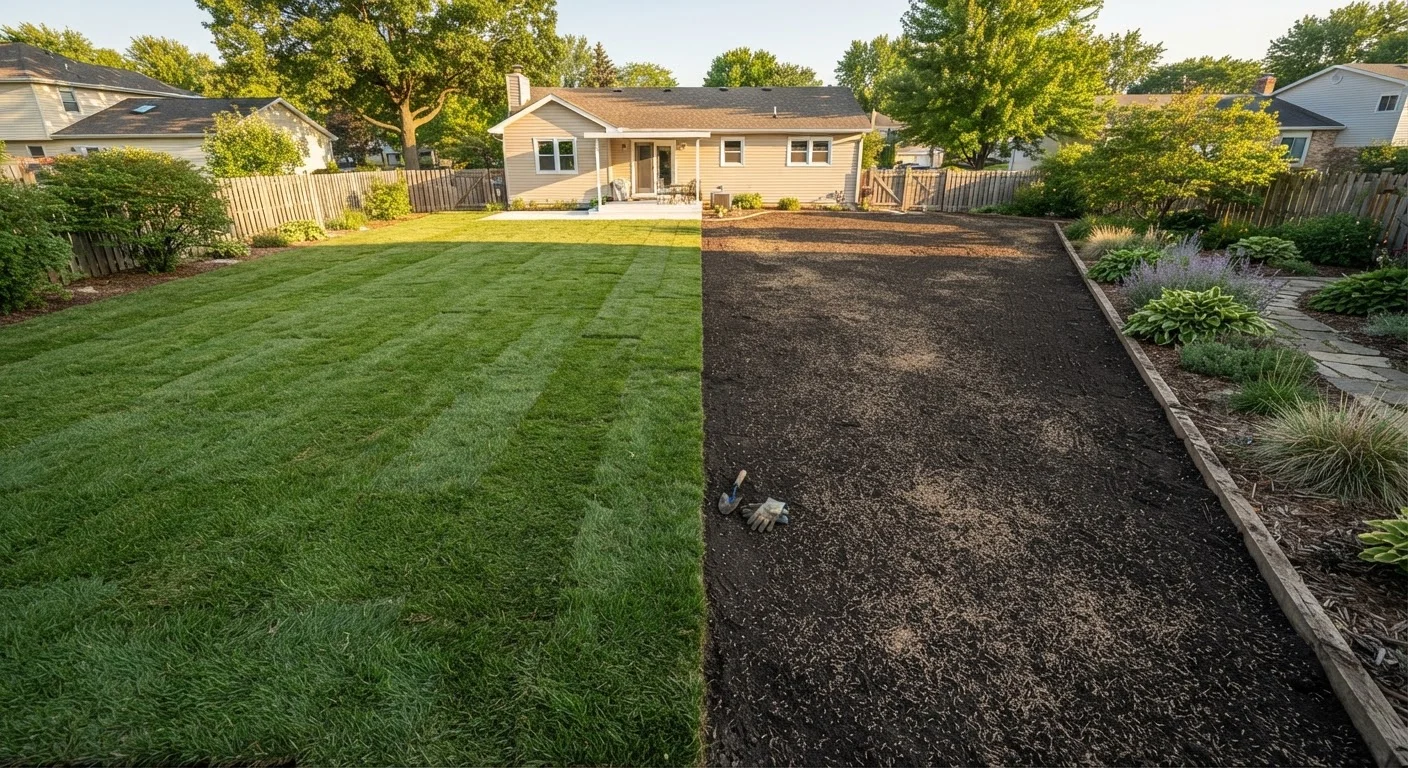
Option A
Grass Seed
The patient, budget-conscious approach to a new lawn.
Best for: Homeowners with a tight budget, flexible timeline, and willingness to put in extra early care.
Option B
Sod
The fast-track method for an instant, established lawn.
Best for: Homeowners who need quick results, have erosion concerns, or want to reduce early weed pressure.
How Each Method Works
Both grass seed and sod start with the same foundation: properly prepared soil. Neither method will thrive on compacted, nutrient-poor ground, so tilling to a depth of at least four inches, removing debris, and amending with compost is essential before you begin.
Grass seed involves broadcasting or drilling seed directly into the prepared soil. The seed germinates over one to three weeks depending on the grass type and temperature, and young grass requires consistent moisture - typically light watering twice daily - until it roots deeply enough to tolerate normal conditions. Foot traffic and mowing are off-limits for the first several weeks.
Sod arrives as pre-grown grass and soil held together by a root mat, cut into rolls or squares. It is laid directly onto prepared ground in a staggered pattern, watered in thoroughly, and then kept moist for two to three weeks while the roots knit into your soil below. Once established, it behaves just like a mature lawn.
Timing affects both methods. Cool-season grasses - such as Kentucky bluegrass and tall fescue - establish best when seeded or sodded in late summer to early fall. Warm-season varieties like Bermudagrass and Zoysia prefer late spring installation. Planting outside these windows raises the risk of stress, poor germination, or failure to root before extreme temperatures arrive.
| Criterion | Grass Seed | Sod |
|---|---|---|
| Upfront cost | Low | High |
| Time to usable lawn | 6-8 weeks minimum | 2-3 weeks |
| Variety selection | Very wide | Limited by supplier |
| Weed pressure during establishment | High | Low |
| Erosion resistance | Poor until rooted | Good immediately |
| Labor intensity | Moderate (watering focus) | High (installation day) |
| Long-term soil integration | Seamless | Requires transition period |
Cost, Labor, and Time Commitments
Cost is often the deciding factor. Grass seed for a typical 1,000-square-foot lawn might run $30-$80 depending on the grass type and blend, while the same area in sod can cost $150-$450 or more in materials alone - before any labor. Professional installation of sod adds further to that figure.
Labor is also a consideration. Laying sod is physically demanding work: the rolls are heavy, must be fitted snugly, and require leveling to prevent uneven surfaces. Seeding is less intensive but demands patience and disciplined watering over a longer stretch of time.
5-10×
Sod cost premium over seed
Industry estimates commonly place sod material costs at five to ten times higher per square foot than comparable grass seed for the same area.
7-21 days
Typical grass seed germination window
Most cool-season grass varieties germinate within one to three weeks under adequate moisture and appropriate soil temperatures of 50-65°F.
Time-to-use differs sharply. Seeded lawns typically take six to eight weeks before they can handle light foot traffic, and a full season before they look mature. Sod reaches usable status in roughly two to three weeks. If you have children, pets, or simply want a functional yard sooner rather than later, that gap matters.
For homeowners tackling a patchy or thin existing lawn rather than a bare lot, full installation may not be necessary. Overseeding a thin lawn is a lower-cost middle-ground worth exploring first.
Soil Health and Long-Term Performance
Both methods benefit from healthy, well-fed soil. Grass seeded directly into your native soil tends to integrate more naturally over time - the roots grow directly into your ground without any transition layer. Sod, by contrast, arrives with a thin layer of its own growing medium that must mesh with your existing soil. If the two soil types are very different in texture, rooting can sometimes be uneven until the transition zone breaks down.
Fertilizing appropriately during establishment and in subsequent seasons helps both seeded and sodded lawns thrive. Understanding how different fertilizer types affect your soil over the long run is worth considering - see our look at organic vs. synthetic fertilizers for a balanced overview.
Weed competition is an important practical difference. Freshly seeded soil is exposed and highly susceptible to weed invasion, especially in the first several weeks. Sod's dense, established root mat suppresses weeds more effectively from day one. Pre-emergent herbicides are generally not safe to use during seed germination, so mechanical weeding may be required early on. For fall lawn prep strategies that support either method, fall lawn care tasks is a useful seasonal checklist.
Soil Testing Before You Start
Before laying seed or sod, a basic soil test (available through many county extension offices) can reveal pH imbalances and nutrient gaps that would undermine either method. Adjusting soil pH and adding amendments before installation is far easier - and more effective - than trying to correct problems after the lawn is in place. Most grass varieties do best in soil with a pH between 6.0 and 7.0.
The content on this site is provided for informational purposes only and should not be considered a substitute for professional advice. While we strive to provide accurate and up-to-date information, we make no guarantees regarding its completeness or accuracy. Always consult a qualified professional for advice specific to your circumstances before making any decisions.