

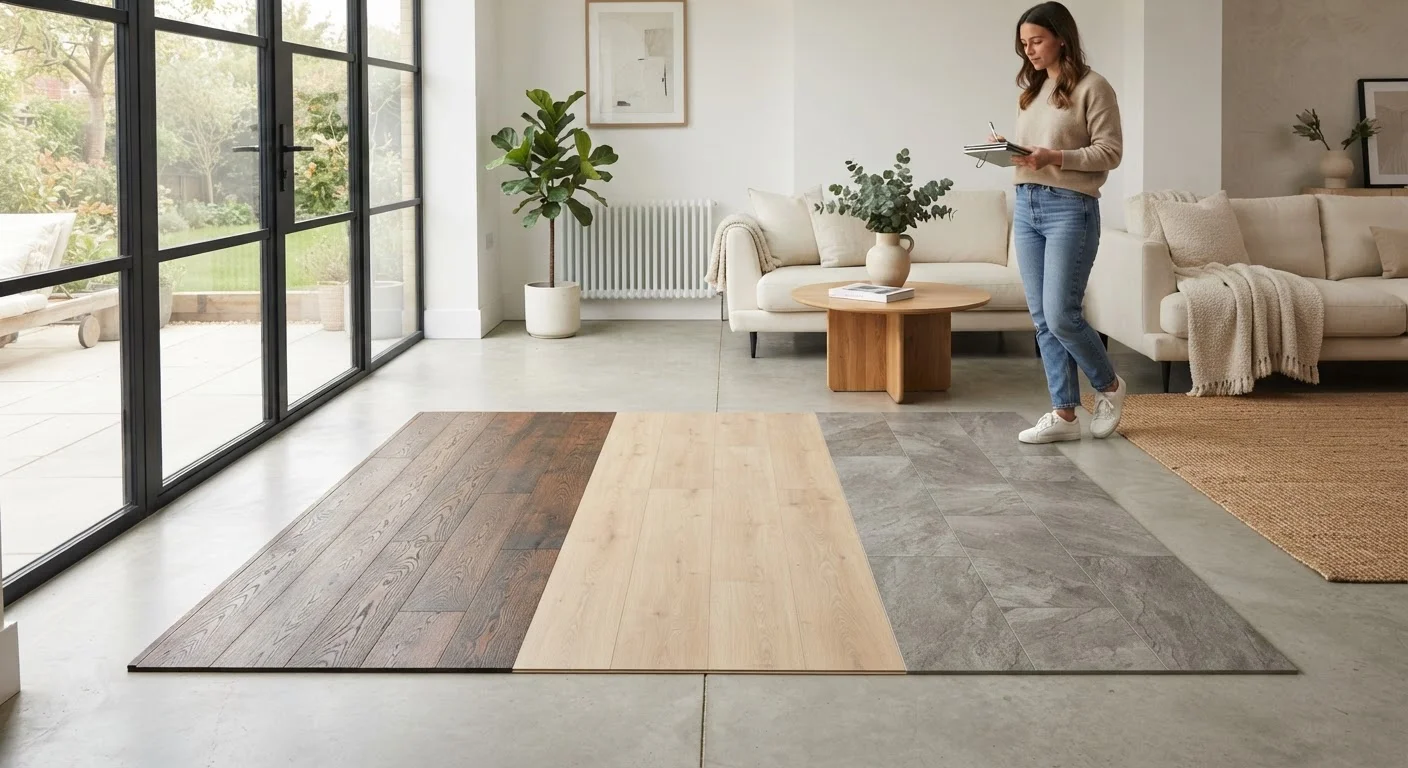
Our Verdict
No single flooring material wins outright - the right choice depends on the room's moisture levels, traffic, and how long you plan to stay in the home. Hardwood rewards patient homeowners in low-moisture living spaces; luxury vinyl handles wet and high-traffic zones with minimal fuss; laminate occupies a middle ground best suited to dry, medium-traffic rooms where budget is a priority.
| Best for | Recommended |
|---|---|
| Living rooms, dining rooms, and bedrooms in dry climates | Hardwood |
| Kitchens, bathrooms, basements, and laundry areas | Luxury Vinyl |
| Dry secondary rooms where budget is a top constraint | Laminate |
| Homeowners weighing long-term resale and refinishing potential | Hardwood |
What Sets These Three Materials Apart
Hardwood, laminate, and luxury vinyl planks (LVP) can all look remarkably similar on a showroom floor. The differences that matter most are underneath the surface - in how each material is constructed, how it responds to moisture and heat, and how long it realistically holds up under daily use.
Hardwood is milled from solid wood or engineered with a real wood veneer over a plywood core. Solid hardwood can be sanded and refinished multiple times, making it a long-term investment. Engineered hardwood offers more dimensional stability across humidity changes but has a thinner wear layer.
Laminate is a synthetic product with a photographic image layer fused to a fiberboard core. High-quality laminate is convincing visually, but fiberboard is highly susceptible to water damage. Most laminate cannot be refinished.
Luxury vinyl (also called LVP or LVT) is made entirely of PVC layers, making it waterproof by nature rather than just water-resistant. It is softer underfoot than hardwood, handles temperature swings well, and is increasingly available in realistic wood and stone visual patterns.
Just as paint sheen selection affects both look and performance room by room - as we explore in our guide to choosing the right paint sheen for each room - flooring material choices carry real functional consequences beyond aesthetics.
| Hardwood | Laminate | Luxury Vinyl | |
|---|---|---|---|
| Moisture resistance | Low - avoid wet areas | Low - fiberboard swells | High - fully waterproof |
| Durability / lifespan | 25-100+ years with refinishing | 10-25 years, no refinishing | 15-25 years typical |
| Refinishable | Yes (solid); limited (engineered) | No | No |
| DIY installation ease | Moderate to difficult | Easy to moderate | Easy to moderate |
| Comfort underfoot | Firm, warm | Firm, slightly hollow sound | Softer, quieter |
| Relative material cost | Higher | Lower to moderate | Moderate |
| Best rooms | Living, dining, bedroom | Dry secondary rooms | Kitchen, bath, basement |
Room-by-Room Breakdown
Living Rooms and Dining Rooms
These are the spaces where hardwood traditionally shines. Foot traffic is moderate, moisture exposure is low, and the warmth and authenticity of real wood genuinely adds to the room's character. Engineered hardwood works well here too, especially in homes with radiant heat or fluctuating indoor humidity.
Laminate is a reasonable alternative in dry living spaces, particularly in rental properties or homes where resale timelines are uncertain. Luxury vinyl is an option here as well, though some buyers and appraisers still perceive it as a downgrade from hardwood in primary living areas.
Kitchens
Kitchens involve spills, steam, and cleaning - conditions that rule out solid hardwood for most homeowners. Luxury vinyl is the practical frontrunner: fully waterproof, easy to clean, and comfortable underfoot during long cooking sessions. Engineered hardwood can work in kitchens if it carries a strong moisture warranty and the subfloor is well-sealed, but it carries risk. Laminate should generally be avoided near sinks or dishwashers.
Bathrooms and Laundry Rooms
Luxury vinyl is the clear choice in these spaces. Hardwood is rarely appropriate in full bathrooms, and laminate risks irreversible swelling from routine humidity alone. For tile lovers, our overview of bathroom tile installation and surface prep is also worth reviewing before committing to any floor in a wet zone.
Bedrooms
All three materials are viable in bedrooms, where moisture is rarely a factor. Hardwood and premium laminate both offer a quieter, warmer feel. Luxury vinyl with a thick underlayment can also feel comfortable underfoot. Budget and visual preference tend to drive the decision here more than performance requirements.
Basements
Below-grade spaces are high-risk for moisture - even in homes without visible water intrusion. Luxury vinyl is the most defensible choice. Floating LVP installations also accommodate concrete subfloors that expand and contract seasonally. Hardwood is generally not recommended below grade; laminate carries similar concerns.
Check Your Subfloor Before Choosing a Material
Before purchasing any flooring, assess your subfloor's flatness, moisture content, and material. Concrete slabs below grade may require a moisture barrier or self-leveling compound before installation. A subfloor with more than 3/16-inch variation over a 10-foot span can cause problems for floating floors regardless of material. Addressing subfloor issues upfront prevents far more expensive repairs later.
Installation, Subfloor, and Long-Term Costs
Material cost is only part of the calculation. Installation method and subfloor condition significantly affect total project cost and which materials are even viable.
Hardwood typically requires nail-down or glue-down installation by a professional, and subfloor flatness is critical. Expect added costs for acclimation time - solid hardwood should sit in the home for several days before installation to adjust to indoor humidity.
Laminate and luxury vinyl both frequently use click-lock floating systems, making them more DIY-accessible. However, floating floors require a flat subfloor as well - high or low spots will cause planks to flex, creak, or separate at joints over time.
Over a 20-year horizon, hardwood's refinishing potential changes the math. A floor that can be sanded and restained twice may outlast two or three laminate or luxury vinyl replacements. That said, refinishing adds cost and disruption each time.
If you're still deciding whether improvements like this make sense for your situation - particularly if you're weighing owning versus renting - our piece on renting vs. buying and what actually drives that decision covers the financial and personal factors worth thinking through first.
The content on this site is provided for informational purposes only and should not be considered a substitute for professional advice. While we strive to provide accurate and up-to-date information, we make no guarantees regarding its completeness or accuracy. Always consult a qualified professional for advice specific to your circumstances before making any decisions.