

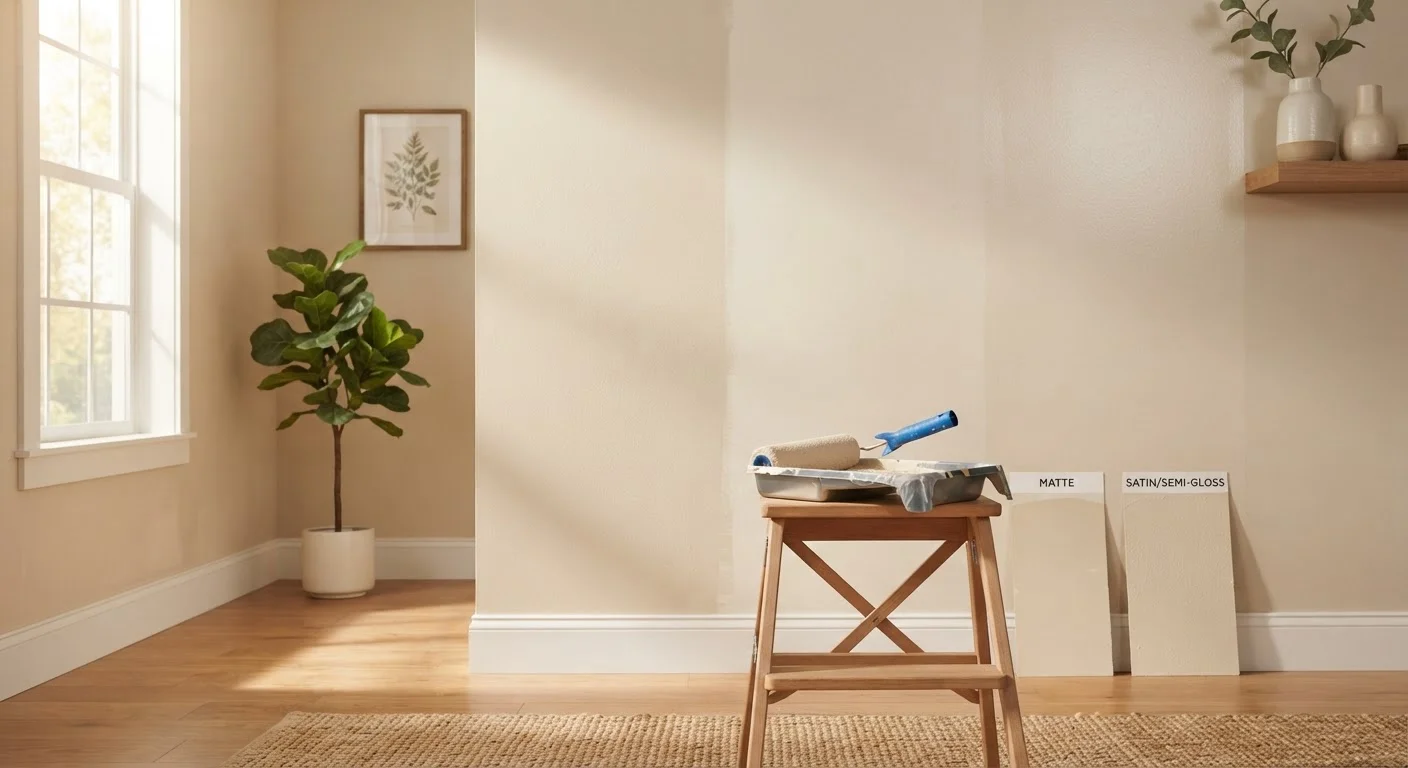
Why Sheen Level Matters as Much as Color
Walk into any paint aisle and you'll find the same color offered in five or six different finishes. That's not just a marketing tactic - sheen level fundamentally changes how paint looks on a wall, how it holds up to wear, and how easy it is to clean. A flat white in a bathroom and a semi-gloss white in the same bathroom are practically different products.
Sheen refers to how much light a dried paint film reflects. Higher sheen means more light bounces back, giving surfaces a harder, shinier appearance. Lower sheen absorbs light, producing a softer, more matte look. The trade-off is that higher-sheen paints are generally more washable and moisture-resistant, while lower-sheen paints are better at hiding surface imperfections.
| Lowest sheen option | Flat / Matte |
| Best for ceilings | Flat or matte finish |
| Most popular wall finish | Eggshell |
| Best for kitchens & baths | Satin |
| Standard finish for trim & doors | Semi-gloss |
| Highest durability finish | Gloss |
Understanding this trade-off - durability and cleanability versus camouflage and softness - is the key to making the right choice for each space in your home. Just as the right flooring material varies room by room (see our guide to choosing the right floor for each room), the same logic applies to paint finishes.
The Four Main Sheens and Where They Belong
Flat/Matte: This finish reflects very little light, making it ideal for concealing minor drywall imperfections, roller marks, and uneven texture. It works well on ceilings and low-traffic adult bedrooms where walls rarely need scrubbing. The downside is that scuffs and stains are difficult to wipe away without removing paint along with the dirt.
Eggshell: Named for the subtle sheen of an eggshell, this finish sits just above matte. It's the most popular choice for living rooms, dining rooms, and hallways - spaces that see regular use but aren't exposed to heavy moisture or grease. It tolerates light cleaning and still softens imperfections.
Sheen
The degree of light reflectivity in a dried paint film. Higher sheen means a shinier surface; lower sheen produces a flatter, more matte look.
Eggshell finish
A low-luster paint finish with very slight sheen, comparable to the surface of an actual eggshell. It's more washable than flat paint but still minimizes surface imperfections.
Satin finish
A mid-range paint sheen that is noticeably reflective and offers good resistance to moisture and repeated cleaning. Commonly used in kitchens, bathrooms, and children's rooms.
Semi-gloss finish
A high-sheen paint finish that reflects significant light and is highly durable and moisture-resistant. Widely used on trim, doors, and cabinetry.
Flat/Matte finish
The lowest sheen level, absorbing rather than reflecting light. Best at hiding surface flaws but the least resistant to scrubbing and moisture.
Surface prep
The process of cleaning, sanding, and priming a wall or surface before painting. More important with higher-sheen paints, which emphasize imperfections rather than concealing them.
Satin: A noticeable step up in reflectivity, satin holds up well to moisture and repeated cleaning, making it a strong choice for kitchens, bathrooms, laundry rooms, and children's bedrooms. It resists mildew better than flatter finishes, though it will highlight surface flaws more readily. Good wall prep matters here.
Semi-Gloss and Gloss: These finishes reflect the most light and offer the highest durability and moisture resistance. Semi-gloss is the standard for trim, doors, window frames, and cabinets throughout the home. Full gloss is typically reserved for high-impact surfaces like kitchen cabinets or furniture-style pieces where a lacquer-like look is desired.
Room-by-Room Quick Reference
Applying these principles room by room helps simplify your decision-making before you ever open a can:
- Ceilings: Flat or matte - hides imperfections, no distracting reflection overhead.
- Living room / dining room walls: Eggshell - durable enough for everyday life without looking shiny.
- Primary bedroom walls: Matte or eggshell - soft, restful look for a low-traffic space.
- Children's rooms: Satin - withstands crayon, handprints, and regular wiping.
- Kitchen walls: Satin - tolerates splashes, grease, and frequent cleaning.
- Bathrooms: Satin or semi-gloss - moisture resistance is the priority.
- Trim, doors, and baseboards: Semi-gloss - crisp, hard-wearing, and easy to wipe down.
- Cabinets: Semi-gloss or gloss - highest durability for surfaces touched constantly.
Higher Sheen Requires Better Wall Prep
The shinier the finish, the more it emphasizes any imperfections in the underlying surface - bumps, dents, tape lines, and roller marks all become more visible. Before applying satin, semi-gloss, or gloss paint, take extra time to sand, fill, and prime the surface properly. Skipping prep is the most common reason a high-sheen paint job looks worse than expected.
One practical note: mixing sheens within a single room is common and intentional. Many designers use eggshell on walls and semi-gloss on the trim in the same space - the contrast actually makes architectural details pop.
The content on this site is provided for informational purposes only and should not be considered a substitute for professional advice. While we strive to provide accurate and up-to-date information, we make no guarantees regarding its completeness or accuracy. Always consult a qualified professional for advice specific to your circumstances before making any decisions.