

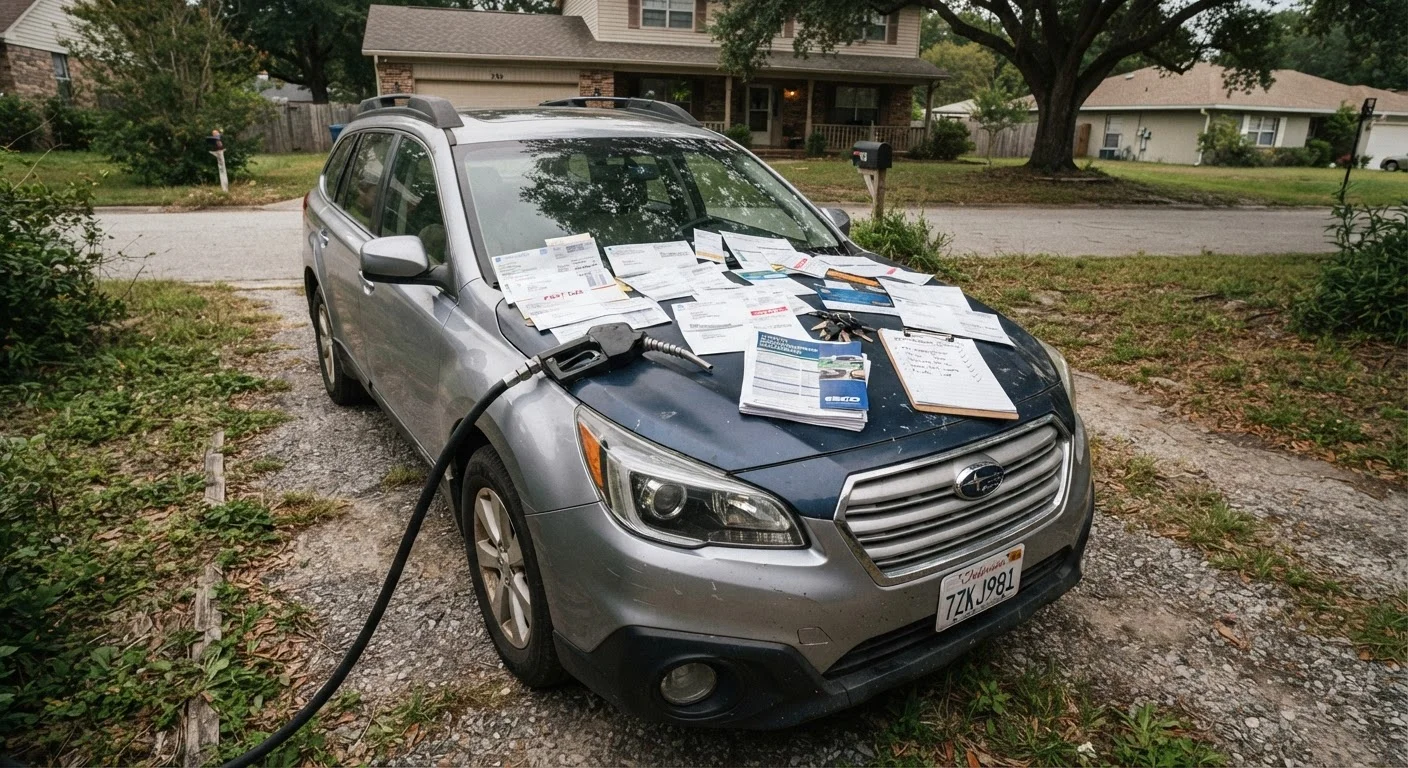
Why the Monthly Payment Is Only Part of the Story
When most people shop for a car, the conversation quickly centers on one number: the monthly payment. But that figure - whether it's a loan installment or a lease payment - covers only the financing portion of what it truly costs to own and operate a vehicle. For many drivers, the payment represents less than half of their total annual car expenses.
Understanding the full picture matters for one simple reason: financial surprises tied to car ownership are among the most common causes of household budget stress. A vehicle that looks affordable on paper can become a strain once insurance renewals, fuel costs, and repair bills arrive. The full lifecycle of car ownership involves costs at nearly every stage, from purchase through eventual trade-in.
$10,000+
Estimated average annual cost to own a new vehicle
Industry research from organizations such as AAA consistently estimates that total ownership costs for a new vehicle exceed $10,000 annually when all expenses are included.
~20%
Typical value lost in a new car's first year
Many new vehicles depreciate by roughly 15-20% in their first year of ownership, making depreciation the dominant cost for early-stage owners.
$1,700+
Average annual auto insurance expenditure per household
According to the Bureau of Labor Statistics Consumer Expenditure Survey, U.S. households spend over $1,700 per year on vehicle insurance on average.
Depreciation: The Cost You Never Write a Check For
Depreciation is the reduction in a vehicle's market value over time - and for most owners, it's the single largest ownership expense. A new vehicle can lose a substantial portion of its value within the first three years, with the sharpest drop occurring in year one. This isn't a cash payment you make directly, but it's a real economic loss you realize when you sell or trade in the car.
The rate of depreciation varies by make, model, and market conditions. Some vehicles hold their value considerably better than others, which is a meaningful factor when calculating long-term costs. For a deeper look at why this happens so quickly, see our explanation of why cars lose value so fast in the first year. Buyers weighing new versus used vehicles should factor depreciation heavily into the comparison - something covered in detail when looking at new car vs. used car trade-offs.
Insurance, Fuel, and Registration: The Recurring Line Items
Insurance is mandatory in virtually every U.S. state, and premiums depend on your vehicle, driving history, location, age, and chosen coverage levels. For financed vehicles, lenders require comprehensive and collision coverage, which increases costs beyond the state minimum. Premiums can range from under $1,000 to well over $2,500 annually depending on these variables.
Fuel is one of the most variable ongoing expenses. Annual fuel costs depend on how many miles you drive, your vehicle's fuel efficiency, and local gas prices. A driver covering 15,000 miles per year in a midsize SUV averaging 25 mpg will spend noticeably more than someone in a compact sedan - and significantly more than someone in a hybrid or electric vehicle.
Registration and taxes are annual requirements that vary widely by state. Some states charge flat fees; others calculate registration based on vehicle value or weight. Several states also levy annual personal property taxes on vehicles. These costs are easy to underestimate during the initial purchase decision.
Build a Monthly Car Budget That Covers Everything
Before purchasing a vehicle, estimate all ongoing costs - insurance quotes, average local fuel prices, estimated annual maintenance, and registration fees - and divide by 12. Add this to your loan or lease payment to get a realistic monthly number. This total-cost approach prevents the common mistake of overextending on a vehicle that fits the payment but not the full budget.
Maintenance and Repairs: Predictable and Unpredictable
Routine maintenance - oil changes, tire rotations, air filters, brake inspections - is predictable and manageable when budgeted for consistently. The vehicle maintenance basics every owner should know form the foundation of keeping costs in check. Neglecting scheduled service is a false economy: a skipped oil change can lead to engine damage that costs many times more to repair.
Unplanned repairs are harder to anticipate but statistically certain over any vehicle's lifetime. Tires wear out. Brakes need replacing. Belts, batteries, and sensors fail. Older vehicles with higher mileage require more attention and more frequent component replacement. Setting aside a dedicated vehicle repair fund - separate from routine maintenance - is one of the most practical steps an owner can take.
A commuter purchases a new midsize SUV with a $550/month loan payment, assuming that's their primary car expense.
A driver buys a used sedan at a lower price to save money, but skips routine maintenance to cut costs further.
A suburban family switches from a compact car to a full-size pickup truck without recalculating fuel and insurance costs.
The True Annual Cost: Putting the Numbers Together
When depreciation, insurance, fuel, maintenance, registration, and financing costs are combined, the annual total for a typical new vehicle frequently lands in the $10,000-$12,000 range according to industry research, though this varies significantly by vehicle type and individual driving patterns. That translates to roughly $800-$1,000 per month - often more than double the loan payment alone.
This is the same logic that applies across major purchases. As explored in the concept of total cost of ownership, the sticker price - or in this case the payment - is rarely the whole story. Building a complete, honest budget before purchasing a vehicle allows drivers to choose a car they can genuinely afford over time, not just on signing day.
This article is for general informational and educational purposes only. Actual ownership costs vary by vehicle, location, driving habits, and individual circumstances. Consult with a qualified financial professional for advice tailored to your personal financial situation.
Frequently Asked Questions
Industry estimates commonly place the average annual cost of owning and operating a new vehicle in the range of $10,000 to $12,000 per year, depending on the vehicle type, location, and driving habits. This figure includes depreciation, insurance, fuel, maintenance, registration, and financing costs. Used vehicles generally carry lower depreciation but may have higher maintenance expenses.
A common rule of thumb is to set aside roughly $100 to $150 per month for routine maintenance on a newer vehicle, with higher amounts appropriate for older or high-mileage cars. This covers oil changes, tire rotations, filters, and minor repairs. Unexpected repairs can push costs much higher, so building a dedicated vehicle emergency fund is a sound approach.
Generally, yes - new vehicles tend to cost more to insure because their replacement or repair value is higher. Lenders also typically require comprehensive and collision coverage on financed vehicles, which adds to the premium. The specific cost depends on the vehicle model, your driving record, location, and coverage levels chosen.
Yes. Even if you keep a vehicle for many years, depreciation represents real lost value you will not recover when you eventually sell or trade it in. The steepest depreciation occurs in the first few years of ownership. Keeping a car well-maintained helps preserve more of its resale value over the long term.
Registration fees, state taxes, personal property taxes (in states that levy them), parking costs, tolls, and roadside assistance memberships are frequently overlooked. Gap insurance on financed vehicles and extended warranty costs are also easy to underestimate. These line items can collectively add several hundred to over a thousand dollars annually.
Absolutely. Luxury and performance vehicles carry higher insurance, fuel, and repair costs due to expensive parts and specialized service requirements. Electric vehicles may reduce fuel and some maintenance expenses but can involve higher insurance and battery-replacement considerations. Vehicle type, model reliability history, and local fuel prices all shape the total cost picture meaningfully.
The content on this site is provided for informational purposes only and should not be considered a substitute for professional advice. While we strive to provide accurate and up-to-date information, we make no guarantees regarding its completeness or accuracy. Always consult a qualified professional for advice specific to your circumstances before making any decisions.