

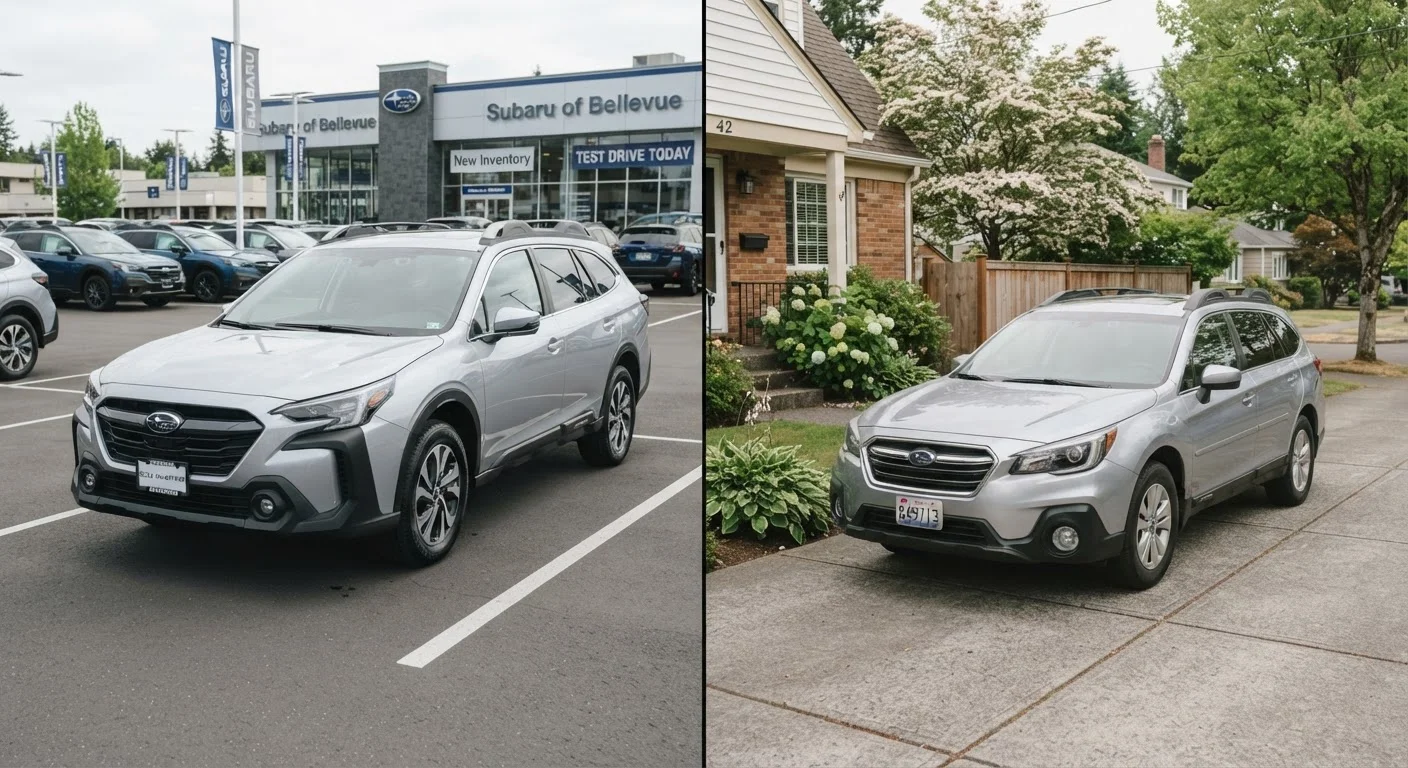
Option A
New Car
The full-warranty, latest-tech, higher-cost option.
Best for: Drivers who want predictable ownership costs, the latest safety features, and manufacturer-backed peace of mind.
Option B
Used Car
The depreciation-adjusted, value-focused alternative.
Best for: Budget-conscious buyers who can accept some uncertainty in exchange for a significantly lower purchase price.
The Depreciation Reality
Depreciation is the single largest cost most drivers never see itemized on a monthly statement. A new vehicle typically loses a significant portion of its value within the first year of ownership - often cited in industry research as roughly 15-20% - and continues to decline steeply through years two and three. By the time a car reaches three years old, a large share of that initial depreciation has already occurred.
This dynamic is precisely what makes used vehicles appealing from a pure value standpoint. When you buy a three-year-old car, a previous owner has absorbed that initial drop. You effectively pay closer to what the vehicle is worth at that stage of its life cycle. For a deeper look at how this plays out, our guide on first-year depreciation explains the mechanics behind the numbers.
The important caveat: depreciation only matters financially when you sell. If you intend to drive a new car for 12 or more years, the depreciation curve flattens out considerably over your ownership period, and the calculus changes.
| Criterion | New Car | Used Car |
|---|---|---|
| Purchase price | Full market value | Depreciation-reduced price |
| Depreciation exposure | Steepest in year one | Initial drop already absorbed |
| Loan interest rates | Generally lower | Generally higher |
| Warranty coverage | Full factory warranty | Limited or none (CPO varies) |
| Insurance cost | Higher (greater replacement value) | Often lower |
| Technology & safety features | Latest available | Depends on model year |
| Ownership history uncertainty | None | Requires research to assess |
Financing Costs and Insurance Differences
Interest rates on auto loans are not equal across new and used vehicles. Lenders generally offer lower annual percentage rates on new cars because the collateral is more predictable - a new vehicle carries a known starting value. Used car loans frequently carry rates one to several percentage points higher, which can meaningfully affect your total cost when financed over four to six years.
Insurance is another variable. Comprehensive and collision premiums on a new vehicle are typically higher because replacement cost is greater. An older, less valuable used car may allow you to carry a leaner coverage structure, though this depends on your lender's requirements and your own risk tolerance. For a full picture of what ownership actually costs month to month, see the real costs of owning a car beyond the monthly payment.
15-20%
Typical new-car depreciation in year one
Industry analysts broadly estimate new vehicles lose this share of value within the first 12 months of ownership.
1-4 pts
Higher APR typical on used car loans
Used vehicle loan rates commonly run higher than new car rates at the same lender, though this varies by credit profile and market conditions.
~3 yrs
Average age of CPO vehicles at purchase
Manufacturer CPO programs typically cap eligible vehicles at four to six years old, with many purchases clustering around three years.
Warranties, Reliability, and the CPO Middle Ground
New cars come with a manufacturer's bumper-to-bumper warranty - typically three years or 36,000 miles - plus a separate powertrain warranty that often extends to five years or 60,000 miles. This coverage sharply limits your exposure to unexpected repair bills during the early ownership period.
Used vehicles without remaining factory warranty shift that risk to you. Mechanical failures that would have been covered under warranty become out-of-pocket expenses. That said, modern vehicles are meaningfully more durable than those built two decades ago, and a well-maintained, low-mileage used car from a reliable model line can deliver years of trouble-free driving.
Certified pre-owned (CPO) programs - offered by manufacturer-franchised dealers - occupy a useful middle ground. CPO vehicles must meet age and mileage thresholds, pass a multi-point inspection, and typically include an extended limited warranty. They cost more than equivalent non-CPO used cars, but less than new. If you go the used route without CPO status, a vehicle history report is non-negotiable due diligence. Also consider reviewing our vehicle maintenance hub to understand ongoing upkeep for whichever path you choose.
What a CPO Warranty Actually Covers
Certified pre-owned warranties vary significantly by manufacturer. Some extend powertrain coverage to 100,000 miles from the original in-service date; others offer shorter terms. Always read the CPO contract itself rather than relying on the program's marketing summary. Key exclusions - wear items, corrosion, emissions components - differ across programs and can materially affect your out-of-pocket exposure.
Making the Decision That Fits Your Situation
There is no universally correct answer. A new car makes more sense if you prioritize warranty coverage, want the latest active-safety technology (automatic emergency braking, blind-spot monitoring, lane-keep assist), and plan a long ownership horizon. A used car makes more sense if your budget is tight, you're comfortable doing adequate research on vehicle history, or you want to minimize the financial hit of near-term depreciation.
Before committing to either path, it's worth considering whether buying outright or financing is the right structure - and separately, whether leasing might suit your situation better. Our buying vs. leasing comparison walks through those trade-offs in detail. The framework is similar: total cost of ownership, not just monthly payment, should drive the analysis.
Ultimately, the right vehicle is one you can afford comfortably across all its costs - purchase price, financing, insurance, fuel, maintenance, and eventual resale - not just the number on the window sticker.
The content on this site is provided for informational purposes only and should not be considered a substitute for professional advice. While we strive to provide accurate and up-to-date information, we make no guarantees regarding its completeness or accuracy. Always consult a qualified professional for advice specific to your circumstances before making any decisions.