

Start here
The Amtrak Network: What It Covers (and What It Doesn't)
Next
Ticket Classes and What You Actually Get
Then
Reliability, Delays, and Setting Expectations
Before you book
Costs, Booking, and Practical Tips
The Amtrak Network: What It Covers (and What It Doesn't)
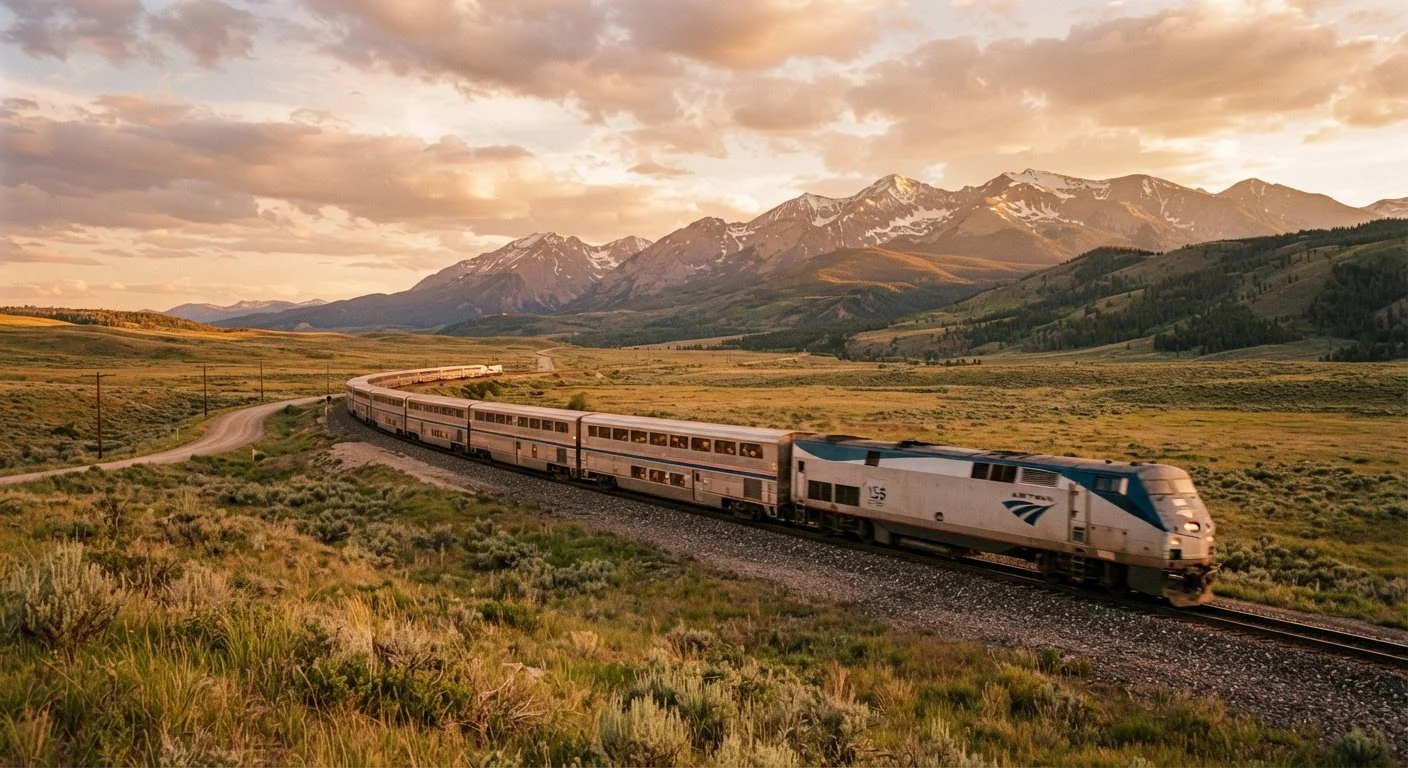
Amtrak operates roughly 30 routes serving more than 500 stations across 46 states. On paper, that sounds expansive. In practice, the network is uneven - dense and frequent along the Northeast Corridor between Washington, D.C., Boston, and New York, and sparse across large portions of the South and Mountain West.
The most popular long-distance routes include the California Zephyr (Chicago to San Francisco), the Empire Builder (Chicago to Seattle or Portland), and the Southwest Chief (Chicago to Los Angeles). These trains run once daily at best - some only several times per week - so missing one has real consequences.
Notably absent from the rail map: direct service between many major city pairs Americans commonly travel. There is no direct Amtrak route between Los Angeles and Las Vegas, for example. Understanding where the network does and doesn't reach before you plan is essential. For a broader look at how rail fits alongside other domestic travel options, see our end-to-end US travel planning guide.
Northeast Corridor
The heavily used rail line running between Washington, D.C., New York City, and Boston - the only major segment of track that Amtrak itself owns and operates.
Sleeper car
A train car with private or semi-private rooms that include beds, typically used on overnight long-distance routes. Meals are often included.
Dynamic pricing
A fare system where ticket prices change based on demand and how far in advance you book, similar to airline ticketing.
On-time performance
The percentage of trains that arrive at their destination within a defined window of the scheduled time - a key metric for evaluating rail reliability.
Freight priority
The operational practice where freight railroad companies give their own trains scheduling preference over Amtrak trains on shared track, a common cause of passenger delays.
Ticket Classes and What You Actually Get
Amtrak offers two primary accommodation tiers: Coach and Sleeping Car (also called Business Class on some corridor routes).
- Coach: Wide, reclining seats with leg rests - more spacious than a typical airplane seat. Suitable for day trips or short overnight legs if you can sleep upright. No meals included.
- Business Class: Available mainly on the Northeast Corridor and a handful of other routes. Offers more legroom and, on some trains, complimentary non-alcoholic drinks.
- Roomette: A compact private room in the sleeping car with two facing seats that convert to bunk beds. Meals are included in the dining car on most long-distance routes.
- Bedroom: A larger private room with a sofa, private toilet, and shower. Better for couples or travelers who want more space and privacy.
Sleeper fares are substantially higher than coach - often two to four times the price - but the meal inclusion and privacy change the calculus on multi-day journeys. If you're traveling overnight for more than one night, seriously weigh the cost of a roomette against the alternatives.
Sleeper Rooms: Do the Math First
Before writing off a sleeper as too expensive, add up what you'd otherwise spend on a hotel night, dinner, and breakfast for the same travel day. On a two-night long-distance journey, a roomette may cost less than you expect once those savings are factored in. Compare the all-in cost, not just the ticket price.
Reliability, Delays, and Setting Expectations
This is where honesty matters most. Long-distance Amtrak trains travel primarily on tracks owned and maintained by private freight railroads. Under federal law, passenger trains are supposed to have scheduling priority, but in practice, freight traffic routinely causes delays. On some long-distance routes, on-time performance has historically hovered around 40-50% or lower.
What this means for you: never book a same-day flight connection at your destination. Build in at least a full day of buffer. Treat the arrival time as an estimate, not a promise.
Northeast Corridor trains - including the Acela and Northeast Regional - perform considerably better because Amtrak owns those tracks. If reliability is a priority, corridor routes are a safer choice than cross-country trains.
Never Book a Tight Connection Off a Long-Distance Train
Long-distance Amtrak trains are delayed more often than they run on time. If your onward flight, rental car pickup, or hotel check-in depends on a precise arrival, you're taking a real risk. Always build at least a full day of buffer into your itinerary when traveling on cross-country routes.
Costs, Booking, and Practical Tips
Amtrak fares use a dynamic pricing model similar to airlines - prices generally rise as seats fill and departure dates approach. Booking several weeks in advance often yields lower fares, though sales and promotions can occasionally make last-minute purchases worthwhile. Amtrak's website and app are the primary booking channels.
A few logistics worth knowing before your first trip:
- Baggage: Two carry-on bags and two personal items are included at no charge. Checked baggage is available at select stations.
- Food: Coach passengers can purchase meals in the café car. Sleeping car passengers have meals included in the dining car on most long-distance trains, though service formats have varied in recent years.
- Station arrivals: Amtrak stations are almost always located downtown - a genuine advantage over airports, which are often 30-60 minutes from city centers. Factor that into your total travel cost comparison.
- Rail passes: Amtrak offers multi-trip passes that can reduce per-journey costs for frequent travelers. Evaluate whether the math works for your specific itinerary.
For help building a complete trip budget that accounts for transportation, lodging, and daily expenses, see our US travel budget guide. And if you're weighing train against other modes, our road trip vs. flying comparison covers the trade-offs in detail.
Frequently Asked Questions
Long-distance Amtrak trains have historically on-time rates well below 50% on many routes, largely because they share tracks with freight railroads that have operating priority. Budget extra time at your destination rather than booking tight connections.
Not always. Coach fares can be competitive with budget airline tickets, but once you factor in travel time and the cost of a sleeper for overnight trips, flying is often cheaper door-to-door. Amtrak's value is more about experience and convenience than pure cost savings.
Sleeper accommodations on most long-distance routes include meals in the dining car, bedding, and access to a private or semi-private room. The exact inclusions vary by route and room type, so check the specifics when booking.
Amtrak allows two carry-on bags and two personal items at no extra charge. Some stations also offer checked baggage service, though not all stations support this - verify before you travel.
Many Amtrak trains offer Wi-Fi, but coverage is inconsistent, especially through rural areas and tunnels. Don't plan on reliable connectivity for remote work on a cross-country route.
Train travel works well for short-to-medium corridors, scenic routes, or when you want a city-center arrival without a rental car. For a fuller comparison of your options, see our guide on <a href="/travel-shopping/smarter-travel/road-trip-vs-flying-weighing-the-real-trade-offs-for-us-travel">road trips vs. flying</a>.
The content on this site is provided for informational purposes only and should not be considered a substitute for professional advice. While we strive to provide accurate and up-to-date information, we make no guarantees regarding its completeness or accuracy. Always consult a qualified professional for advice specific to your circumstances before making any decisions.