

What 'Unlimited' Actually Means to a Carrier
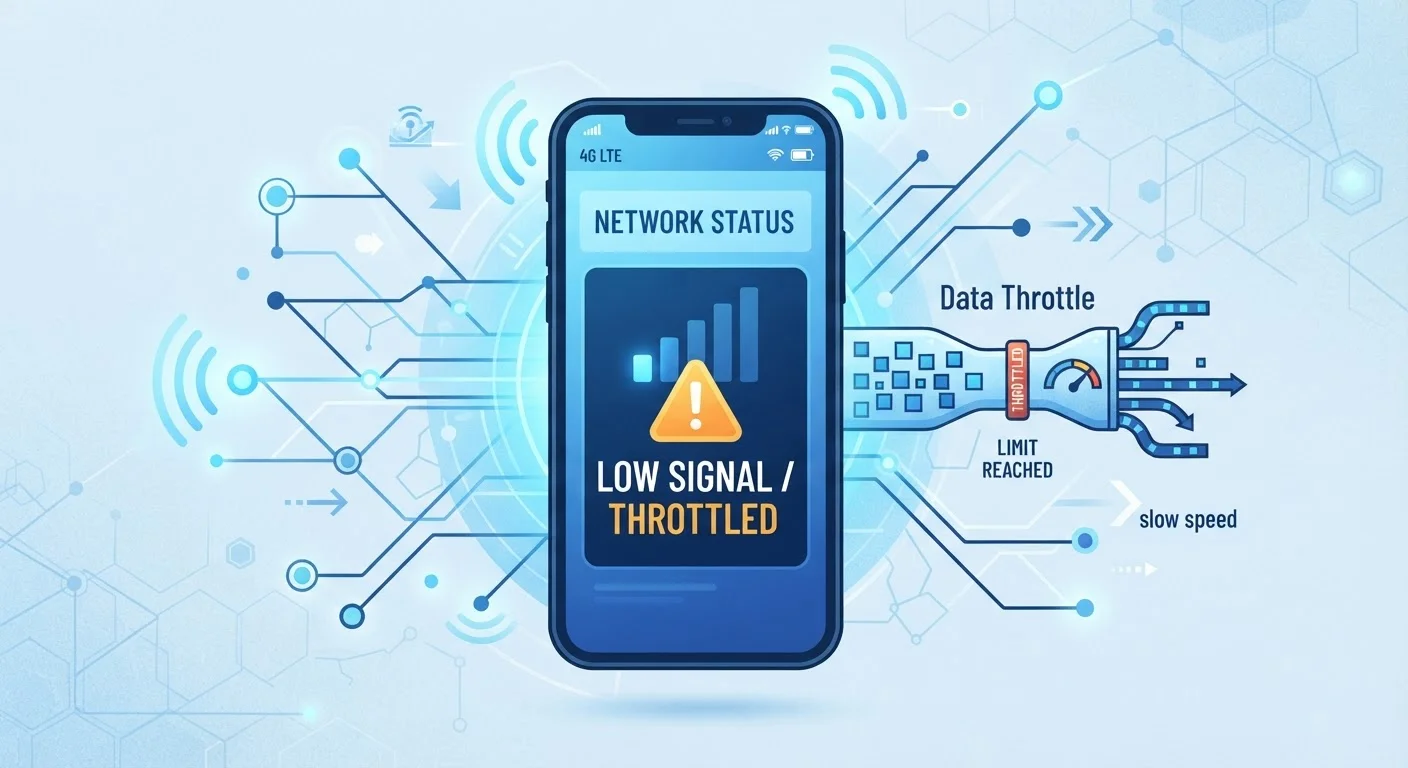
When a wireless carrier advertises an unlimited plan, they're using the word in a very specific - and legally defensible - way. Unlimited in this context typically means there is no hard monthly data cutoff that results in total service termination. Your phone won't go dark when you hit a threshold. What it does not mean is that your data speeds will remain consistent regardless of how much you use or when you use it.
Carriers build multiple forms of traffic management into unlimited plans. These practices - including deprioritization, throttling, and video resolution caps - are disclosed in plan documents, often in small print or in separate terms-of-service pages. Understanding each one helps you evaluate whether an unlimited plan will actually perform the way you expect.
For a deeper look at how these clauses are buried in plan documents, see how to read your wireless plan's fine print before signing.
Myth
Unlimited data means I can use as much data as I want at full speed, all month long.
Fact
Most unlimited plans reduce speeds after a set data threshold is reached, particularly during times of network congestion.
Carriers use a practice called deprioritization to manage network traffic. Once you surpass a plan's soft data cap - which is clearly stated in the terms but rarely in the ads - your traffic is placed behind that of lower-usage customers on congested towers. On an uncrowded tower, you may not notice. During peak usage hours in a busy area, speeds can drop substantially. This is not a technical malfunction; it is an intentional, disclosed traffic management policy.
Myth
Hotspot use is included in my unlimited data and works the same as data on my phone.
Fact
Mobile hotspot data is almost always governed by a separate, smaller allotment and may be throttled to very slow speeds after that allotment is used.
Unlimited plans typically split data into two pools: standard device data and mobile hotspot data. The hotspot allotment is usually much smaller - sometimes as low as 5-15 GB of high-speed hotspot data per month - and once it's depleted, carriers commonly reduce hotspot speeds to around 600 Kbps, which is barely adequate for basic web browsing and insufficient for video calls or streaming. This limit resets at the start of each billing cycle.
Myth
If I'm not experiencing slow speeds, I must be getting full unlimited performance.
Fact
Video streaming may be throttled to standard definition at the plan level, regardless of your current data usage or network conditions.
Many unlimited tiers apply a permanent video resolution cap - commonly 480p (standard definition) - that applies regardless of whether you've hit any data threshold. This is a plan-level policy, not a congestion response. Upgrading to a higher plan tier is typically required to unlock HD or 4K video streaming. Because compressed video at 480p is harder to distinguish on a small phone screen, many users don't notice this cap until they mirror content to a larger display.
Myth
All unlimited plans from major carriers offer essentially the same features.
Fact
Unlimited plans differ significantly in deprioritization thresholds, hotspot data amounts, streaming quality, and access to premium network speeds.
Carriers generally offer multiple unlimited tiers at different price points, and the differences are substantial. Entry-level unlimited plans may deprioritize data after 25-30 GB, cap hotspot at 5 GB, and limit video to 480p. Premium tiers may offer 50-100 GB before deprioritization, significantly more hotspot data, and access to HD or 4K streaming. Choosing a plan based on its advertised price without reading the tier-specific terms often results in paying for capabilities that don't match actual usage needs.
Myth
Throttling only happens if I've done something unusual or used an excessive amount of data.
Fact
Speed reductions can occur as a routine network management practice even for typical usage patterns during high-traffic periods.
Deprioritization is a normal, built-in feature of how modern wireless networks handle capacity - not a penalty for misuse. If a carrier's network in your area is congested at a given time, deprioritized users will experience slower speeds regardless of whether their individual usage is considered heavy or light. This is why urban users and those in densely populated areas tend to notice the effects of deprioritization more frequently than users in less congested locations.
Where Throttling Actually Shows Up
Throttling on unlimited plans takes several forms, and they don't all kick in under the same conditions.
Deprioritization After a Soft Cap
Most unlimited plans include a monthly data allotment - commonly ranging from 25 GB to 100 GB depending on the tier - after which your traffic is deprioritized. This means that when you're connected to a congested cell tower, your data is served last, behind users who haven't yet reached that threshold. On a quiet tower, you may notice no speed difference at all. During peak hours in a dense urban area, the slowdown can be significant.
Hotspot Data Is Usually Separate
Mobile hotspot usage - using your phone to share its connection with a laptop or tablet - typically draws from a separate, smaller pool of high-speed data. Once that hotspot allotment is exhausted, many carriers reduce hotspot speeds to 600 Kbps or slower for the rest of the billing cycle, even if your regular phone data is unaffected.
Video Streaming Caps
Many unlimited plans, including lower-cost tiers from major carriers, cap streaming video at standard definition (480p) by default. This isn't a congestion response - it's a permanent, plan-level setting designed to manage network load and differentiate between pricing tiers. Higher-tier plans may allow HD or 4K streaming, but only after you confirm that setting is included. Understanding how resolution affects data consumption is explained in more detail in our guide on streaming quality settings and what they mean for data usage.
~25-100 GB
Typical deprioritization threshold range on unlimited plans
The exact threshold varies by carrier and plan tier; lower-priced unlimited plans generally apply deprioritization earlier.
600 Kbps
Common throttled hotspot speed after allotment is exhausted
This speed - roughly equivalent to 2G - is frequently cited in carrier terms of service as the reduced hotspot rate after high-speed data runs out.
480p
Default video cap on many entry-level unlimited plans
Standard definition video streaming is applied at the plan level by many carriers on lower-tier unlimited offerings, independent of congestion.
How to Evaluate a Plan Before You Commit
Because unlimited plans vary significantly in how and when they restrict speeds, comparing them solely on price or the presence of the word 'unlimited' leads to mismatched expectations. The variables that matter most are: the deprioritization threshold (in gigabytes), the hotspot data allotment, the default video streaming resolution, and whether premium data speeds are guaranteed during congestion.
These figures appear in the plan's full terms or in comparison tables on the carrier's website - rarely in the headline advertising. If you're trying to avoid common assumptions that lead to overpaying, our article on what to double-check before committing to a carrier covers the most frequent missteps.
Also worth noting: if you use your phone as a primary internet source through a hotspot, an unlimited wireless plan may not be a reliable substitute for a fixed home broadband connection. For context on how data caps apply in home internet plans, see how data caps work in home internet plans.
Don't Rely Solely on Marketing Language
The word 'unlimited' in a plan name is a marketing term, not a technical specification. Before selecting a plan, locate the carrier's full plan details page - not the landing page - and confirm the deprioritization threshold, hotspot data limit, and default video streaming resolution. These figures determine real-world performance more than any headline claim. Our guide on decoding wireless plan fine print walks through exactly what to look for.
The content on this site is provided for informational purposes only and should not be considered a substitute for professional advice. While we strive to provide accurate and up-to-date information, we make no guarantees regarding its completeness or accuracy. Always consult a qualified professional for advice specific to your circumstances before making any decisions.