

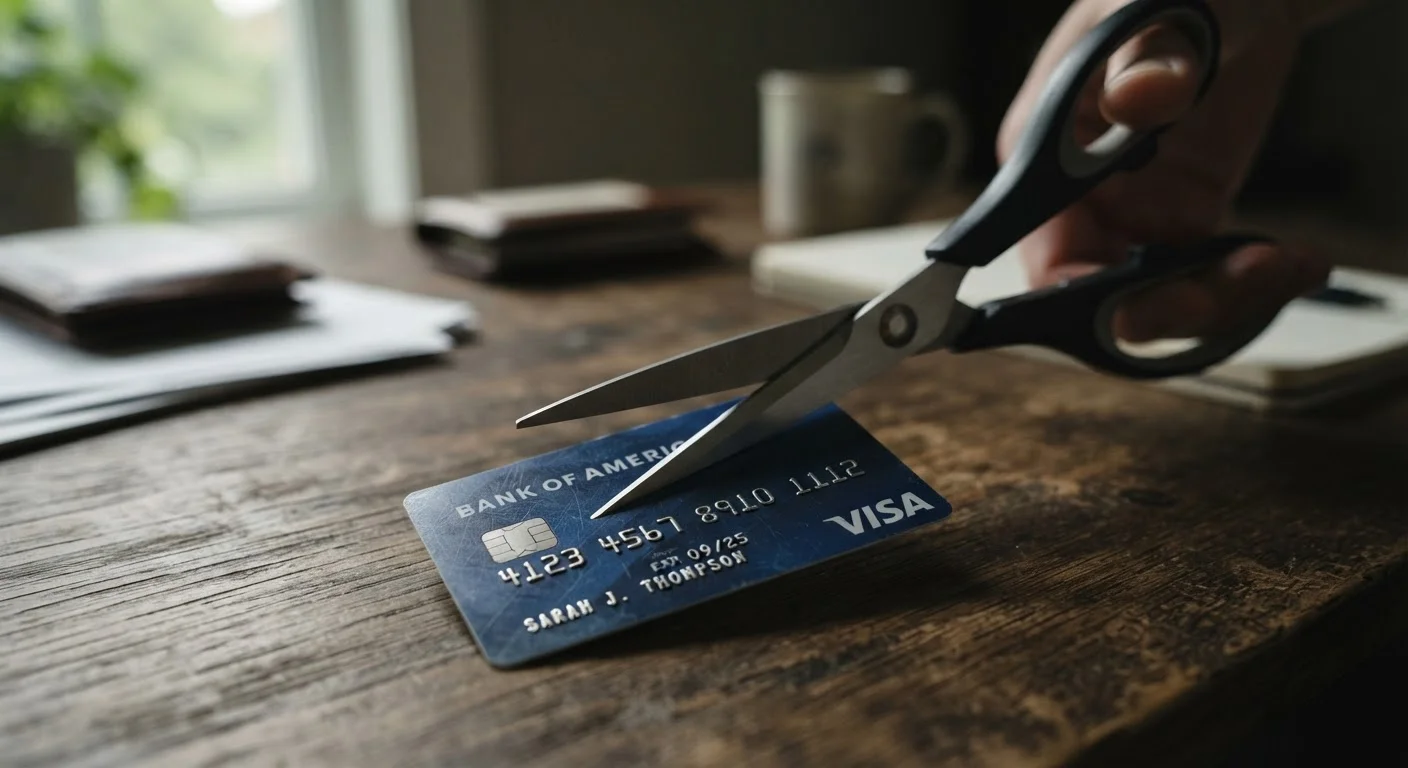
How Closing a Card Actually Affects Your Score
Your credit score is calculated from five main factors: payment history, amounts owed (credit utilization), length of credit history, new credit inquiries, and credit mix. Closing an old credit card touches at least three of those factors - and not in your favor.
The most immediate hit comes from credit utilization, which measures how much of your available revolving credit you are currently using. If you carry a $1,000 balance across cards with a combined limit of $5,000, your utilization is 20%. Cancel a card with a $2,000 limit and your available credit drops to $3,000 - pushing that same balance to a 33% utilization rate. Most scoring models reward keeping utilization below 30%, and many experts suggest targeting below 10% for the strongest scores.
The second impact is on average account age. Scoring models reward long, established credit relationships. While a closed account stays on your credit report for up to 10 years, it will eventually disappear - and when it does, your average account age can drop sharply. This matters most if the card you're closing is your oldest account.
For a broader look at how these mechanics interact with common misconceptions, see our guide on credit score myths.
30%
Credit utilization threshold to stay below
FICO and VantageScore models generally reward keeping your revolving credit utilization under 30%, with stronger scores typically seen below 10%.
15%
Share of FICO score tied to credit age
According to FICO's published scoring breakdown, the length of credit history accounts for approximately 15% of a standard FICO score.
Mistakes Consumers Make When Canceling Cards
Closing your oldest credit card account to simplify your wallet.
Why it happens: Consumers often equate fewer accounts with better financial discipline, assuming older unused cards are clutter.
Canceling a card immediately after paying it off, without considering utilization.
Why it happens: Paying off a card feels like a natural closing point - it's emotionally satisfying to shut the chapter completely.
Closing multiple cards at once during a financial cleanup.
Why it happens: A personal finance reset can feel motivating, leading people to cancel several accounts in a short period as part of a fresh start.
Assuming a closed account immediately disappears from your credit report.
Why it happens: Many consumers believe canceling a card wipes the slate clean, not realizing closed accounts remain visible for years.
Closing a card to avoid paying an annual fee without exploring alternatives.
Why it happens: When a card's annual fee no longer seems worth its perks, cancellation appears to be the only logical exit.
If your credit has already taken a hit from other financial events, these mistakes can compound existing damage. Rebuilding credit after financial setbacks requires protecting every positive account you have - closing cards during recovery is rarely the right move.
Never Close Your Only Credit Card
If you hold just one credit card, closing it eliminates your entire revolving credit history and will significantly damage your score. Lenders use revolving credit history as a primary indicator of how you manage ongoing credit obligations. If the card has a fee you can't justify, request a product change to a no-fee option - do not cancel outright.
When Keeping the Card Open Makes More Sense
For most consumers, the simplest strategy is to keep old cards open and use them occasionally - a small recurring charge paid in full each month keeps the account active without accumulating debt. This preserves your utilization ratio, maintains account age, and demonstrates responsible usage to lenders.
If an annual fee is the sticking point, call the issuer and ask to downgrade to a no-fee version of the card. Many issuers will oblige rather than lose the account entirely, and a product change typically preserves your account's history and credit limit.
There are legitimate reasons to close a card - chronic overspending temptation, a fee you genuinely cannot justify, or a card tied to a troubled financial relationship. In those cases, close the newest card with the smallest limit rather than your oldest or highest-limit account to minimize score damage. And before making any major decision about your credit mix, consider speaking with a nonprofit credit counselor or a licensed financial adviser who can evaluate your full picture. This article provides general financial education and is not personalized financial advice.
Understanding how debt and credit products interact is also worth exploring: comparing personal loans and credit cards can clarify which tool fits which financial need.
The content on this site is provided for informational purposes only and should not be considered a substitute for professional advice. While we strive to provide accurate and up-to-date information, we make no guarantees regarding its completeness or accuracy. Always consult a qualified professional for advice specific to your circumstances before making any decisions.