

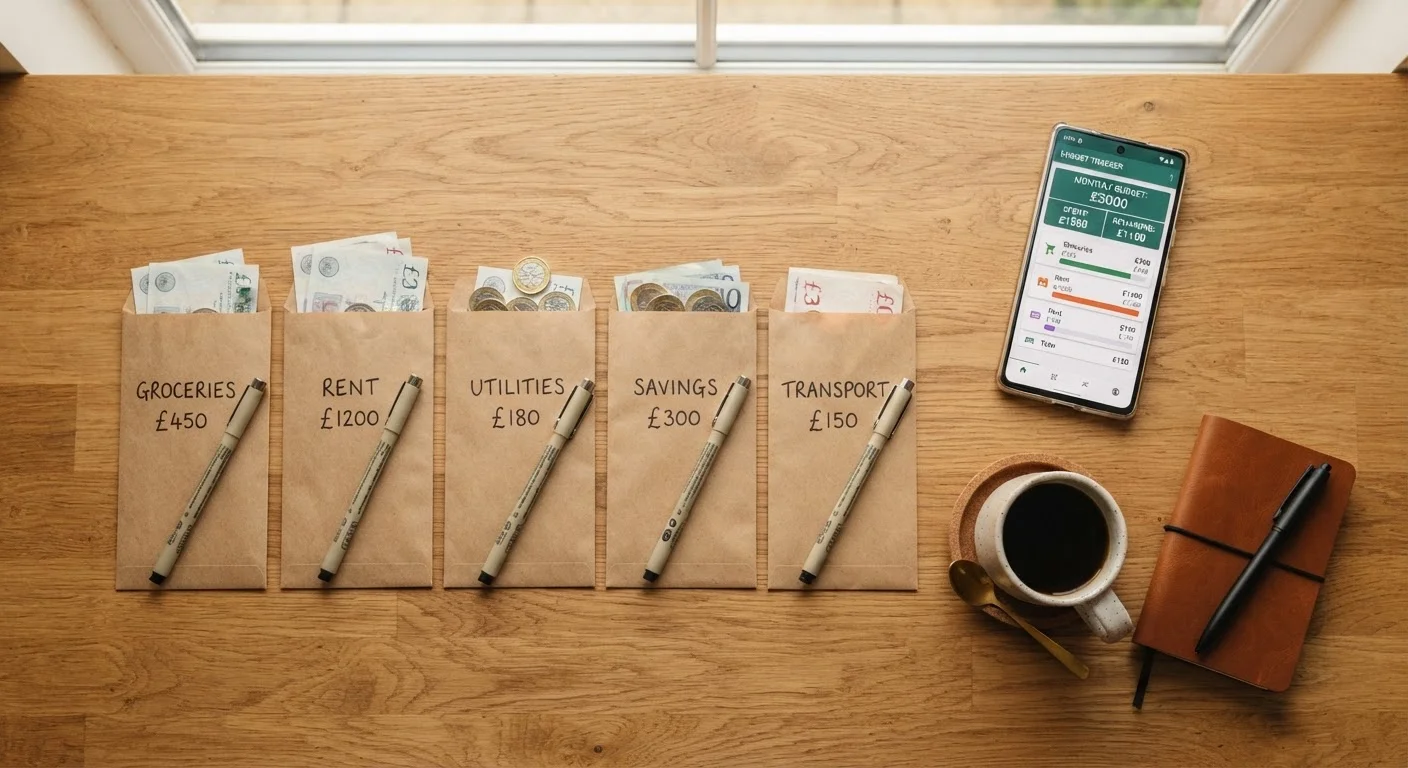
What Envelope Budgeting Actually Does
The envelope method is one of the oldest personal budgeting frameworks around. Traditionally, you'd cash your paycheck, divide the bills into labeled envelopes - groceries, gas, entertainment, utilities - and spend only what was in each envelope. When an envelope was empty, spending in that category stopped until next month.
The logic is straightforward: money that is already allocated is harder to accidentally spend elsewhere. The physical constraint of a finite pile of bills made overspending immediately visible. That same constraint is what makes the system effective - and it's fully reproducible without a single dollar bill.
If you're new to budgeting altogether, the Personal Budgeting from the Ground Up guide covers the foundational concepts worth understanding before layering on any specific method.
What you will need
Tools and Setup: What You'll Need
Before diving into the steps, gather what you'll need to build your digital envelope system. The good news is that meaningful setup requires minimal resources.
Bank or credit card statements (2-3 months)
Used to identify real spending patterns and set realistic envelope amounts for each category.
Budgeting app with envelope or category tracking
Automates transaction logging and shows real-time balances for each spending category.
Spreadsheet (template or custom-built)
Provides a manual, fully customizable way to track envelope balances without third-party software.
No-fee checking or savings accounts
Act as physical digital envelopes when you transfer category allocations into dedicated accounts at the start of each month.
For tracking, you have three main options: a dedicated budgeting app that uses virtual envelopes natively, a spreadsheet you build or download, or separate bank accounts acting as physical envelopes. Each approach has real trade-offs - the Tracking Your Spending comparison breaks these down in detail to help you pick the one most likely to stick.
Step-by-Step: Building Your Digital Envelope Budget
Follow these steps at the start of each budget period - typically the beginning of the month or aligned with your pay cycle.
Calculate your monthly take-home income
Start with the money that actually lands in your bank account after taxes and deductions - not your gross salary. If your income varies month to month, use a conservative estimate based on your lowest recent months to avoid over-allocating.
List your spending categories
Write down every area where money leaves your account: housing, utilities, groceries, transportation, dining out, subscriptions, clothing, medical, savings, debt payments, and a miscellaneous buffer. Aim for categories that match how you actually spend - not how you wish you spent.
- Fixed expenses (rent, loan payments) are straightforward - they don't change month to month.
- Variable expenses (groceries, gas) need an estimated ceiling based on recent history.
- Irregular expenses (car registration, annual subscriptions) should be broken into monthly amounts and set aside in a dedicated envelope.
Assign a dollar amount to each envelope
Distribute your take-home income across your categories until every dollar is assigned. The goal is that income minus all envelope totals equals zero - a method sometimes called zero-based budgeting. If you run out of income before filling all envelopes, reduce discretionary categories first. If you have money left over, direct it intentionally to savings or debt payoff.
Set up your digital envelopes
Translate your category list into your chosen tool:
- Budgeting app: Create a budget category for each envelope and enter the allocated amount. Apps with envelope-style tracking will show a running balance as transactions are logged.
- Spreadsheet: Create a column for each category with the allocated amount at the top and a running subtraction of each expense below.
- Separate bank accounts: Open no-fee checking or savings accounts for major categories (e.g., groceries, entertainment) and transfer the allocated amount at the start of each month. Spend only from the designated account.
Log transactions as they happen
Every purchase needs to be recorded against its envelope promptly. The closer to real-time, the more accurate your remaining balances will be. Most budgeting apps can connect to your bank or card accounts and auto-categorize transactions, which reduces manual entry - though you should still review auto-categorized items for accuracy.
Review and reset at the end of each month
Before the next month begins, look at which envelopes were consistently overspent, which were consistently underspent, and whether your category list still reflects your life. Adjust allocations accordingly. Carry forward any unspent amounts as you see fit - some people roll them over to boost the next month's envelope; others move surpluses to savings.
This article provides general financial education and is not personalized financial advice. For guidance specific to your situation, consider consulting a licensed financial professional.
Keeping the System Running Month to Month
Setup is the easy part. Consistency is where most budgets stall. A few habits make the difference between a digital envelope system that shapes your behavior and one that becomes a neglected app on your phone.
Check before you spend, not after. The envelope method only works if you verify your remaining balance before a purchase. Build a quick check into your routine - glance at your grocery envelope before entering the store, for example.
Decide in advance how to handle overages. Life produces surprises. Agree with yourself ahead of time whether you'll pull from a buffer envelope, borrow from a lower-priority category, or simply pause spending. Having a rule removes the temptation to rationalize.
Run a monthly review. Spending patterns shift. An envelope that felt generous in month one may be too tight or too loose by month three. The Monthly Budget Setup Checklist is a useful reference for resetting your categories before each new period.
For the behavioral side of sticking with any budgeting system - the habits and friction points that spreadsheets don't address - see The Habit Side of Budgeting. And if you want a broader framework for making intentional spending decisions within your envelopes, Spending Wisely on a Budget offers practical guidance on evaluating everyday purchases.
Start with Fewer Envelopes Than You Think You Need
New budgeters often create too many categories, which makes the system feel overwhelming and hard to maintain. Start with five to eight broad categories and refine them after one or two months. A simpler system you actually use will outperform a detailed one you abandon within weeks.
The content on this site is provided for informational purposes only and should not be considered a substitute for professional advice. While we strive to provide accurate and up-to-date information, we make no guarantees regarding its completeness or accuracy. Always consult a qualified professional for advice specific to your circumstances before making any decisions.