

Option A
Pressure-Treated Lumber
The affordable, widely available workhorse of deck framing.
Best for: Homeowners prioritizing upfront cost savings and structural durability, especially for substructure framing.
Option B
Cedar
The naturally beautiful, splinter-resistant choice for deck surfaces.
Best for: Homeowners who want a warm, attractive deck surface with natural rot resistance and a comfortable feel underfoot.
What Sets These Two Materials Apart
When planning an outdoor deck, the choice between pressure-treated lumber and cedar comes down to how each material is made durable - and what trade-offs that creates. Pressure-treated lumber starts as softwood (most commonly Southern yellow pine) and is infused with chemical preservatives under pressure to resist rot, fungal decay, and insect damage. Cedar, on the other hand, derives its durability naturally: the wood's own oils and tight grain make it inherently resistant to moisture and insects without any added treatment.
This fundamental difference ripples through every aspect of deck planning - from handling and installation to long-term maintenance and appearance. Understanding both materials at this level helps you make a decision grounded in your specific project rather than just price tags or surface impressions.
For a broader look at how deck material choices fit into the full scope of structural planning and permitting, see our guide on adding a deck - it covers footings, ledger attachments, and code considerations that affect every material choice.
| Criterion | Pressure-Treated Lumber | Cedar |
|---|---|---|
| Upfront Cost | Generally lower | Moderately higher |
| Rot Resistance | Chemical treatment | Natural oils |
| Insect Resistance | High (treated) | Moderate (natural) |
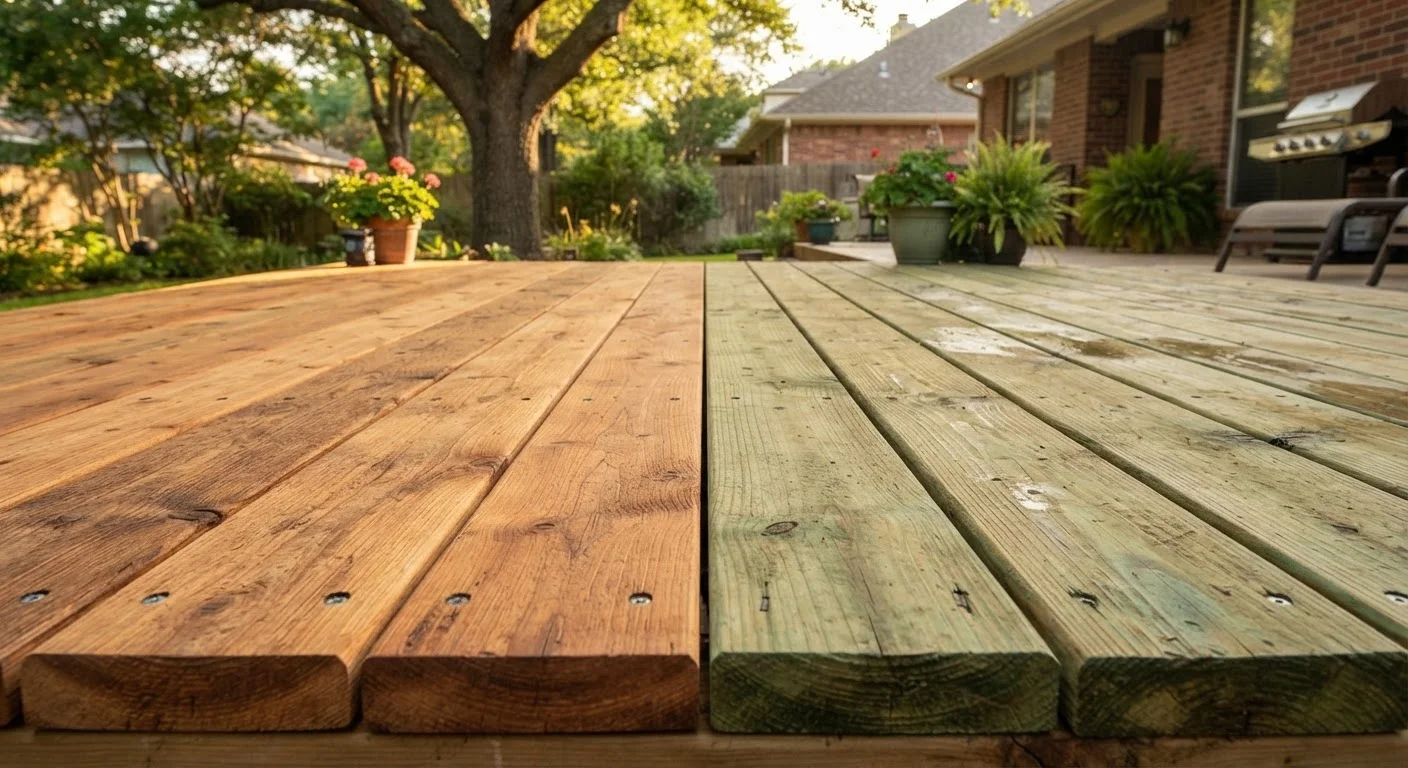
| Appearance (raw) | Green-tinted, rough | Warm reddish-brown grain |
| Splinter Risk | Higher | Lower |
| Structural Use | Standard for framing | Less common for framing |
| Dimensional Stability | Can shrink when drying | More stable at purchase |
| Maintenance Frequency | Every 1-3 years | Every 1-3 years |
| Chemical Exposure Concern | Moderate (handle with care) | Minimal |
| Estimated Deck Lifespan | 15-40 years (maintained) | 15-30 years (maintained) |
Cost, Availability, and Installation Considerations
Pressure-treated lumber is typically one of the most affordable structural wood options at most lumberyards and home centers across the country. Cedar is more expensive on a per-board-foot basis - often noticeably so - though prices vary by region, grade, and market conditions. In areas closer to the Pacific Northwest or other cedar-producing regions, the cost gap can narrow considerably.
Installation behavior differs between the two as well. Freshly milled pressure-treated lumber often contains significant moisture from the treatment process and can shrink or warp as it dries after installation. Experienced builders sometimes allow gaps between boards to account for this. Cedar is typically drier at purchase and more dimensionally stable, though it still benefits from acclimation before installation in humid or dry climates.
~40 yrs
Maximum lifespan of maintained pressure-treated deck framing
Industry estimates suggest well-maintained pressure-treated lumber used in framing can last up to 40 years, depending on grade and exposure conditions.
2-3×
Approximate cost premium for cedar over pressure-treated lumber
Cedar decking boards can cost roughly two to three times more per board foot than comparable pressure-treated pine, though regional prices vary.
1-3 yrs
Recommended resealing interval for outdoor wood decks
Most wood deck maintenance guidelines recommend applying a water-repellent sealant or stain every one to three years to preserve both wood types.
One important safety note: pressure-treated lumber - particularly older boards treated with now-discontinued formulas - should be handled with care. Modern formulations use different preservative compounds, but it's still advisable to wear gloves and a dust mask when cutting, avoid burning scraps, and wash hands thoroughly after handling. Always check current safety guidelines from the manufacturer or lumber supplier.
Maintenance, Longevity, and Appearance Over Time
Both wood types require maintenance to reach their potential lifespan. Left completely untreated, pressure-treated lumber will gray and check (develop surface cracks) over time. A penetrating sealant or stain applied every one to three years helps maintain appearance and reduce checking. Cedar responds similarly - without a finish, it weathers to an attractive silver-gray that many homeowners appreciate, though a clear sealant preserves the warm reddish-brown tone longer.
In terms of raw longevity when maintained, pressure-treated lumber is commonly estimated to last 15-40 years depending on grade, ground contact, and climate. Cedar decking, when properly sealed, can reach 15-30 years. Structural framing - posts, beams, and joists - almost universally uses pressure-treated lumber regardless of what decking surface sits above it, because those elements face the highest moisture and decay risk.
Appearance is where cedar holds a clear edge for many homeowners. Its natural grain and color are more visually appealing in their raw state, and the wood is softer and less prone to splintering than pressure-treated pine, making it more comfortable on bare feet. Our guide to maintaining a wood deck through every season covers the cleaning, staining, and inspection routines that help either material last its full potential lifespan.
Making the Right Choice for Your Project
For most residential decks, a practical hybrid approach makes the most sense: use pressure-treated lumber for all structural components - posts, beams, joists, and any framing in contact with or close to the ground - and consider cedar (or another preferred decking material) for the visible walking surface. This approach balances structural performance and cost with the aesthetic and comfort benefits cedar provides.
Climate matters too. In the Pacific Northwest, Gulf Coast, or other consistently wet regions, the chemical protection of pressure-treated lumber offers meaningful peace of mind for structural framing. In drier climates, cedar's natural oils may be sufficient even for some structural applications, though local code requirements always take precedence - consult your local building department before making that call.
Whatever material you choose, factor in the full cost of ownership: initial board cost, hardware (use stainless steel or hot-dipped galvanized fasteners with pressure-treated lumber to prevent corrosion), sealants, and the time you're willing to spend on annual or biannual maintenance. Both materials reward attentive care and punish neglect in roughly equal measure.
Permits and Codes Apply to Deck Materials
Many municipalities have specific requirements about which materials can be used in ground-contact applications, and some jurisdictions restrict older formulations of pressure-treated wood near water features or gardens. Before purchasing materials in bulk, check with your local building department to confirm code compliance. Permit requirements for deck construction vary widely - a deck over a certain height or square footage almost always requires a permit and inspection.
The content on this site is provided for informational purposes only and should not be considered a substitute for professional advice. While we strive to provide accurate and up-to-date information, we make no guarantees regarding its completeness or accuracy. Always consult a qualified professional for advice specific to your circumstances before making any decisions.