

Why the DIY Electrical Question Matters
Electrical work sits in a uniquely consequential category of home improvement. Done correctly, a straightforward repair or upgrade is perfectly manageable. Done incorrectly, it can cause a house fire, an electrocution, or a failed home inspection years later. The challenge is that many homeowners either overestimate or underestimate what they can safely handle - and confident-sounding online tutorials don't always fill in the critical gaps.
The goal here isn't to scare you away from reasonable DIY tasks or to suggest that every outlet swap needs a contractor. It's to give you an honest, practical line between what a careful homeowner with basic skills can tackle and what genuinely belongs in the hands of a licensed electrician. Understanding that line starts with correcting a few widely held misconceptions.
For a broader framework on when DIY makes sense versus when to call a pro, see our guide to DIY vs. professional repairs.
Myth
As long as I turn off the breaker, any electrical work is safe to do myself.
Fact
Turning off the breaker is necessary but not sufficient - you must verify the circuit is truly de-energized with a non-contact voltage tester before touching any wires.
Breakers can be mislabeled, and some fixtures are wired to multiple circuits. A non-contact voltage tester (an inexpensive tool available at hardware stores) should be used to confirm no live current is present before you touch anything. Additionally, even with the correct breaker off, the main service entrance lines feeding your panel are always live - those are never safe for a homeowner to touch under any circumstances.
Myth
Replacing an outlet or light switch is too complicated for a homeowner.
Fact
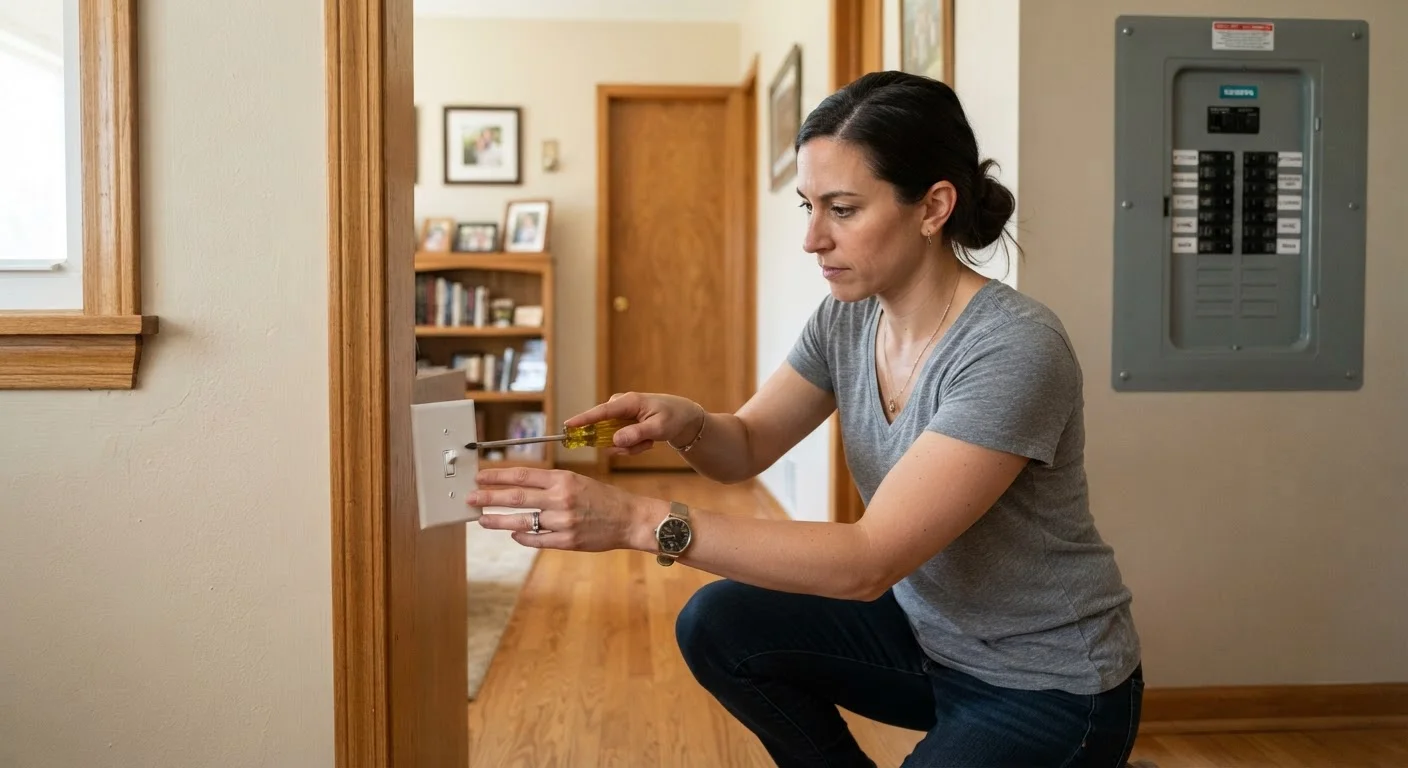
Like-for-like replacement of outlets and switches is one of the most accessible DIY electrical tasks, provided you work safely, de-energize the circuit, and follow the existing wiring connections.
Swapping a standard outlet for a GFCI (ground-fault circuit interrupter) outlet in a bathroom or kitchen, or replacing a worn switch, is well within reach for a careful homeowner who photographs the existing wiring before disconnecting anything. The key is working only on circuits you've verified are off, matching wire connections exactly, and not modifying the wiring configuration. If the box is crowded, shows signs of scorching, or the wiring looks unusual, stop and call a professional.
Myth
If the lights work fine, the wiring in my home is safe.
Fact
Functioning lights do not indicate safe wiring - hidden issues like overloaded circuits, loose connections, aluminum wiring, or degraded insulation carry real fire risk without any visible symptoms.
Many electrical fires originate in walls or attic spaces from wiring issues that produce no obvious warning signs for years. Homes built before the mid-1970s may contain aluminum branch-circuit wiring, which expands and contracts differently than copper and requires special connectors and outlets rated for aluminum. If your home is older or has never had an electrical inspection, having a licensed electrician perform a thorough assessment is a worthwhile investment - not an optional extra.
Myth
Adding a new circuit is just an extension of existing wiring - any handy person can do it.
Fact
Installing a new circuit requires working inside the electrical panel, which involves exposure to always-live conductors and demands both technical knowledge and, in most jurisdictions, a permit and licensed electrician.
The interior of a main electrical panel is never fully de-energized when the panel door is open - the service entrance conductors coming from the utility remain live even when every breaker is off. Incorrectly installed circuits can also overload the panel, create fire hazards, or fail inspection. New circuit work almost universally requires a permit and is one of the clearest cases where hiring a licensed electrician is the appropriate choice, not an overly cautious one.
Myth
A circuit breaker that trips repeatedly just needs to be reset or replaced.
Fact
A repeatedly tripping breaker is signaling an overloaded circuit, a short circuit, or a ground fault - replacing the breaker without diagnosing the cause treats the symptom and leaves the hazard in place.
Breakers are safety devices, not inconveniences. Frequent tripping means the breaker is doing its job by responding to something wrong downstream. The correct response is to have a licensed electrician identify whether the circuit is overloaded (too many devices drawing power), has a wiring fault, or has a failing appliance. Simply swapping in a new breaker - or, worse, installing a higher-amperage breaker - without resolving the underlying problem can allow dangerous levels of current to flow through wiring not rated to handle it.
The Permit Reality Most Homeowners Miss
One of the most overlooked aspects of electrical work isn't the wiring itself - it's the paperwork. Many jurisdictions require a permit for any work beyond straightforward like-for-like fixture replacement. This includes adding circuits, upgrading panels, installing ceiling fans where no wiring existed, and running new wire through walls.
Unpermitted Electrical Work Has Lasting Consequences
Completing electrical work without a required permit isn't just a code violation - it can affect your homeowner's insurance claim eligibility if that work is later involved in a fire or injury. When you sell your home, unpermitted work can surface during inspection and either delay the sale or require costly remediation. Always verify local permit requirements before starting any project beyond a simple like-for-like replacement.
Permits exist so that a licensed inspector can verify the work was done safely and to code. Skipping this step doesn't just risk a fine - it can void your homeowner's insurance coverage for a related incident, complicate a future home sale, or force you to tear open walls to bring unpermitted work up to code retroactively.
Local rules vary significantly, so always check with your municipality before starting any project. Our article on when home improvement projects require permits walks through the broader landscape of what typically triggers an inspection requirement.
If you do need to bring in a licensed electrician, use a structured vetting process. Our contractor vetting checklist covers licensing, insurance, references, and contracts - everything you need before work begins.
~51,000
Home electrical fires annually in the U.S.
According to the U.S. Fire Administration, electrical fires account for roughly 51,000 home fires each year, resulting in significant property damage and injuries.
40%
Electrical fires linked to wiring and related equipment
The National Fire Protection Association has identified wiring and related equipment as among the leading causes of home electrical fires, underscoring why behind-the-wall work carries serious stakes.
The content on this site is provided for informational purposes only and should not be considered a substitute for professional advice. While we strive to provide accurate and up-to-date information, we make no guarantees regarding its completeness or accuracy. Always consult a qualified professional for advice specific to your circumstances before making any decisions.