

Why Renovation ROI Is More Complicated Than It Looks
Walk through any home improvement store and the promise feels straightforward: upgrade your home, increase its value. In practice, the relationship between renovation spending and resale returns is uneven - and sometimes surprising. Some projects reliably appeal to buyers and appraisers; others feel worthwhile to live with but deliver little at closing.
Understanding the general patterns can help homeowners make more deliberate choices about where to invest time and money - whether they're planning to sell soon or years from now. Keep in mind that resale value is only one measure of a renovation's worth. Comfort, safety, and daily enjoyment matter too. But if recouping costs at resale is a priority, the distinctions below are worth knowing.
For a broader look at how home values shift and why, see common housing market myths examined. And before any project gets underway, check whether official approval is required - permits matter more than many homeowners expect.
Minor Kitchen Refresh
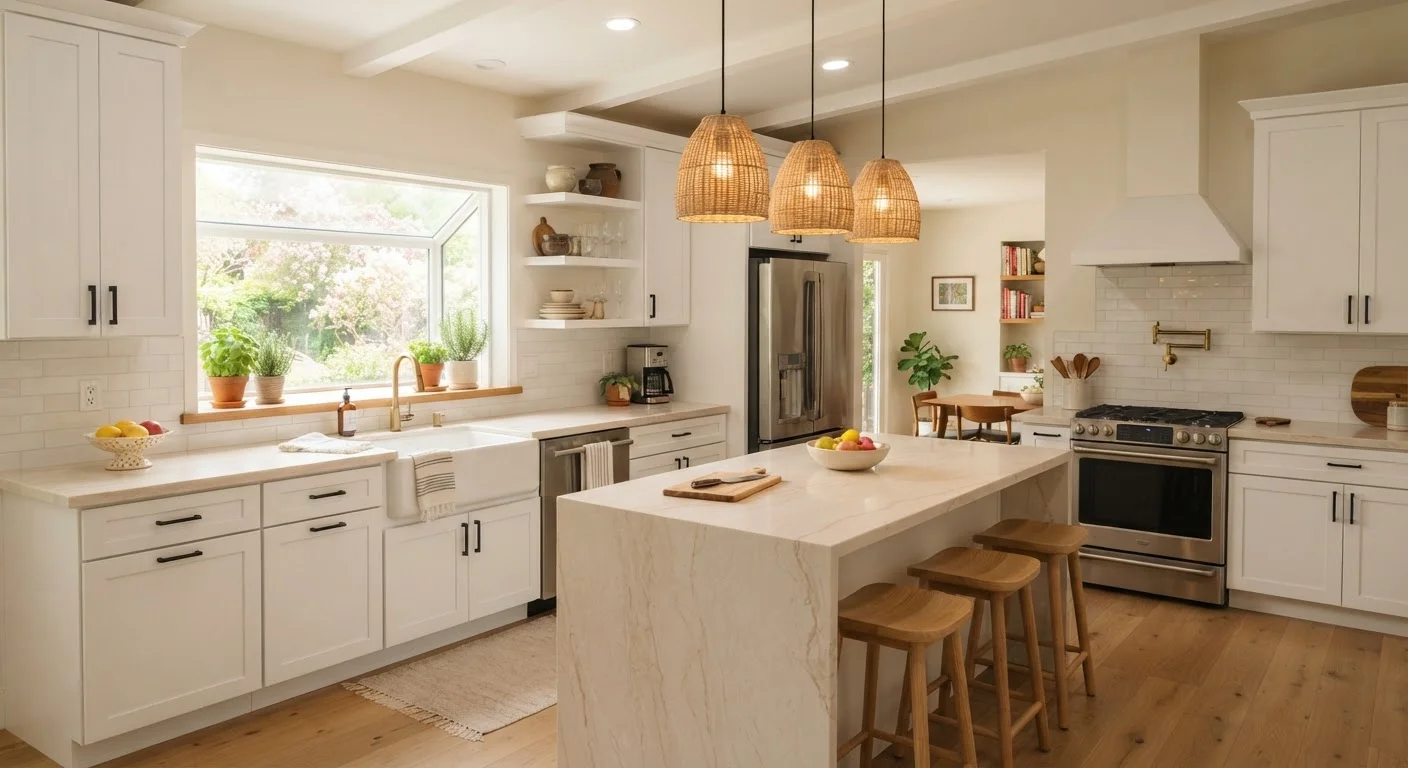
A full kitchen gut renovation is expensive and rarely returns dollar-for-dollar at resale. However, a minor kitchen update - swapping cabinet fronts, replacing hardware, installing a new faucet, and refreshing countertops - tends to fare considerably better in cost-recoup terms.
Buyers consistently rank kitchens among the most important rooms, so an updated, clean kitchen can meaningfully support a home's perceived value without the cost of moving walls or reconfiguring plumbing. The key is staying proportional to the home and neighborhood. If you're thinking through a larger-scale remodel, this complete kitchen renovation roadmap covers the full scope of what's involved.
Minor kitchen updates consistently outperform full gut renovations in cost recoupment at resale.
Garage Door Replacement
Garage door replacement is one of the more frequently cited strong performers in industry cost-versus-value analyses. It improves curb appeal immediately, is visible to every potential buyer who drives by, and tends to be a relatively contained cost compared to interior renovations.
Because buyers form first impressions quickly, exterior improvements that make a home look well-maintained often have an outsized influence on perceived value - even before anyone steps inside.
A new garage door boosts curb appeal instantly and is often one of the stronger resale investments.
Entry Door Replacement (Steel)
Replacing an aging front door with a quality steel entry door is another exterior upgrade with a solid track record for recouping a high proportion of its cost. Like garage door replacement, it signals to buyers that the home has been maintained. It also carries practical benefits - improved insulation, security, and weather resistance - that appraisers and buyers can readily identify.
This is generally a project where professional installation ensures proper fit, weatherproofing, and hardware alignment.
Steel entry door replacements combine security, efficiency, and curb appeal in a single, well-recouping upgrade.
Deck or Patio Addition
Outdoor living space has become an increasingly valued feature for many buyers. A well-built deck or patio extends usable square footage into the yard and appeals to a broad range of lifestyles. Wood decks tend to recoup a reasonable portion of cost, while composite materials - though more expensive upfront - often have lower maintenance demands that buyers appreciate.
Recoupment varies significantly by region. In climates where outdoor seasons are short, the return may be lower than in areas where outdoor living is practical for much of the year.
Outdoor living additions appeal broadly to buyers, with returns that vary meaningfully by climate and region.
Bathroom Addition or Remodel (Midrange)
Adding a bathroom where one is genuinely needed - for example, a home with only one bathroom for multiple bedrooms - can meaningfully increase functionality and buyer appeal. A midrange bathroom remodel that updates fixtures, tile, and lighting without going into luxury territory tends to recoup more consistently than a high-end overhaul.
Luxury features like heated floors, custom tile work, and spa fixtures can make a bathroom more enjoyable to live with, but they rarely return their full cost unless the overall home is already positioned at the higher end of its market.
Midrange bathroom updates beat luxury overhauls on resale recoupment in most markets.
Upscale Primary Suite Additions
Large primary suite additions - expanding square footage, adding walk-in closets, or building out high-end bathrooms - can be appealing to owners who plan to stay long-term. But at resale, these projects frequently cost more than the value they add, particularly when they require significant structural changes or are overbuilt for the neighborhood price point.
The expense of moving load-bearing walls, adding square footage under roof, and finishing to luxury standards is substantial. Buyers may appreciate the result, but appraisers and market comparables often limit how much of that spending translates into a higher sale price.
High-cost primary suite expansions are often overbuilt relative to what local markets will support at appraisal.
Swimming Pool Installation
A swimming pool is one of the more polarizing home features among buyers. In some warm-weather markets, a pool may be expected and can support a home's price. In other regions - or for buyers with young children or maintenance concerns - a pool can actually narrow the buyer pool rather than expand it.
Installation costs are substantial, ongoing maintenance adds to lifetime costs, and insurance implications vary. Homeowners who are considering a pool primarily for resale value should weigh local market expectations carefully rather than assuming it will add equivalent dollar value.
Pools are expensive, market-dependent, and can narrow your buyer pool as easily as they expand appeal.
Highly Personalized Interior Finishes
Bold wallpaper, unconventional color palettes, custom built-ins designed around specific hobbies, and unusual flooring choices may reflect genuine personal style - but they can make a home feel harder to picture for buyers with different tastes. The cost of reversing or repainting such choices often falls to the seller in the form of price reductions or buyer negotiation.
Neutral, broadly appealing finishes tend to perform better at resale, even if they feel less exciting to live with during ownership.
Personalized finishes that reflect specific tastes can cost sellers at resale when buyers factor in reversal work.
Making Smarter Renovation Decisions
No renovation guarantees a specific return, and local market conditions shape outcomes more than any national average suggests. A project that performs well in one metro area may be unremarkable in another. Before committing to a large project, it's worth talking to a local real estate professional who understands what buyers in your specific area actually value.
Match Your Renovation to the Neighborhood
One of the most consistent mistakes homeowners make is over-improving relative to neighboring homes. If comparable homes on your street sell for significantly less than what your renovation will cost on top of your purchase price, the market may not support recouping that investment. Local comparables - not wishful projections - should guide how far you take any project.
Budgeting discipline also plays a significant role. Overbuilt renovations - where the cost far exceeds what the neighborhood can support - are a common way homeowners end up upside-down on improvements. See why renovation budgets fall apart for planning habits that help keep spending in check.
Finally, not every project should be a DIY effort. Quality of execution affects how buyers and appraisers respond to improvements. Review when to DIY versus when to call a professional to make that call confidently.
The content on this site is provided for informational purposes only and should not be considered a substitute for professional advice. While we strive to provide accurate and up-to-date information, we make no guarantees regarding its completeness or accuracy. Always consult a qualified professional for advice specific to your circumstances before making any decisions.