

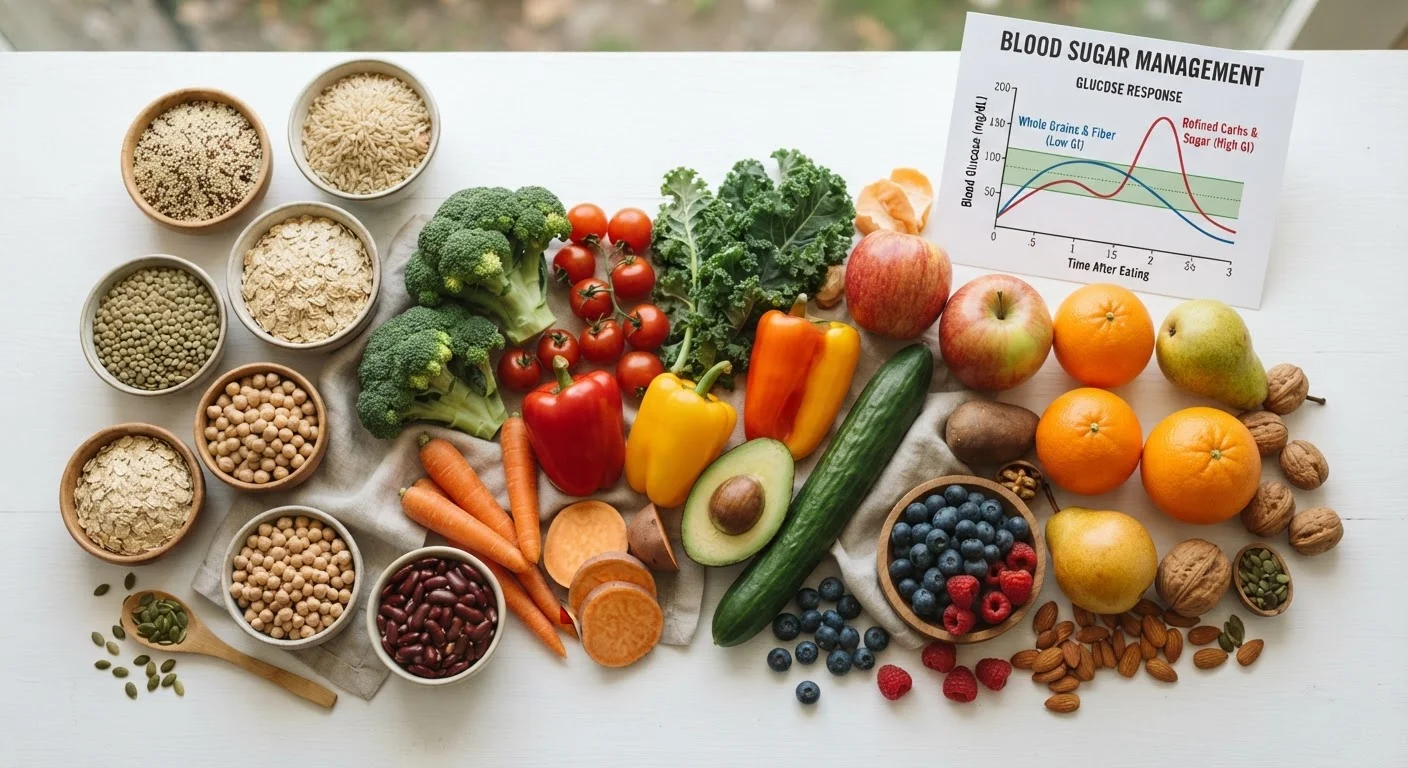
How the Glycemic Index Is Measured
To assign a GI value to a food, researchers feed participants a portion containing 50 grams of digestible carbohydrate from that food, then measure blood glucose at regular intervals over two hours. Those results are compared to the blood glucose response from 50 grams of pure glucose - the reference point assigned a GI of 100. The lower the score, the slower and more modest the blood sugar response under those controlled conditions.
Commonly referenced GI categories are:
- Low GI (55 or below): Lentils, oats, most fruits, non-starchy vegetables
- Medium GI (56-69): Whole wheat bread, brown rice, sweet potatoes
- High GI (70 and above): White bread, white rice, many breakfast cereals, glucose drinks
Understanding these benchmarks is a reasonable starting point, but the measurement process itself introduces important limitations worth knowing.
GI Values Can Vary by Source
GI values for the same food can differ between published databases depending on the variety tested, growing conditions, preparation method, and study population. The University of Sydney's GI database is one of the most widely referenced resources, but even there, ranges rather than single values are often more accurate. Treat published GI figures as useful approximations, not precise constants.
What GI Doesn't Tell You
One of the most significant limitations of the glycemic index is that it measures foods in isolation - typically after an overnight fast, consumed without any other food. In real life, carbohydrates are almost always eaten as part of a mixed meal alongside protein, fat, and fiber, all of which slow digestion and reduce blood sugar spikes. A baked potato eaten with chicken, broccoli, and olive oil behaves very differently in the body than a baked potato eaten alone in a lab.
GI also says nothing about a food's overall nutrient density, calorie content, vitamin and mineral profile, or fiber content. Nor does it account for how much of the food you actually eat - a factor that matters considerably for blood sugar management. This is where the concept of glycemic load (GL) becomes useful. GL multiplies a food's GI by the grams of carbohydrate per serving and divides by 100, producing a figure that better reflects real-world impact at normal portion sizes.
For practical guidance on understanding what's actually in your food, reading a Nutrition Facts label is an equally important skill that complements GI awareness.
“The glycemic index is a useful but imperfect tool. Used thoughtfully as part of a broader dietary framework, it can help guide healthier carbohydrate choices - but it should not be applied as a rigid filter for what is or isn't a healthy food.”
— David Jenkins, Professor of Nutritional Sciences, University of Toronto, and original developer of the glycemic index concept
Individual Variability and Practical Takeaways
Research has consistently shown that two people can eat the exact same food and experience meaningfully different blood glucose responses. Factors including gut microbiome composition, metabolic health, activity level, stress, and even time of day all influence how carbohydrates are processed. A landmark 2015 study published in Cell by Zeevi and colleagues demonstrated that personalized glycemic responses varied so substantially that population-level GI rankings were often poor predictors of individual responses.
~36%
U.S. adults with prediabetes or diabetes
According to CDC data, approximately 96 million U.S. adults have prediabetes and 37 million have diabetes, making blood sugar literacy broadly relevant.
10-50 points
Typical GI variation between individuals for same food
Research including the 2015 Zeevi et al. Cell study found that the same standardized food can produce glycemic responses differing by 10 to 50 GI-equivalent points between different people.
Despite these limitations, GI remains a useful educational framework. Dietary patterns that emphasize lower-GI foods - such as those rich in legumes, whole grains, non-starchy vegetables, and most fruits - are broadly associated with better blood sugar regulation and cardiovascular health markers in large observational studies. These patterns align well with general evidence-based nutrition guidance.
Rather than treating GI as a rigid rulebook, most registered dietitians recommend using it as one lens among many - alongside portion awareness, food variety, cooking methods, and your own health context. Anyone with diabetes, prediabetes, or other metabolic concerns should seek personalized guidance from a qualified healthcare provider or registered dietitian before making significant dietary changes.
This article is for general educational and informational purposes only and does not constitute medical or dietary advice. Please consult a qualified healthcare professional for guidance tailored to your individual health needs.
Frequently Asked Questions
Foods with a GI of 55 or below are considered low, 56-69 is medium, and 70 or above is high. Examples include lentils (low), whole wheat bread (medium), and white rice (high). These categories help compare foods, but they don't tell the whole story on their own.
No. Glycemic load (GL) combines a food's GI score with the actual amount of carbohydrate in a typical serving. A food can have a high GI but a low glycemic load if you eat only a small portion - watermelon is a classic example. Many nutrition researchers consider GL a more practical measure for everyday eating.
Low-GI dietary patterns may support blood sugar management and are recognized by some diabetes organizations as a useful framework. However, dietary needs for people with diabetes are highly individual. Anyone managing diabetes should work directly with their healthcare team or a registered dietitian before making significant dietary changes.
Yes, significantly. Cooking time, temperature, and even cooling after cooking can alter how quickly starches are digested. For example, pasta cooked al dente has a lower GI than overcooked pasta, and cooled cooked potatoes have a lower GI than freshly cooked ones due to resistant starch formation.
Not necessarily. Some nutrient-dense foods like watermelon and carrots have relatively high GI scores but are low in total carbohydrates and rich in vitamins and fiber. Judging a food's overall nutritional value by GI alone is an oversimplification. A balanced diet considers the full nutritional profile of foods.
The content on this site is provided for informational purposes only and should not be considered a substitute for professional advice. While we strive to provide accurate and up-to-date information, we make no guarantees regarding its completeness or accuracy. Always consult a qualified professional for advice specific to your circumstances before making any decisions.