

Why the Nutrition Facts Label Exists - and What It Can and Can't Tell You
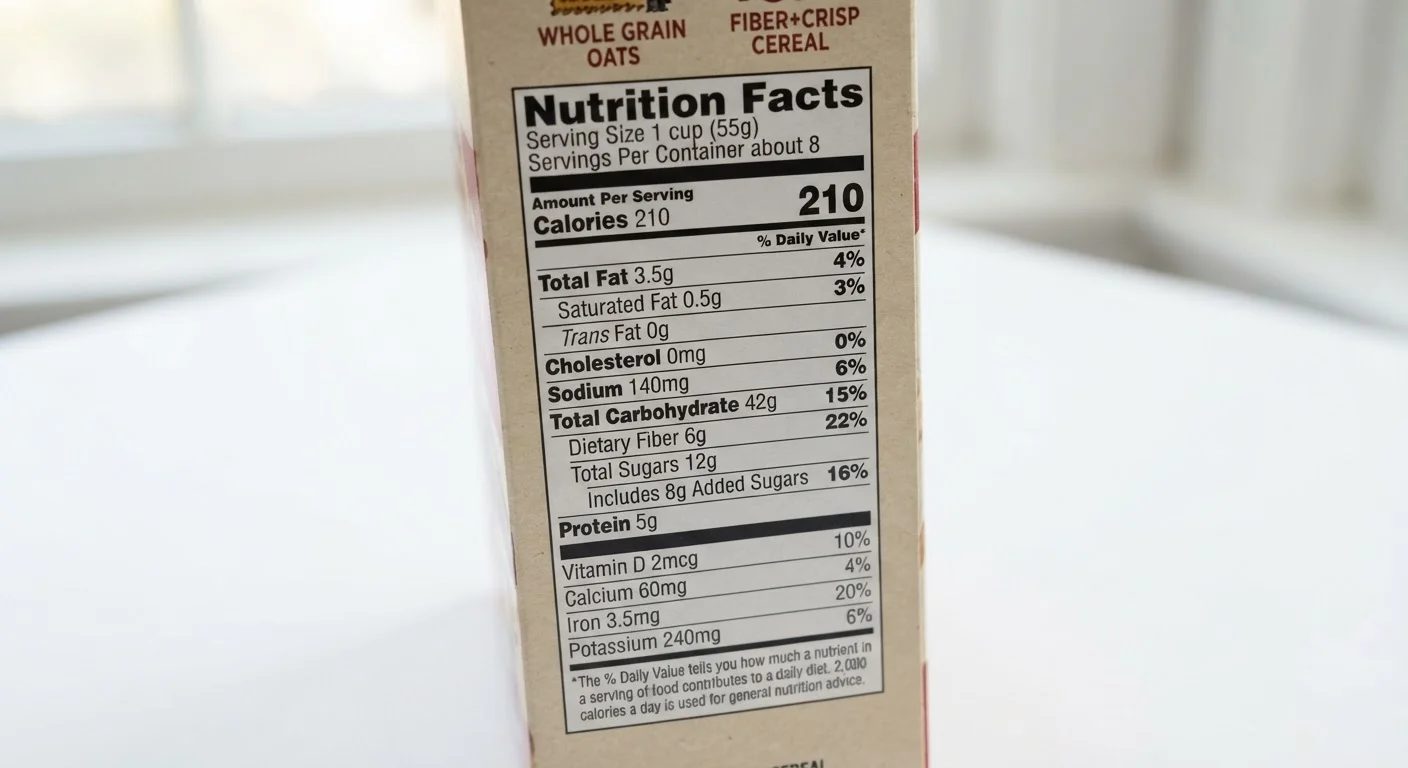
The Nutrition Facts panel is a federally mandated tool created to help consumers make informed food choices. The FDA most recently updated its required format, making added sugars and updated serving sizes more prominent. Despite its standardized structure, the label reflects a snapshot - what's in one serving of this product - not a verdict on whether you should eat it.
Labels work best as comparison tools and awareness builders. A food with high sodium isn't automatically "bad," just as a low-calorie food isn't automatically nutritious. Patterns across your whole diet matter far more than any single product's numbers. If you're still sorting through foundational concepts, our nutrition fundamentals guide is a useful starting point.
What you will need
This article provides general nutrition education and is not a substitute for personalized advice from a registered dietitian or qualified healthcare professional.
What You'll Need
Reading a nutrition label requires no special equipment - just the label itself and a basic framework for interpreting what you see. Grab any packaged food from your pantry, and work through the steps below.
Packaged food with a Nutrition Facts label
Provides the real-world panel you'll practice reading during the steps.
Pen and notepad (or phone notes app)
Useful for jotting down key figures to compare across multiple products.
Step-by-Step: Decoding the Label
The Nutrition Facts panel follows a consistent top-to-bottom order. Working through it systematically - rather than jumping to the number that catches your eye - gives you the most accurate picture of what a food contains.
Start with serving size and servings per container
Every number on the label - calories, fat, sodium, everything - is calculated for one serving, not the entire package. The serving size is printed in both a common household measure (e.g., "1 cup") and grams. The "servings per container" line tells you how many of those servings the package holds.
If a bag of chips lists 150 calories per serving but contains 3 servings, eating the whole bag means consuming 450 calories. This single step prevents the most common misreading of nutrition labels.
Read the calorie count in context
Calories measure how much energy one serving provides. The label displays calories prominently in large type. While calorie needs vary significantly by age, sex, body size, and activity level, the label's reference point is a 2,000-calorie daily diet. Use calories as a rough relative indicator rather than an absolute target.
Understand the % Daily Value (%DV) column
The right-hand column shows each nutrient as a percentage of its recommended daily amount, based on a 2,000-calorie diet. A useful rule of thumb established by the FDA: 5% DV or less is considered low for a nutrient; 20% DV or more is considered high.
- Use %DV to quickly compare similar products side by side.
- Use it to identify foods high in nutrients you want more of (fiber, calcium) or less of (sodium, saturated fat).
Keep in mind that your personal daily values may differ if your calorie needs are significantly higher or lower than 2,000.
Examine fats - total, saturated, and trans
Total fat includes all fat types combined. Below it, you'll find breakdowns for saturated fat and trans fat - both listed separately because of their distinct health implications. Current dietary guidance from major health organizations generally recommends limiting saturated fat and avoiding industrially produced trans fats.
Unsaturated fats (found in nuts, fish, and plant oils) are not required to be listed but may appear voluntarily. To understand what these fats actually do in the body, see our macronutrients explainer.
Decode carbohydrates: total, fiber, and added sugars
Total carbohydrates encompass dietary fiber, total sugars, and added sugars. Each sub-item tells a different story:
- Dietary fiber
- Supports digestive health, blood sugar regulation, and more. Most Americans fall well short of recommended intake. Learn more in our dietary fiber guide.
- Total sugars
- Includes both naturally occurring sugars (from fruit or dairy) and added sugars combined.
- Added sugars
- Sugars and syrups added during processing. The Dietary Guidelines for Americans recommend limiting added sugars to less than 10% of daily calories. The %DV for added sugars helps you track this quickly.
Check sodium and the micronutrient section
Sodium is listed in milligrams (mg) and as %DV. Because most dietary sodium in the US comes from packaged and processed foods rather than table salt, the label is a valuable tracking tool. For a broader look at where sodium hides, see our sodium in the American diet overview.
Below sodium, the label is required to list vitamin D, calcium, iron, and potassium - nutrients identified as commonly under-consumed in the US population. A high %DV for these is generally a positive signal. Our micronutrient reference guide covers what each one does in more detail.
The Ingredient List Is a Companion Tool
The Nutrition Facts panel tells you quantities; the ingredient list tells you sources. Ingredients are listed in descending order by weight, so the first few ingredients make up the bulk of the product. If added sugars appear among the first three ingredients under multiple names (cane syrup, dextrose, maltose), that's useful context the numbers alone don't always convey.
Once you've practiced with a few products, you'll find that scanning a label takes under a minute. For common misconceptions that can skew how you interpret nutritional information, see our guide to persistent nutrition myths. You can also apply these skills directly when doing a weekly grocery audit of your regular purchases.
Putting It All Together: Using Labels in Real Life
Label literacy is most useful when applied consistently rather than obsessively. A few practical habits make the skill stick:
- Compare before you commit: Hold two similar products side by side and check %DV for sodium, saturated fat, fiber, and added sugars. Often the difference is stark.
- Watch for serving-size traps: Single-serve packaging sometimes contains 2-2.5 servings. Confirm before assuming a package equals one serving.
- Use %DV as a shortcut: When time is short, scan the %DV column. Anything at 20% or above for saturated fat, sodium, or added sugars warrants a second look. Anything at 20% or above for fiber or calcium is a positive signal.
- Keep the big picture: No single food needs to be nutritionally perfect. What you eat consistently across days and weeks shapes health outcomes far more than any one item.
Labels Reflect What's in the Product, Not What's Right for You
Daily values on the Nutrition Facts panel are reference points for a general 2,000-calorie diet. Individual needs vary based on age, health status, activity level, and other factors. People with conditions such as hypertension, diabetes, or kidney disease may need to track specific nutrients at different thresholds than what the label implies. Always consult a qualified healthcare professional for personalized guidance.
For readers managing specific health conditions - diabetes, heart disease, kidney disease, or others - label reading may carry additional considerations. A registered dietitian can help translate label information into guidance relevant to your individual situation.
The content on this site is provided for informational purposes only and should not be considered a substitute for professional advice. While we strive to provide accurate and up-to-date information, we make no guarantees regarding its completeness or accuracy. Always consult a qualified professional for advice specific to your circumstances before making any decisions.