

What a Car Battery Actually Does
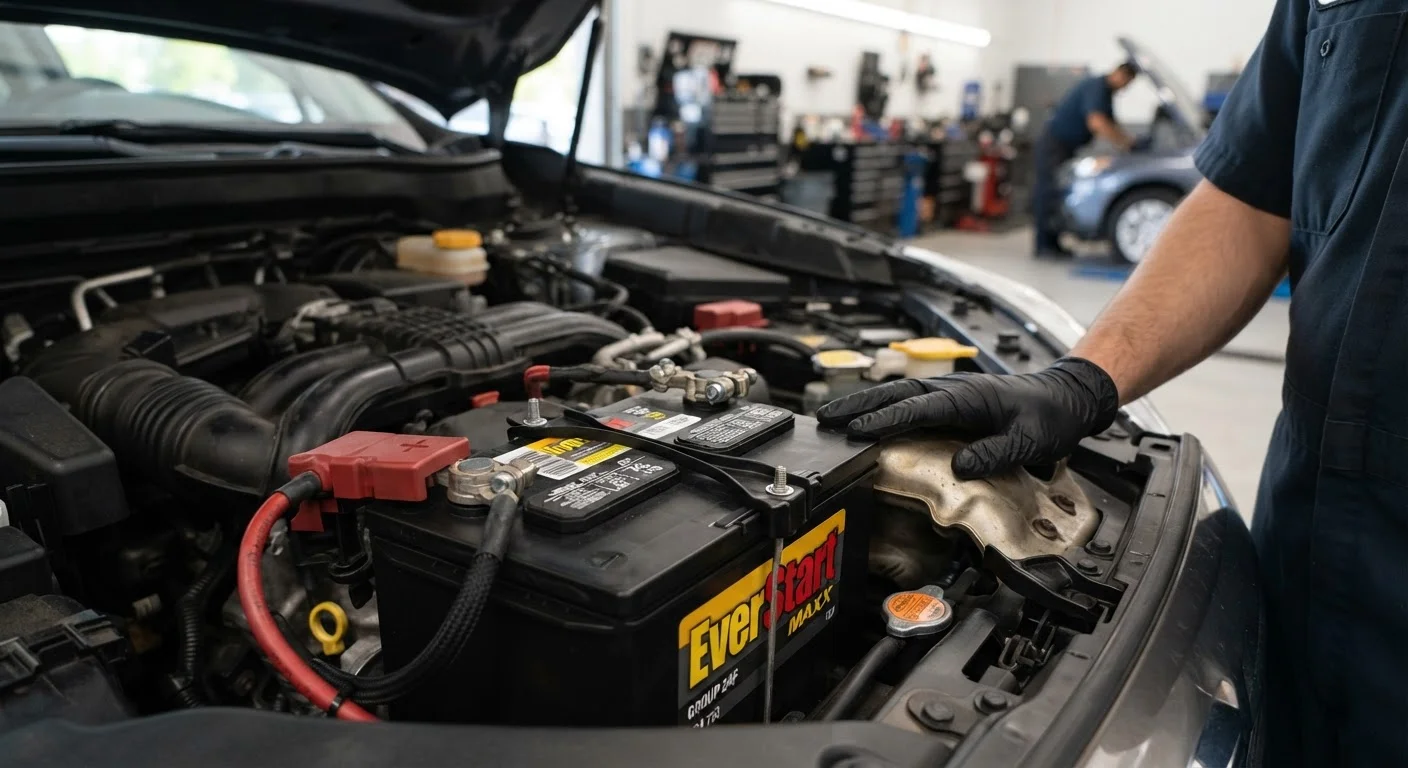
Most drivers think of a car battery as a device that starts the engine - and it is, but that's only part of the picture. The 12-volt lead-acid battery found in most conventional vehicles performs three essential jobs: it delivers the high-amperage burst needed to crank the engine, it powers all electronics when the engine is off, and it acts as a voltage buffer that stabilizes the electrical system while the engine runs.
Modern vehicles place far greater electrical demands on batteries than older models did. Advanced driver-assistance systems, infotainment screens, multiple USB ports, and keyless entry modules all draw power - sometimes even with the ignition off. Understanding this broader role helps explain why battery health is more than a simple on-or-off question. A degraded battery can cause puzzling issues, from erratic dashboard behavior to failed engine start-stop systems, long before it refuses to start the car at all.
For a broader look at keeping your vehicle dependable, see our guide to long-term vehicle reliability.
Common Causes of Battery Drain
Battery degradation happens through several distinct mechanisms, and knowing them helps you address the right problem.
Parasitic Draw
A parasitic draw occurs when one or more electrical components continues pulling current after the ignition is off. Common culprits include a dome light left on, a faulty relay, an aftermarket alarm system wired incorrectly, or a charging port that never powers down. Even a small continuous draw - say, 50 milliamps - can fully discharge a battery within a day or two if the vehicle sits unused.
Temperature Extremes
Heat accelerates the internal chemical reactions inside a battery, which speeds up corrosion and causes electrolyte evaporation. Cold weather doesn't destroy batteries the same way, but it thickens engine oil and dramatically increases the power needed to crank the engine - placing sudden heavy demand on a battery whose capacity is already reduced by low temperatures. A battery weakened by summer heat may not reveal the problem until the first cold snap.
Short-Trip Driving
The alternator recharges the battery while the engine runs, but it takes time. Trips under 10 to 15 minutes - common in urban and suburban driving - may not give the alternator enough time to restore what was used during starting. Repeated short trips without occasional longer drives can result in a battery that is chronically undercharged.
If you suspect a parasitic draw, have a technician perform a drain test before replacing the battery. Replacing the battery without fixing the underlying draw simply means the new battery will be dead within days.
A faulty relay, module, or accessory can continuously pull 100-400 milliamps - far more than the 20-50 milliamp threshold considered acceptable for a vehicle at rest - depleting even a new battery rapidly.
When a battery fails in extreme cold, get it load-tested rather than just charged and returned to service. Cold masks marginal batteries; once warm weather returns, the same battery may seem fine until the next winter.
Lead-acid battery capacity drops significantly at low temperatures - a battery at 32°F (0°C) may deliver only 70-80% of its rated capacity, making borderline batteries appear functional until conditions change.
Age and Internal Degradation
Lead-acid batteries degrade through a process called sulfation, in which lead sulfate crystals form on the battery plates when the battery remains in a discharged state. Over time, these deposits reduce the battery's ability to accept and hold a charge. This process is largely irreversible once advanced.
How to Extend Battery Life
While no battery lasts forever, deliberate habits can push service life toward the higher end of its expected range.
- Drive regularly and long enough. If your driving pattern consists mainly of short errands, plan at least one longer drive per week - 30 minutes or more at highway speeds - to allow full recharging.
- Minimize electrical load at startup. Before cranking the engine, turn off the air conditioning, heated seats, and high-draw accessories. Starting already places peak demand on the battery; adding load compounds that stress.
- Keep terminals clean and tight. Corrosion on battery terminals (the whitish or bluish crust that builds up around connections) increases resistance and reduces charging efficiency. Cleaning terminals with a wire brush and a baking soda solution is a straightforward task, but if you're uncertain about working near battery acid, have it done by a mechanic.
- Use a battery maintainer for stored vehicles. If a vehicle will sit unused for weeks or months, a trickle charger or battery maintainer keeps the charge level stable without overcharging - preventing deep discharge and the sulfation that follows.
- Park in a garage when possible. Reducing exposure to extreme heat and cold slows chemical degradation and reduces the thermal cycling that wears down battery components over time.
These habits complement a broader maintenance approach. See our maintenance guide for high-mileage vehicles for how battery care fits into a larger upkeep routine.
Test Your Battery Before Winter
Fall is the ideal time to have your battery load-tested. A battery weakened by summer heat may still start the car in mild weather but fail when cold temperatures reduce its effective capacity. Many auto parts stores offer free load testing - take advantage of it before temperatures drop.
Warning Signs Your Battery Is Failing
Battery failure is rarely instantaneous. Most batteries give clear signals for weeks or even months before they leave a driver stranded.
- Slow or labored engine cranking. If the starter motor sounds sluggish or the engine takes longer than normal to turn over, the battery may not be delivering sufficient current.
- Dimming headlights or interior lights at idle. Lights that brighten when you rev the engine point to a battery struggling to maintain voltage when alternator output is low.
- Frequent need for jump-starts. A battery that cannot hold a charge overnight or after sitting for a short period has likely degraded beyond useful service life.
- Dashboard warning light. Most modern vehicles display a battery or charging system warning when voltage drops below acceptable thresholds. This light can also indicate an alternator problem, so a proper diagnostic test is important.
- Swollen or misshapen battery case. Visible bulging on a battery case is typically caused by excessive heat and indicates internal damage. A battery in this condition should be replaced promptly - do not attempt to test or jump-start it without consulting a mechanic.
A Swollen Battery Case Is a Safety Issue
A battery with a visibly bulging or misshapen case has experienced internal damage, typically from overcharging or extreme heat. Do not attempt to jump-start, charge, or test the battery yourself. Have the vehicle inspected by a qualified mechanic promptly, as a damaged battery can leak corrosive acid or, in rare cases, pose a risk of thermal event.
When to Replace Your Car Battery
Most automotive batteries have a service life of three to five years, though some premium batteries and certain driving conditions can extend that range. At around the three-year mark, it's worth having the battery load-tested by a mechanic or auto parts retailer - many offer this service at no charge. A load test measures how well the battery performs under the high-current demand of starting, providing a more accurate picture than a simple voltage reading.
Don't rely on age alone. A battery used exclusively for short city trips in a hot climate may fail before three years. One maintained on a charger through a mild climate may perform adequately at six. Testing, not calendars, should drive the replacement decision.
When replacement is necessary, choose a battery that matches the original equipment specification for your vehicle - specifically the group size, cold cranking amps (CCA), and reserve capacity (RC). Your owner's manual or a reliable parts reference will list these. Installing an undersized battery to save money often results in premature failure and can cause starting problems in cold weather.
Battery replacement is a task some mechanically confident drivers handle themselves, but it does involve working with lead-acid chemistry and electrical connections. If you have any doubts, have it installed by a qualified technician. Improperly disconnecting a battery on modern vehicles can also reset certain electronic systems, which may require recalibration.
For more on separating maintenance fact from fiction, explore common car maintenance myths that may be affecting how you care for your vehicle.
3-5 years
Typical car battery lifespan
AAA research indicates most lead-acid batteries reach the end of reliable service life within this window under normal driving conditions.
~33%
Battery failures caused by heat damage
According to the Battery Council International, high temperatures are a leading cause of premature battery failure, often manifesting months after heat exposure.
1 in 4
Vehicles with weak or failing batteries
AAA road service data has consistently found that a significant portion of vehicles tested have batteries that are underperforming relative to original specifications.
The content on this site is provided for informational purposes only and should not be considered a substitute for professional advice. While we strive to provide accurate and up-to-date information, we make no guarantees regarding its completeness or accuracy. Always consult a qualified professional for advice specific to your circumstances before making any decisions.