

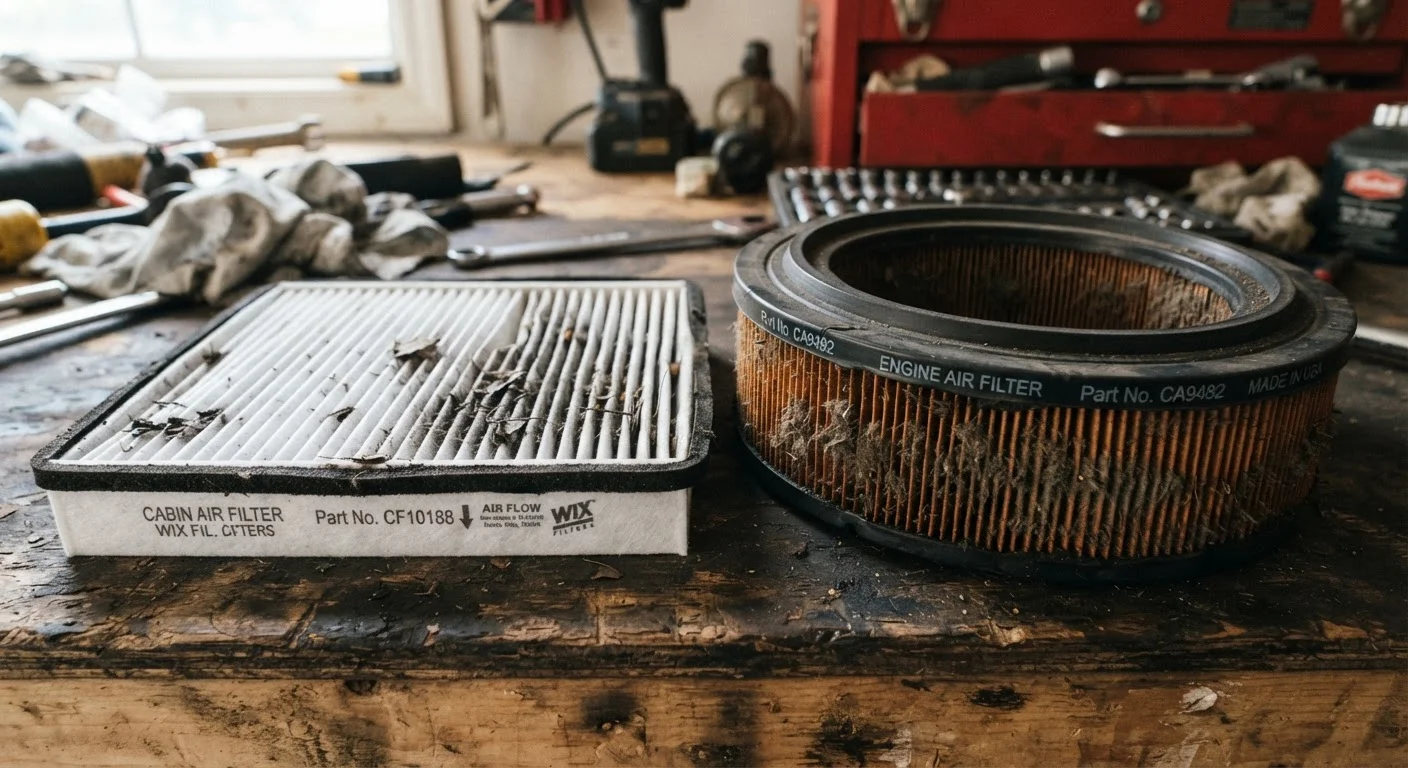
Two Filters, Two Completely Different Jobs
Most vehicles contain two air filters that are frequently confused with each other. Understanding what each one actually does makes it far easier to catch problems early and stay on top of routine upkeep - without overspending on unnecessary service visits.
| Cabin filter location | Behind glove box or under dashboard (varies by model) |
| Engine filter location | Under hood, in air intake housing |
| Cabin filter interval | Every 15,000-25,000 miles or annually (General manufacturer guidance; consult your owner's manual) |
| Engine filter interval | Every 15,000-30,000 miles (General manufacturer guidance; varies by driving conditions) |
| Primary purpose - cabin filter | Cleans air entering the passenger cabin |
| Primary purpose - engine filter | Protects engine from dirt and debris in intake air |
The cabin air filter cleans the air that circulates inside your passenger compartment. Positioned in the HVAC (heating, ventilation, and air conditioning) system - typically behind the glove box or under the dashboard - it traps pollen, dust, mold spores, and other airborne particles before they reach you and your passengers. A working cabin filter directly affects interior air quality and the efficiency of your climate control system.
The engine air filter protects your engine from airborne contaminants - dirt, debris, insects, and road grit - that enter through the intake. Located in a housing under the hood connected to the air intake duct, it ensures the combustion process uses clean air. A clogged engine air filter can choke airflow, reducing performance and fuel efficiency over time.
For a broader look at how these and other maintenance items fit into your vehicle's upkeep cycle, see our guide to routine car maintenance tasks.
Symptoms That Signal a Filter Needs Replacing
Both filters communicate their condition through observable symptoms. Knowing the difference helps you prioritize the right fix.
Signs the cabin air filter is due:
- Reduced airflow from vents even at maximum fan settings
- Musty or stale odors inside the cabin when the HVAC is running
- Increased dust accumulation on the dashboard and interior surfaces
- Allergy symptoms that seem worse inside the car than outside
- Noisy blower motor straining against restricted airflow
Signs the engine air filter is due:
- Noticeable drop in fuel economy without a clear cause
- Sluggish acceleration or hesitation under load
- Rough idling or misfires in severe cases
- Check Engine light triggered by lean air-fuel mixture readings
- Black smoke from the exhaust indicating a rich-running condition
Don't Assume One Filter Replacement Covers Both
A common misconception is that replacing one air filter addresses both systems. They are separate components serviced independently, and failing to replace one has no effect on the other. Always confirm which filter your service provider replaced - and whether the other has been inspected.
Visual inspection is a useful quick check for both filters. A new filter is white or off-white; a spent one is visibly gray, brown, or clogged with debris. That said, appearance alone doesn't always tell the full story - some filters look moderately dirty but still flow air adequately, while others may be contaminated with fine particles not visible to the naked eye.
Replacement Intervals and What Affects Them
General guidelines exist, but your actual replacement interval depends heavily on where and how you drive.
Cabin air filter: Most manufacturers recommend replacement every 15,000 to 25,000 miles, or once a year - whichever comes first. Drivers in high-pollen areas, heavily trafficked urban environments, or dusty regions (desert, agricultural zones, unpaved roads) may need to replace theirs more frequently.
Engine air filter: The typical interval is every 15,000 to 30,000 miles, but this varies considerably by vehicle and driving conditions. Severe-duty driving - frequent short trips, towing, dusty terrain, stop-and-go traffic - shortens the effective life of the filter significantly.
Your owner's manual is the most reliable authority on intervals specific to your vehicle. If you're unsure how to read the maintenance schedule section, this guide explains how to interpret your manual correctly.
Both filters are among the more accessible DIY maintenance tasks on most vehicles - no specialty tools required. However, if you're not confident locating the filter housings or reconnecting the air duct, a qualified mechanic can swap them out during a routine service with minimal added labor cost. Neither replacement involves any significant safety risk when done correctly, but if you're uncertain, professional service is always a sound choice.
The content on this site is provided for informational purposes only and should not be considered a substitute for professional advice. While we strive to provide accurate and up-to-date information, we make no guarantees regarding its completeness or accuracy. Always consult a qualified professional for advice specific to your circumstances before making any decisions.